CM Rekha Gupta Opens Delhi's Second Automated Vehicle Testing Station in 23 Days
Synopsis
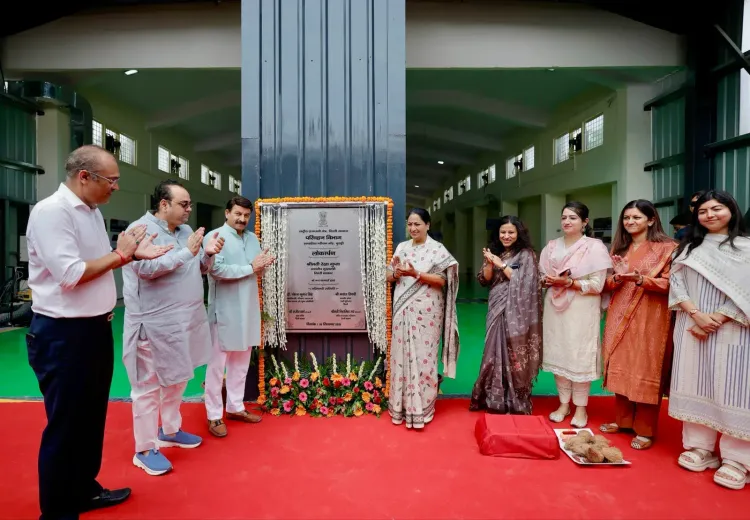
Delhi CM Rekha Gupta inaugurated a high-capacity Automated Testing Station at Burari on 26 September 2026 — the city's second such facility in 23 days under SevaSankalpAbhiyan, aimed at strengthening road safety and pollution control.
Key Takeaways
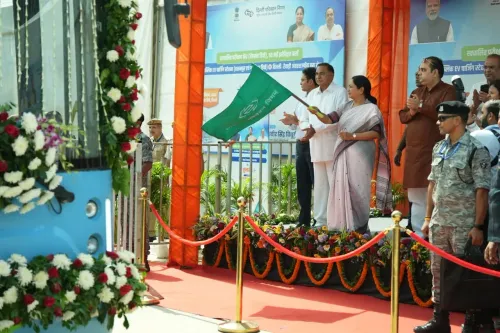
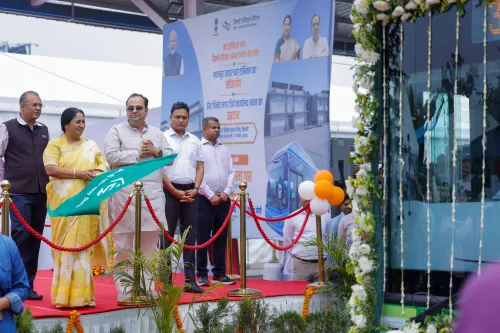
Delhi's second Automated Testing Station was inaugurated at Burari, north Delhi on 26 September 2026 by Chief Minister Rekha Gupta .
The station has an annual capacity of 90,000 vehicles , or roughly 7,500 vehicles per month.
The first ATS was launched at Tehkhand, south Delhi on 3 September 2026 — just 23 days before the Burari facility.
Both stations are being rolled out under the #SevaSankalpAbhiyan campaign, part of the government's #ViksitDelhi agenda.
BJP MP Manoj Tiwari and Cabinet minister Dr Pankaj Kumar Singh attended the Burari inauguration.
The ATS rollout aligns with the National Vehicle Scrappage Policy 2021 , which mandated automated fitness infrastructure to phase out unfit, high-polluting vehicles.
Two automated vehicle testing stations in 23 days. That is the pace Delhi Chief Minister Rekha Gupta is benchmarking her administration against — and on Saturday, 26 September 2026, she made it official by inaugurating a state-of-the-art Automated Testing Station (ATS) at Burari in north Delhi, capable of testing 90,000 vehicles annually.
Posting on X under the #SevaSankalpAbhiyan banner, the Chief Minister announced the Burari facility as Delhi's second automated testing station within the month, following the launch of the first at Tehkhand in south Delhi on 3 September 2026. 'Sahi Fitness, sateek Testing aur behtar Monitoring' — right fitness, precise testing, better monitoring — she wrote, framing the twin launches as a direct strike at both road-safety failures and Delhi's chronic air-quality crisis.
What an Automated Testing Station actually does — and why it matters in Delhi
An Automated Testing Station removes human discretion from vehicle fitness checks. Sensors, rollers, and cameras run standardised assessments — braking efficiency, emissions levels, lighting, structural integrity — and generate a tamper-resistant digital certificate. That mechanised rigour is precisely what India's National Vehicle Scrappage Policy of 2021 envisaged when it mandated a network of such stations to phase out unfit, high-polluting vehicles from the country's roads.
For Delhi-NCR, the stakes are unusually high. The capital's air quality regularly breaches safe limits, and old, poorly maintained vehicles are a documented contributor to particulate and nitrogen-oxide pollution. A station with a 90,000-vehicle annual capacity — roughly 7,500 vehicles a month — can process a meaningful slice of the capital's ageing fleet, identifying which vehicles are too unsafe or too dirty to remain on the road.
Burari joins Tehkhand: Delhi's growing ATS network
Until this month, Delhi's automated testing infrastructure was sparse relative to the size of its registered vehicle fleet. The Tehkhand station, inaugurated on 3 September, was itself a signal that the Gupta administration intended to move fast. The Burari inauguration, arriving just over three weeks later, confirms the tempo.
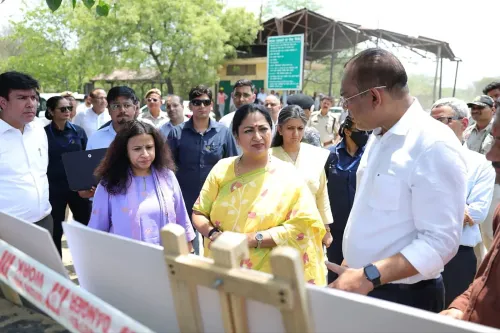
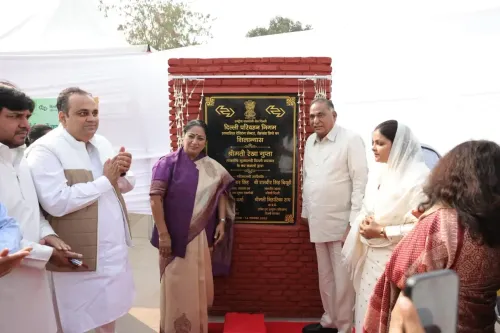
BJP Member of Parliament Manoj Tiwari and Cabinet colleague Dr Pankaj Kumar Singh were present at the Burari event alongside other dignitaries — lending both parliamentary and administrative weight to what is being framed as a flagship urban-governance push under #ViksitDelhi, the government's broader development narrative for the capital.
Speed of delivery as political message
CM Gupta's post did not merely announce an inauguration — it explicitly cited the 23-day gap between the two launches as evidence of her government's working pace. That framing is deliberate: governance speed has been a recurring BJP talking point in Delhi, a city where infrastructure promises have historically taken years to materialise.
The SevaSankalpAbhiyan campaign — under which both stations are being rolled out — gives the expansion a unified brand, making individual inaugurations legible as part of a larger, trackable commitment. The next station to watch will be whichever facility the campaign commissions next, and whether enforcement drives on vehicles that fail the new automated checks follow swiftly behind the infrastructure build-out.
Delhi's air does not wait for bureaucratic timelines. Whether these stations translate from ribbon-cutting to cleaner, safer roads will depend on one thing: throughput — vehicles actually tested, and unfit ones actually taken off the road.
Point of View
Measurable infrastructure delivery as its core political proof-point in Delhi — a city where governance credibility has long been contested. Linking the rollout to SevaSankalpAbhiyan gives the BJP a branded, trackable campaign asset ahead of any future electoral calculus. More substantively, the ATS expansion directly operationalises the National Vehicle Scrappage Policy's vision, filling an enforcement gap that has allowed ageing, high-polluting vehicles to remain on Delhi's roads despite existing norms. The real test of this infrastructure, however, is not the inauguration count but whether higher testing throughput translates into measurable improvements in Delhi's air quality index and road-safety statistics.
NationPress
26 Sept 2026
Frequently Asked Questions
What is an Automated Testing Station for vehicles in Delhi?
An Automated Testing Station (ATS) uses sensors, rollers, and cameras to run standardised, tamper-resistant fitness checks on vehicles — assessing brakes, emissions, lighting, and structural integrity — replacing manual inspection with digital certification.
Where is the new Automated Testing Station in Delhi inaugurated in September 2026?
The latest ATS was inaugurated at Burari in north Delhi on 26 September 2026 . An earlier station was launched at Tehkhand in south Delhi on 3 September 2026 .
How many vehicles can the Burari ATS test per year?
The Burari Automated Testing Station has a capacity to test 90,000 vehicles annually , approximately 7,500 vehicles per month.
What is SevaSankalpAbhiyan?
SevaSankalpAbhiyan is a BJP-linked governance campaign under which the Delhi government is rolling out infrastructure projects including the new Automated Testing Stations for vehicle fitness.
How does the vehicle ATS help control Delhi's pollution?
By enforcing standardised emissions checks through automated systems, the ATS identifies high-polluting and unfit vehicles that should be taken off the road, directly supporting Delhi's pollution-control efforts as envisaged under the National Vehicle Scrappage Policy 2021.