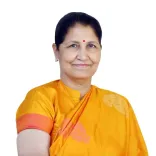
CM Rekha Gupta pledges accessible cancer care for Delhi
Synopsis
On National Cancer Awareness Day, Delhi Chief Minister Rekha Gupta called for timely detection, public awareness, and equitable access to cancer care, urging all Delhiites to get regular health check-ups and pledging to strengthen the capital's health infrastructure from screening to treatment.
Key Takeaways
National Cancer Awareness Day is observed on 7 November every year across India to promote prevention and early detection.
Delhi CM Rekha Gupta pledged to make health facilities — from screening to treatment — more accessible and citizen-centred in Delhi .
She urged all Delhiites to undergo regular health check-ups , framing healthy citizens as the capital's greatest asset.
India's cancer screening efforts are anchored by the NPCDCS (launched 2010) and Ayushman Bharat (2018) , which covers treatment costs for low-income households.
State budget allocations and expansion of diagnostic facilities in Delhi government hospitals will be the key metrics to watch.
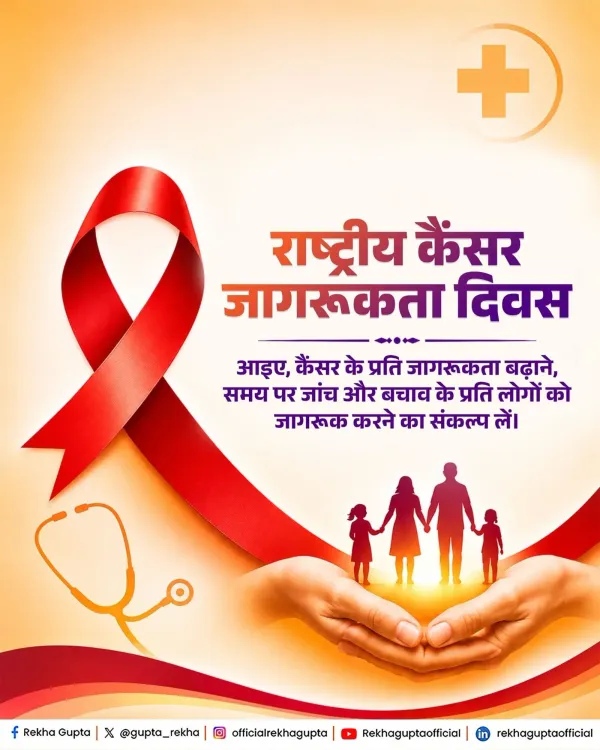
On National Cancer Awareness Day, 7 November 2026, Delhi Chief Minister Rekha Gupta turned a date on the health calendar into a public commitment — calling for every Delhiite to get regular health check-ups and vowing to make the capital's health infrastructure more accessible, stronger, and citizen-centred. The post, shared in Hindi, moves well beyond a ceremonial message to lay out a clear three-point frame: early detection, awareness, and equitable access.
Translating her words, CM Gupta wrote: 'कैंसर के विरुद्ध लड़ाई केवल उपचार की नहीं, समय पर पहचान, जागरूकता और हर व्यक्ति तक बेहतर स्वास्थ्य सेवाएं पहुंचाने की भी है' — 'The fight against cancer is not just about treatment; it is also about timely detection, awareness, and ensuring better healthcare reaches every person.' She added that her resolve on this day is to make health facilities in Delhi — from screening to treatment — more accessible, empowered, and people-centric, urging all residents to undergo regular health screenings.
Why 7 November matters in India's cancer calendar
National Cancer Awareness Day is observed every year on 7 November across India — a date chosen to mark the birthday of Nobel laureate Marie Curie, whose pioneering work on radioactivity laid the foundation for radiotherapy. The day anchors annual public-health campaigns focused on prevention, early diagnosis, and reducing the stigma that still delays many patients from seeking timely care in India.
Delhi's health system within the national NCD push
India's rising cancer burden has pushed both central and state governments to shift strategy — from treatment-only models toward prevention and decentralised diagnostics. The National Programme for Prevention and Control of Cancer, Diabetes, Cardiovascular Diseases and Stroke (NPCDCS), launched in 2010, remains the backbone of state-level cancer screening efforts. Ayushman Bharat Pradhan Mantri Jan Arogya Yojana, introduced in 2018, extended financial cover for secondary and tertiary care — including cancer treatment — to millions of low-income households.
Delhi's own health department operates a network of public hospitals and mohalla clinics that form the first line of contact for most residents. Strengthening that front-line infrastructure for early-stage cancer detection — cervical, breast, oral — is precisely where state policy can make the fastest difference, since survival rates improve dramatically when the disease is caught before it advances.
The appeal CM Gupta is making to Delhiites
The Chief Minister's closing line carried the sharpest punch: 'स्वस्थ नागरिक ही सशक्त दिल्ली की सबसे बड़ी पूंजी हैं' — 'A healthy citizen is the greatest asset of an empowered Delhi.' It is a deliberate reframe: cancer prevention not as a welfare measure, but as a civic investment. Whether that resolve translates into new screening camps, expanded diagnostic capacity in district hospitals, or dedicated budget lines will be the real test — and one Delhi's residents will be watching in the coming budget cycle.
Point of View
Positioning preventive health as an economic and governance priority rather than charity. The real policy signal to watch is whether Delhi's upcoming health budget reflects new allocations for front-line screening — mohalla clinics and district hospitals are the natural delivery points. Without concrete facility upgrades or funding announcements, the message remains aspirational; with them, it becomes a governance marker.
NationPress
7 Nov 2026
Frequently Asked Questions
When is National Cancer Awareness Day observed in India?
National Cancer Awareness Day is observed every year on 7 November in India to promote cancer prevention, early detection, and public awareness.
What did Delhi CM Rekha Gupta say on Cancer Awareness Day 2026?
CM Rekha Gupta pledged to make Delhi's health facilities — from screening to treatment — more accessible and people-centric, and urged all Delhiites to get regular health check-ups.
What is the NPCDCS and how does it relate to cancer screening in Delhi?
The National Programme for Prevention and Control of Cancer, Diabetes, Cardiovascular Diseases and Stroke (NPCDCS) , launched in 2010 , is the central government framework that state health departments, including Delhi's, use to organise cancer screening and NCD prevention programmes.
Does Ayushman Bharat cover cancer treatment?
Yes. Ayushman Bharat Pradhan Mantri Jan Arogya Yojana , introduced in 2018 , provides financial coverage for secondary and tertiary care including cancer treatment for eligible low-income beneficiaries.
Why is early detection important in India's fight against cancer?
Cancer survival rates improve dramatically when the disease is detected early. India's rising cancer burden has pushed policymakers to shift focus from treatment alone toward prevention, awareness, and decentralised diagnostic access at the primary and secondary care levels.