CM Rekha Gupta Pays Tribute to Mangal Pandey on His Jayanti
Synopsis
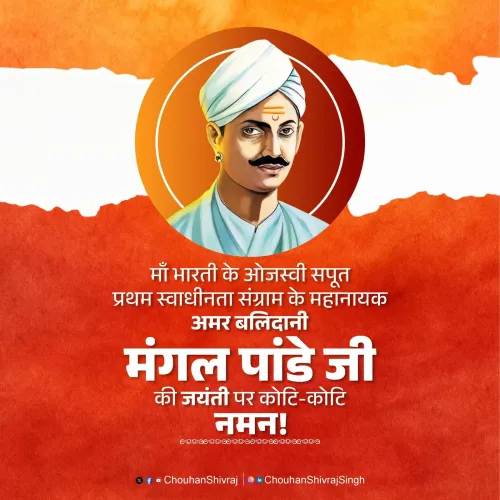
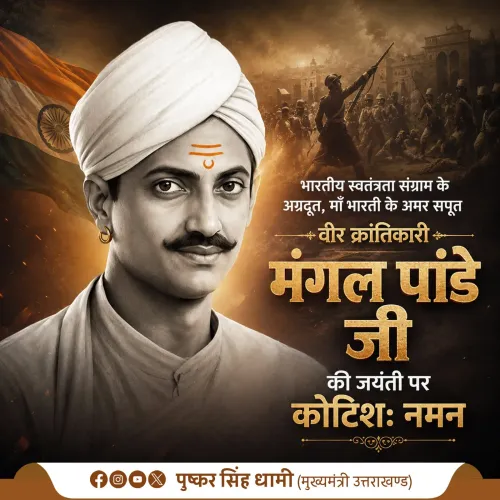
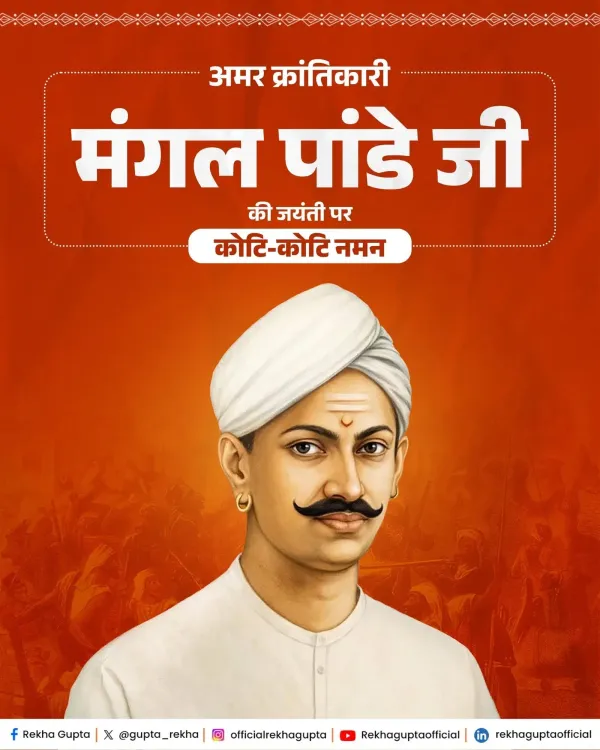
Delhi Chief Minister Rekha Gupta on 19 July 2026 paid tribute to Mangal Pandey on his birth anniversary, saluting the 1857 revolutionary's courage against British rule and his role as a pioneer of India's independence struggle.
Key Takeaways
Delhi Chief Minister Rekha Gupta posted a tribute to Mangal Pandey on his birth anniversary on 19 July 2026 .
Mangal Pandey was a sepoy in the 34th Bengal Native Infantry whose 1857 actions are seen as an early trigger of the First War of Independence.
Gupta described Pandey's revolt as giving 'a new direction to the freedom struggle' and called his sacrifice an enduring inspiration.
The tribute aligns with the Azadi Ka Amrit Mahotsav programme launched in 2021 by the Ministry of Culture to honour 1857 and later freedom fighters.
BJP-led governments have consistently issued public tributes to 1857 figures as part of a broader emphasis on pre-independence nationalist history.
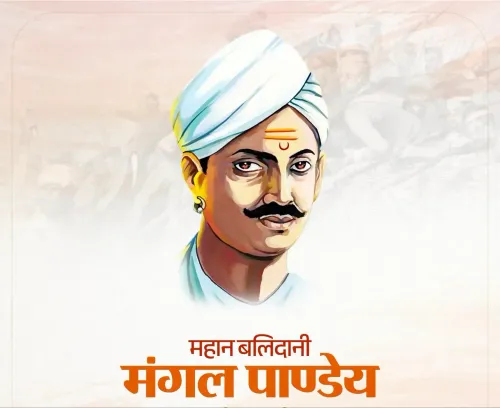
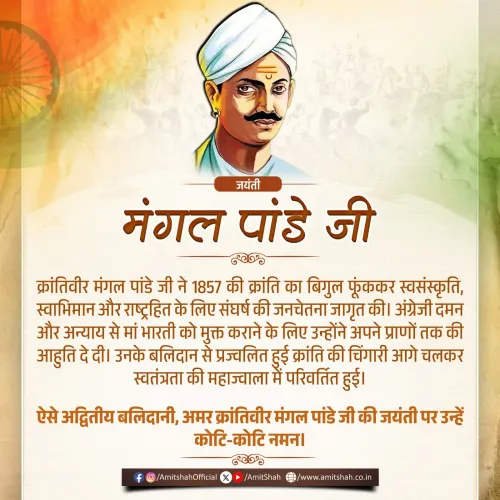
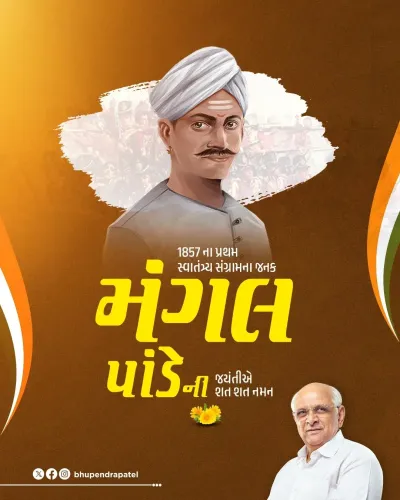
Delhi Chief Minister Rekha Gupta on Sunday, 19 July 2026, paid tribute to Mangal Pandey on his birth anniversary, honouring the 1857 revolutionary as a pioneer of India's freedom struggle. Gupta posted a message in Hindi on X, describing Pandey's defiance of British rule as an act that gave new direction to the independence movement.
In her post, Gupta wrote: '1857 ke pratham swatantrata sangram ke agradoot, mahan krantikari Mangal Pandey ji ki jayanti par unhe koti-koti naman' — offering 'a million salutes to the great revolutionary Mangal Pandey, the harbinger of the First War of Independence of 1857.' She added that his 'courageous revolt against British rule to protect the honour and self-respect of the motherland gave a new direction to the freedom struggle,' and that 'his supreme sacrifice and indomitable courage will always inspire the countrymen.'
Context
Mangal Pandey was a sepoy in the 34th Bengal Native Infantry whose actions against British officers in early 1857 are widely regarded as an early trigger for the broader uprising that year. The revolt, variously called the First War of Independence or the Sepoy Mutiny, spread across northern and central India against the rule of the East India Company. Pandey's defiance — and his subsequent execution — made him a symbol of early anti-colonial resistance in Indian national memory.
Policy Backdrop
The tribute aligns with a long-standing tradition of official commemorations around 1857. In 2007, the Government of India marked the 150th anniversary of the revolt with nationwide events, exhibitions, and institutional renamings honouring its leaders. Since 2021, the Ministry of Culture's Azadi Ka Amrit Mahotsav programme has continued this outreach, commemorating 1857 and later freedom fighters through public events and educational initiatives aimed at widening awareness of pre-independence nationalist history.
BJP-led governments and leaders have consistently issued public tributes to 1857 figures on birth and martyrdom anniversaries, as part of a broader emphasis on early resistance to colonial rule. These observances have been accompanied by curriculum revisions and memorial projects that foreground figures such as Pandey in the national historical narrative.
Stakeholders and Impact
Such tributes are directed at the general Indian public and carry particular resonance among citizens who identify with nationalist historical narratives. For the Delhi government, statements of this kind reinforce the ruling party's positioning on cultural and historical memory. Rekha Gupta, who assumed office as Delhi Chief Minister in early 2025, has used social media to regularly engage with historical commemorations as part of her public communication.
The post carries no announcement of a specific government programme or scheme tied to the jayanti, but it reflects the broader pattern of linking governance messaging to the 1857 legacy — a consistent feature of BJP-aligned political communication at both state and central levels.
What's Next
Observers will watch whether the Delhi government follows up with formal commemorative events ahead of Independence Day on 15 August, when 1857 figures are frequently invoked in official addresses and cultural programmes. Any new memorial projects, textbook updates, or institutional renamings referencing Mangal Pandey or other 1857 leaders in the capital would signal a deeper policy push beyond social media tribute. The Azadi Ka Amrit Mahotsav framework continues to provide a national platform for such observances.
Point of View
She reinforces the party's cultural-nationalist messaging at the state level, consistent with central government programmes like Azadi Ka Amrit Mahotsav. The statement carries no new policy announcement, but its timing and platform — a Sunday morning post on X — suggests it is aimed at a broad, historically conscious audience. As Independence Day approaches, such tributes are likely to intensify, making them a barometer of the themes the Delhi government intends to foreground in its August messaging.
NationPress
18 Oct 2026
Frequently Asked Questions
Who was Mangal Pandey and why is he remembered?
Mangal Pandey was a sepoy in the 34th Bengal Native Infantry whose defiance of British officers in 1857 is regarded as an early spark of the First War of Independence. He is remembered as a symbol of early anti-colonial resistance and is celebrated on his birth anniversary across India.
When is Mangal Pandey's birth anniversary or jayanti?
Mangal Pandey's jayanti falls on 19 July. In 2026, Delhi Chief Minister Rekha Gupta marked the occasion with a tribute post on X honouring his role in the 1857 uprising.
What did Rekha Gupta say about Mangal Pandey?
Rekha Gupta said Pandey's courageous revolt against British rule gave a new direction to the freedom struggle and that his supreme sacrifice and indomitable courage will always inspire the countrymen.
What is Azadi Ka Amrit Mahotsav and how does it relate to 1857?
Azadi Ka Amrit Mahotsav is a multi-year programme launched by the Ministry of Culture in 2021 to honour freedom fighters including those from the 1857 revolt, through public events and educational outreach.
Why do BJP leaders frequently pay tribute to 1857 figures?
BJP-led governments and leaders routinely issue public tributes to 1857 figures on birth and martyrdom anniversaries as part of a broader emphasis on pre-independence nationalist history, aligning with curriculum revisions and memorial projects that foreground early resistance to colonial rule.