CM Revanth Orders Musi Phase-2 Work in 100 Days
Synopsis
Chief Minister Revanth Reddy has directed officials to begin Musi River Phase-2 rejuvenation works from Nagole to Gourelly within 100 days, while laying foundation stones for Rs 1,511 crore in infrastructure projects in Medchal-Malkajgiri and launching the CURE-1 civic app under Telangana Vision 2047.
Key Takeaways
Musi Phase-2 covering Nagole to Gourelly must commence within 100 days per CM Revanth Reddy's directive to officials.
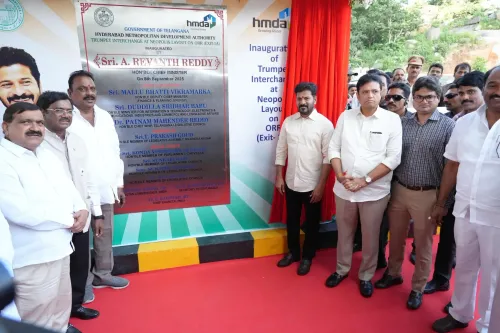
Foundation stones laid for Rs 1,511 crore worth of projects in Medchal-Malkajgiri , including a six-lane flyover at Rs 416 crore and road works at Rs 960 crore .
New Malkajgiri Municipal Corporation office to be built on 10 acres at a cost of Rs 98 crore in Uppal Bhagayat Phase III.
CURE-1 app (Common Unified Billing and Collection System) launched to unify civic billing across the 2,100 sq km ORR zone .
CM outlined 122 km of new metro corridors , including Nagole to the international airport via Rajendranagar and LB Nagar to Hayathnagar.
Nalgonda district communities face compounding harm from Musi pollution alongside existing fluoride contamination, cited as key drivers for urgent river clean-up.
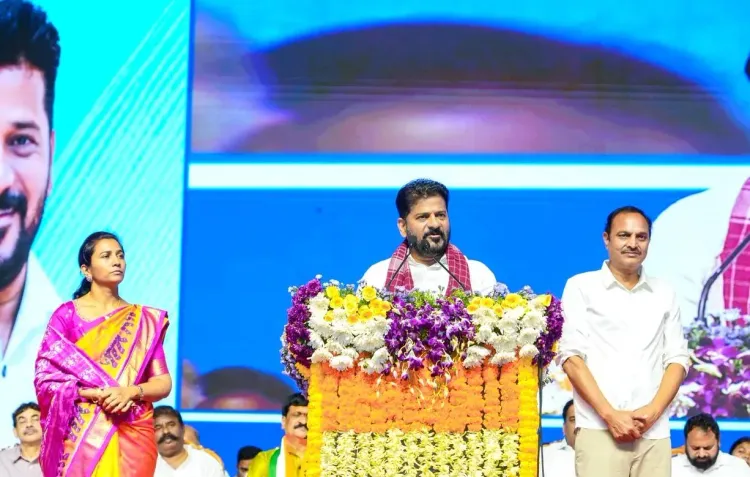
Chief Minister Revanth Reddy on Sunday, 7 June 2026, directed officials to commence Phase-2 of the Musi River rejuvenation project — covering the stretch from Nagole to Gourelly — within 100 days, while simultaneously laying foundation stones for development works worth Rs 1,511 crore in Medchal-Malkajgiri district as part of the state's Praja Palana – Pragati Pranalika (People's Governance – Progress Plan) programme.
Context
Revanth Reddy addressed a public gathering at Uppal Bhagayat in Phase III, where he laid the foundation stone for the new Malkajgiri Municipal Corporation office building — to be constructed on 10 acres at a cost of Rs 98 crore. Ministers @OffDSB and Damodar Cilarapu, along with elected representatives, attended the event. The Chief Minister noted that as a former Malkajgiri Lok Sabha MP, he had not been able to deliver the level of development the constituency deserved, and committed to fulfilling that responsibility now as Chief Minister.
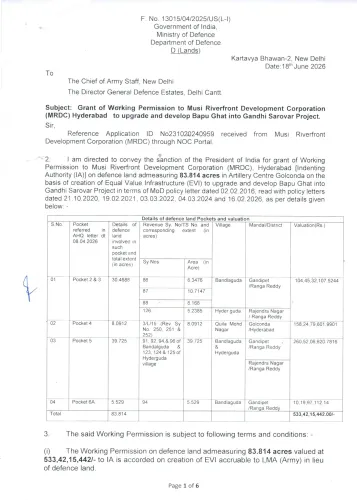
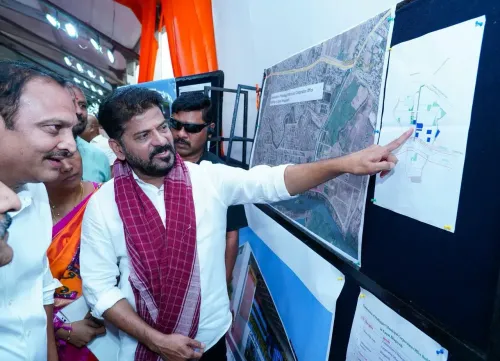
On the Musi River, he clarified the sequencing: the first phase of works has already commenced from Gandipet to Gandhi Sarovar, and the next phase covering Nagole to Gourelly must begin within 100 days. He invoked comparisons with the Sabarmati Riverfront in Gujarat, the Yamuna Riverfront in Delhi, and the Ganga clean-up in Uttar Pradesh, asking why Hyderabad's 55-kilometre Musi stretch should be left behind.
Policy Backdrop
The Rs 1,511 crore package in Medchal-Malkajgiri includes: an alternative road network at the AOC Centre at Rs 960 crore; a six-lane flyover at TKR College Junction at Rs 416 crore; and a 100-bed Malkajgiri District Hospital at Rs 37.50 crore. The Chief Minister also launched the CURE-1 app — the Common Unified Billing and Collection System — designed to streamline civic billing and collections across the metropolitan region.
The event sits within the broader Telangana Vision 2047 framework, which designates the 2,100 sq km area inside the Outer Ring Road (ORR) as the CURE (Core Urban Regional Economy) zone. To ease administration of this zone — which houses 1.34 crore residents and multiple international companies — the government has decentralised governance into three corporations: Hyderabad, Cyberabad, and Malkajgiri. The police system has been similarly reorganised.
Malkajgiri previously straddled gram panchayats, municipalities, corporations, and the Greater Hyderabad Municipal Corporation (GHMC), creating four overlapping administrative layers that the Chief Minister said had blocked coordinated development for years.
Stakeholders and Impact
Communities along the Musi basin bear the direct burden of the river's degradation. The Chief Minister described residents in the catchment area as living in 'unbearable conditions' due to sewage, industrial effluents, and solid waste. Downstream, Nalgonda district — already grappling with a fluoride contamination crisis — faces compounding harm from Musi pollution. He assured that no poor family would be displaced without rehabilitation: 'We will not render any poor person homeless. Those who lose homes will be given homes. Their children will be given good education.'
On Hyderabad Metro expansion, the Chief Minister said the city needs 122 km of new metro lines in all directions and outlined specific corridors: Nagole to LB Nagar, via Owaisi Hospital and Rajendranagar to the international airport, and LB Nagar to Hayathnagar. He questioned why Union ministers representing Telangana were not supporting metro expansion, the Regional Ring Road, and Musi rejuvenation, and appealed for all-party cooperation on urban development.
What's Next
The 100-day clock for Musi Phase-2 work between Nagole and Gourelly is now the most immediate benchmark to watch. The formal operationalisation of the three new municipal corporations and the rollout of the CURE-1 app across civic bodies will be early tests of the administrative decentralisation plan. Any formal response from the Union government on metro expansion funding and approvals will determine whether the 122-km metro vision advances on schedule. The Chief Minister also indicated that a statue of the late Bandari Rajireddy — a local figure associated with the Uppal Elevated Corridor — would be installed at a prominent junction in the area.
Point of View
Metro expansion, and municipal decentralisation reflects a calculated effort to reframe Hyderabad's urban governance as a Congress-era achievement, directly countering BJP's riverfront and metro credentials in Gujarat, Delhi, and Uttar Pradesh. The 100-day deadline on Musi Phase-2 is a political commitment as much as an administrative one — a measurable marker ahead of the next electoral cycle. The CURE-1 app and the three-corporation decentralisation model signal an attempt to institutionalise reforms that survive beyond individual political tenures. The pointed question to Union ministers about metro funding cooperation introduces a Centre-state friction narrative that could sharpen as project timelines approach.
NationPress
22 Oct 2026
Frequently Asked Questions
What is Musi River Phase-2 rejuvenation in Hyderabad?
Musi River Phase-2 rejuvenation covers the stretch from Nagole to Gourelly . CM Revanth Reddy has directed officials to start work on this corridor within 100 days , following Phase-1 works already underway from Gandipet to Gandhi Sarovar.
What projects were launched in Medchal-Malkajgiri on 7 June 2026?
Foundation stones were laid for projects worth Rs 1,511 crore , including a six-lane flyover at TKR College Junction ( Rs 416 crore ), alternative roads at AOC Centre ( Rs 960 crore ), a 100-bed district hospital ( Rs 37.50 crore ), and the Malkajgiri Municipal Corporation office ( Rs 98 crore ).
What is the CURE-1 app launched by Telangana?
The CURE-1 app stands for Common Unified Billing and Collection System. It was launched by CM Revanth Reddy to streamline municipal billing and collections across the Hyderabad metropolitan region as part of the Praja Palana – Pragati Pranalika programme.
What are the new Hyderabad Metro expansion corridors proposed?
CM Revanth Reddy outlined 122 km of new metro lines, including a corridor from Nagole to the international airport via Owaisi Hospital and Rajendranagar, and an extension from LB Nagar to Hayathnagar .
How does Musi pollution affect Nalgonda district?
Untreated sewage, industrial effluents, and solid waste discharged into the Musi River flow downstream into Nalgonda district , compounding an existing fluoride contamination crisis and severely affecting residents' health and living conditions.