CM Revanth Orders Indiramma Indlu Flats Near City Settlements
Synopsis
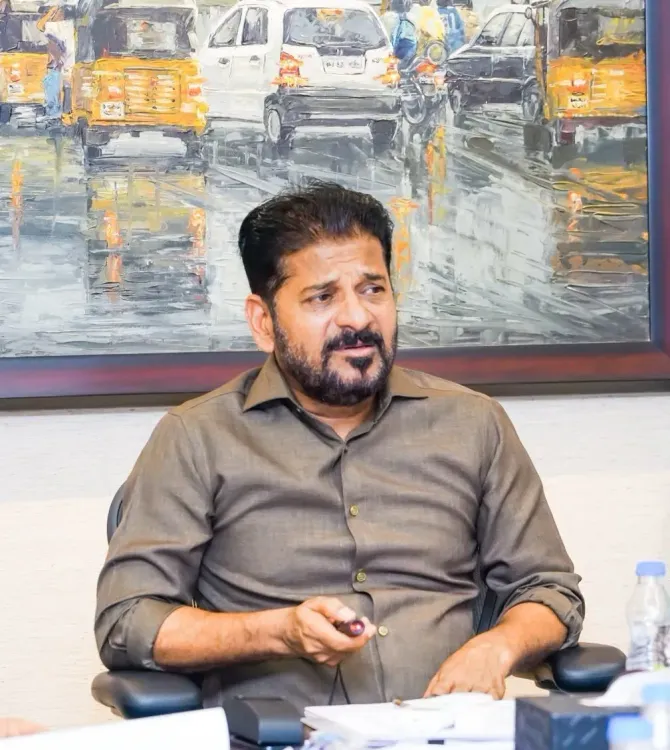
Chief Minister Revanth Anumula on 24 July 2026 ordered that Indiramma Indlu flats in Hyderabad's CURE zone be built within existing settlements, directing officials to identify unused government land across 17 constituencies for a first-phase target of 7,680 units with a per-flat subsidy of Rs 5 lakh.
Key Takeaways
CM Revanth Anumula directed that all Indiramma Indlu units in the CURE zone must be located within existing residential settlements, not on the city's outskirts.
Officials from Police, Revenue, and Transport departments have been asked to surrender unused plots inside the Outer Ring Road for housing, with alternative land to be provided to those departments.
Each flat will measure approximately 528 sq ft (carpet area 400 sq ft ), costing around Rs 11 lakh to build, with a government subsidy of Rs 5 lakh per unit; land cost is fully borne by the state.
The first phase targets 7,680 flats across 17 constituencies including Rajendranagar, Jubilee Hills, Kukatpally, Malkajgiri, and Secunderabad Cantonment, among others.
The CM warned that housing distant from job centres risks low occupancy and livelihood loss for beneficiaries.
Ministers Ponguleti Srinivas Reddy and Ponnam Prabhakar participated in the review meeting alongside senior officials.
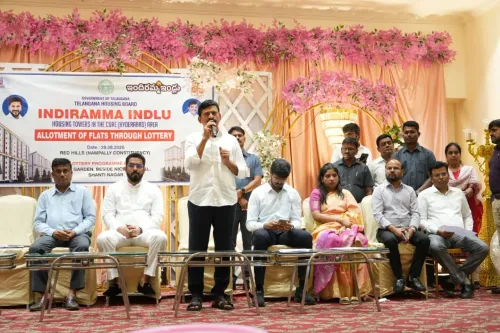
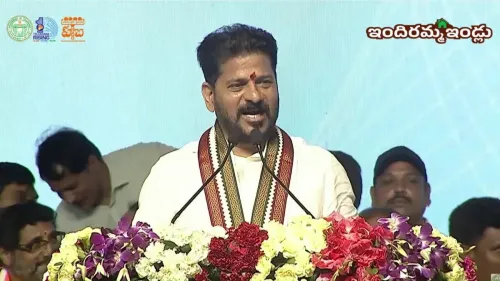
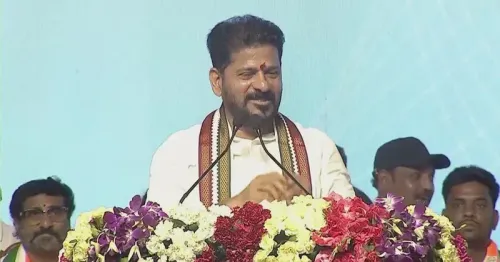
The Chief Minister's Office of Telangana announced on Friday, 24 July 2026 that Chief Minister Revanth Anumula has directed officials to ensure Indiramma Indlu housing units within the Core Urban Area (CURE) zone of Hyderabad are located within existing residential settlements — not on the city's periphery.
Context
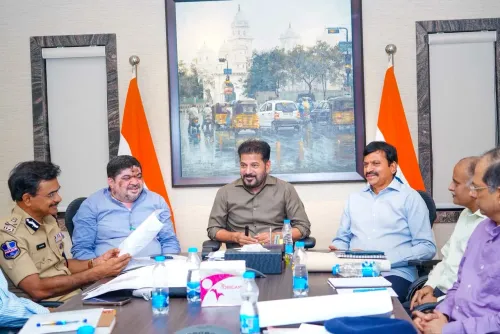
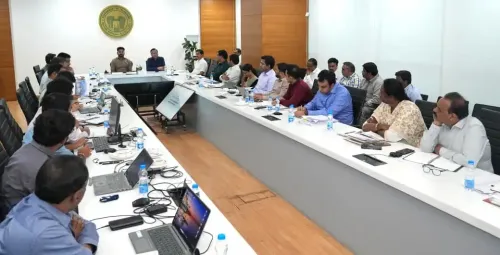
CM Revanth Anumula chaired a review meeting on Indiramma Indlu construction in the CURE area alongside ministers Ponguleti Srinivas Reddy and Ponnam Prabhakar, as well as senior officials from multiple departments. Officials briefed the Chief Minister on plots already identified across several constituencies. The Chief Minister instructed that the process of identifying unused government land in these constituencies be accelerated.
The CURE zone covers the core urban area of Hyderabad falling inside the Outer Ring Road. Officials were asked to identify idle land belonging to the Police, Revenue, and Transport departments within this belt and to allocate alternative plots to those departments elsewhere so the vacated land can be used for housing.
Policy Backdrop
The Telangana Congress government, which came to power in December 2023, had pledged affordable urban housing as part of its election manifesto, emphasising in-situ development over relocation to distant sites. The previous BRS administration had run a large-scale 2BHK housing programme from 2015 onward for the urban and rural poor, a model the current government is now reshaping under the Indiramma Indlu brand.
State governments across India have increasingly moved away from peripheral relocation housing after earlier schemes saw low occupancy rates because beneficiaries were cut off from their livelihoods. CM Revanth explicitly cited this risk, stating that housing allotted far from settlements would create difficulties in accessing employment and could result in units lying vacant, leaving the urban poor without a source of income.
Scheme Details and Scale
Under the announced plan, each flat will have a built-up area of approximately 528 square feet with a carpet area of 400 square feet. The construction cost per unit is approximately Rs 11 lakh, of which the government will provide a subsidy of Rs 5 lakh; the remaining Rs 6 lakh is to be borne by the beneficiary. The cost of land will be met entirely by the government.
In the first phase, the government is planning to build 7,680 flats across 17 constituencies. The constituencies identified are Rajendranagar, Maheshwaram, Serilingampally, Ibrahimpatnam, Malkajgiri, Nampally, Khairatabad, Jubilee Hills, Karwan, Bahadurpura, Amberpet, Kukatpally, Medchal, Quthbullapur, Sanathnagar, Secunderabad Cantonment, and Malakpet.
What's Next
Officials have been directed to fast-track the identification of unused government plots within these 17 constituencies and to work out alternative land arrangements for the departments currently holding those sites. Tendering for the initial 7,680 flats and finalisation of beneficiary selection criteria are the immediate milestones to watch. Subsequent phases of the programme — covering additional constituencies beyond the first-stage list — are yet to be announced.
The government's insistence on keeping units within established residential zones signals a deliberate shift in urban housing philosophy: proximity to jobs and services is now treated as a prerequisite, not an afterthought, in social housing delivery for Hyderabad's urban poor.
Point of View
Which faced criticism for relocating beneficiaries far from their livelihoods. By repurposing idle departmental land, the administration sidesteps the politically fraught task of acquiring fresh urban plots while signalling fiscal discipline. The explicit framing around job proximity and occupancy risk also pre-empts the standard critique of social housing schemes — that they look impressive on paper but sit empty — giving the Congress government a defensible narrative ahead of future elections in these 17 urban constituencies.
NationPress
23 Oct 2026
Frequently Asked Questions
What is the Indiramma Indlu scheme in Hyderabad?
Indiramma Indlu is a Telangana government housing initiative that provides subsidised flats to low-income urban families. In the CURE zone of Hyderabad, each flat is approximately 528 sq ft with a government subsidy of Rs 5 lakh per unit and the land cost fully covered by the state.
How many flats will be built under Indiramma Indlu in the first phase?
The government plans to build 7,680 flats in the first phase, spread across 17 constituencies inside Hyderabad's Core Urban Area (CURE) zone within the Outer Ring Road.
Which constituencies are included in the Indiramma Indlu first phase in Hyderabad?
The 17 constituencies are Rajendranagar, Maheshwaram, Serilingampally, Ibrahimpatnam, Malkajgiri, Nampally, Khairatabad, Jubilee Hills, Karwan, Bahadurpura, Amberpet, Kukatpally, Medchal, Quthbullapur, Sanathnagar, Secunderabad Cantonment, and Malakpet.
How much does the government subsidise each Indiramma Indlu flat?
The government provides a subsidy of Rs 5 lakh per flat. The total construction cost is approximately Rs 11 lakh, with the beneficiary paying the remaining Rs 6 lakh. The cost of land is entirely borne by the government.
Why did CM Revanth insist on building Indiramma Indlu flats within settlements?
CM Revanth Anumula stated that housing located far from residential areas would hamper access to employment and could result in units lying unused, causing the urban poor to lose their livelihoods. Keeping units within existing settlements ensures beneficiaries remain close to job opportunities.