CM Revanth Reddy breaks ground for Veda Pathashala at Yadadri

Synopsis
Telangana Chief Minister A. Revanth Reddy on 25 May 2026 launched construction of a Veda Pathashala at the Yadagirigutta Lakshmi Narasimha Swamy temple in Yadadri, adding a traditional Vedic education institution to the state's premier pilgrimage complex amid chanting of Vedic hymns.
Key Takeaways
Telangana Chief Minister A.
Revanth Reddy launched construction of a Veda Pathashala at Yadagirigutta on 25 May 2026 .
The groundbreaking was held at the Lakshmi Narasimha Swamy temple complex in Yadadri Bhuvanagiri district , one of Telangana's most visited pilgrimage sites.
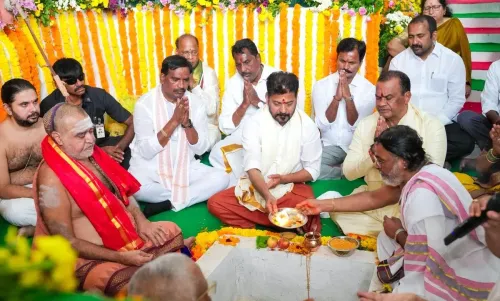
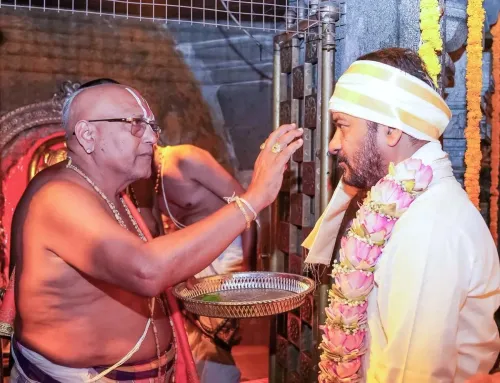
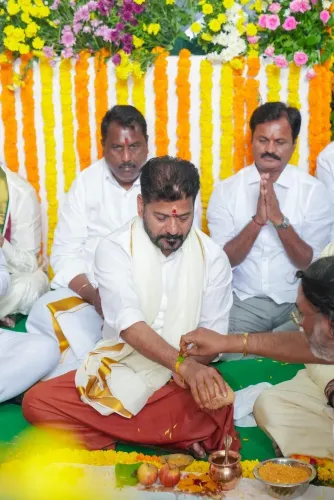
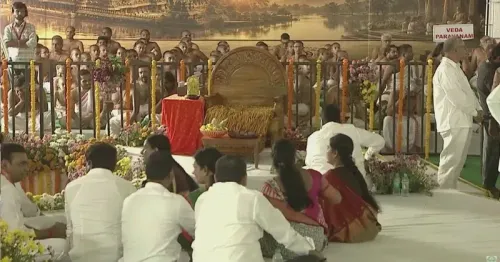
The ceremony was conducted amid Vedic chanting and traditional religious rituals, as described by the Chief Minister in his post.
A Veda Pathashala is a residential school focused on Vedic chanting, Sanskrit studies , and ritual training for future temple priests and scholars.
The Yadadri temple complex has been under development since around 2015–2016 ; this Pathashala is a new institutional addition by the current Congress government.
Construction timelines, student intake, and state budget allocations for the institution are yet to be officially announced.
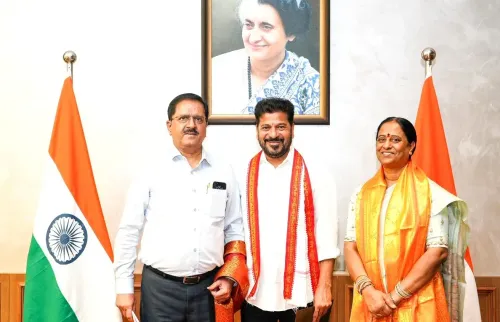
Telangana Chief Minister A. Revanth Reddy on Sunday, 25 May 2026, launched the construction of a Veda Pathashala at the sacred Yadagirigutta Lakshmi Narasimha Swamy temple complex in Yadadri, marking a new institutional addition to one of Telangana's most prominent pilgrimage sites. The groundbreaking ceremony was conducted amid Vedic chanting and religious rituals, the Chief Minister posted on X.
In his post, the Chief Minister wrote — 'నరసింహ స్వామి ఆశీస్సులతో… వేద మంత్రోశ్చారణల మధ్య… వేద పాఠశాల నిర్మాణానికి శ్రీకారం' — which translates to: 'With the blessings of Narasimha Swamy… amidst the chanting of Vedic hymns… the commencement of construction of a Veda Pathashala.'
Context
The Yadagirigutta Lakshmi Narasimha Swamy temple in Yadadri Bhuvanagiri district is one of the most revered Vaishnava shrines in Telangana, drawing lakhs of devotees annually. The temple complex underwent a sweeping redevelopment drive that began around 2015–2016, transforming it into a large-scale pilgrimage destination with modern facilities. The announcement of a Veda Pathashala — a traditional residential school dedicated to Vedic chanting, Sanskrit studies, and associated ritual learning — adds an educational and cultural dimension to the existing religious infrastructure.
Policy Backdrop
Since Telangana's formation in 2014, successive state governments have backed temple infrastructure projects that incorporate traditional learning components. Veda Pathashalas attached to major temple complexes serve a dual function: preserving hereditary ritual knowledge and training the next generation of priests and scholars in an unbroken oral tradition. The current Congress administration under Chief Minister Revanth Reddy, which assumed office in December 2023, has continued select heritage-linked development works at established religious sites while introducing new institutional elements such as this pathashala.
State support for Vedic education also intersects with broader efforts to promote cultural tourism in Telangana, where temple towns like Yadadri serve as anchors for regional pilgrimage circuits. A functioning Veda Pathashala on the premises would reinforce the site's identity as a living centre of religious practice, not merely a tourist destination.
Stakeholders and Impact
The primary beneficiaries of the Veda Pathashala will be students of Vedic learning — typically young boys from priestly families — who pursue a residential curriculum covering chanting, Sanskrit grammar, and ritual procedure. Devotees visiting the Narasimha Swamy temple are also stakeholders, as a resident body of trained scholars elevates the quality and authenticity of temple rituals. Local communities around Yadagirigutta may see ancillary economic activity tied to the institution's establishment and operation.
The move is also symbolically significant for the Telangana Pradesh Congress Committee, which has sought to demonstrate continuity with the state's cultural and religious heritage since coming to power. Public ceremonies at high-profile shrines such as Yadadri carry considerable visibility in a state where temple politics and voter sentiment are closely intertwined.
What's Next
Key details — including the construction timeline, the Pathashala's student intake capacity, curriculum approvals, and any dedicated budget allocation — are yet to be officially announced. Observers will watch whether the Telangana state budget in subsequent assembly sessions includes a specific line item for Vedic institutions linked to the Yadadri temple endowment. The pace of construction and the appointment of a governing body for the Pathashala will be early indicators of the project's momentum.
Point of View
Visible ceremonial participation at major shrines serves both governance and electoral optics in a state where religious identity remains a potent mobiliser. Whether the project translates into a sustained institutional commitment will depend on budget follow-through and administrative oversight in coming assembly sessions.
NationPress
8 Oct 2026
Frequently Asked Questions
What is the Veda Pathashala being built at Yadadri?
A Veda Pathashala is a traditional residential school that trains students in Vedic chanting, Sanskrit, and ritual practice. The one being built at Yadagirigutta will be attached to the Lakshmi Narasimha Swamy temple complex in Yadadri, Telangana.
Who launched the Veda Pathashala construction at Yadadri?
Telangana Chief Minister A. Revanth Reddy launched the construction on 25 May 2026, conducting the groundbreaking ceremony amid Vedic chanting at the Yadagirigutta temple.
Where is the Yadagirigutta Lakshmi Narasimha Swamy temple located?
The temple is located in Yadagirigutta, Yadadri Bhuvanagiri district, Telangana, approximately 60 kilometres from Hyderabad. It is one of the most prominent Vaishnava pilgrimage centres in the state.
What is the history of development at the Yadadri temple complex?
A major renovation and redevelopment of the Yadagirigutta temple complex began around 2015–2016 under the previous BRS government, transforming it into a large-scale pilgrimage destination. The current Congress government has continued heritage-linked works and is now adding the Veda Pathashala.
What will be the impact of the Veda Pathashala at Yadadri?
The institution will primarily benefit students of Vedic learning from priestly families, help preserve oral Vedic traditions, and enhance the quality of temple rituals at Yadadri. It may also boost cultural tourism and bring ancillary economic activity to the surrounding area.