CM Rio marks Indigenous Peoples Day, honours Naga heritage
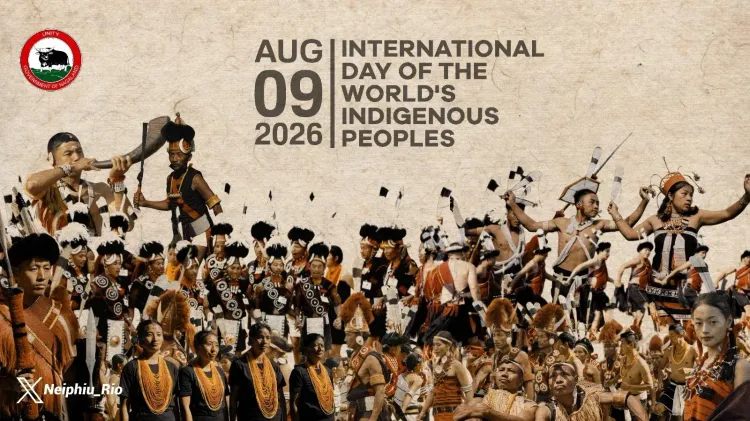
Synopsis
On International Day of the World's Indigenous Peoples, Nagaland Chief Minister Neiphiu Rio called for preserving indigenous knowledge and honouring tribal elders, underscoring Nagaland's constitutional protections for its 16 Naga tribes under Article 371A.
Key Takeaways
Nagaland Chief Minister Neiphiu Rio posted a message on 9 August 2026 marking International Day of the World's Indigenous Peoples .
Rio called for preserving indigenous knowledge, strengthening communities, and celebrating cultures that shape the nation.
Nagaland is home to 16 major indigenous Naga tribes whose customary laws and land rights are protected under Article 371A of the Constitution.
The UN has observed this day annually since 1994 ; India supported the UN Declaration on the Rights of Indigenous Peoples in 2007 .
Rio's specific reference to 'elders and knowledge keepers' highlights the challenge of preserving oral traditions and customary governance systems across the Northeast.
On a day the world pauses to acknowledge the first peoples of the earth, Nagaland Chief Minister Neiphiu Rio used International Day of the World's Indigenous Peoples — observed every 9 August — to call for the preservation of indigenous knowledge and the strengthening of tribal communities across the nation.
Rio's message called on citizens to 'recognise the cultural heritage, traditions, and wisdom of indigenous elders and knowledge keepers' and to 'celebrate the cultures that shape our nation.' The appeal is not merely ceremonial for a state like Nagaland — it lands with constitutional weight.
Why Article 371A makes Nagaland's voice distinct
Nagaland is home to 16 major indigenous Naga tribes whose customary laws and land rights carry explicit protection under Article 371A of the Indian Constitution — one of the most robust tribal safeguard provisions in the country. When the Chief Minister of this state speaks about preserving indigenous wisdom, he speaks from a jurisdiction where that wisdom is, at least in part, already enshrined in law. That distinction separates Nagaland's voice from a routine government statement.The UN framework behind the day
The United Nations has observed International Day of the World's Indigenous Peoples annually since 1994, following a UN General Assembly resolution. India supported the landmark UN Declaration on the Rights of Indigenous Peoples when it was adopted in 2007, aligning the country with a global framework that emphasises cultural survival, self-determination, and the protection of traditional knowledge systems. Northeastern states with large tribal populations have consistently used this day to reaffirm that alignment at the state level.Elders, knowledge keepers, and what preservation actually means
Rio's specific mention of 'elders and knowledge keepers' points to a real and urgent challenge: the generational transfer of oral traditions, ecological knowledge, medicinal practices, and customary governance systems that exist outside written archives. Across India's Northeast, tribal communities have long served as custodians of biodiversity and living cultural systems that formal institutions are only beginning to document. The Ministry of Tribal Affairs has flagged indigenous knowledge documentation as a priority area — though on-ground programme specifics for 2026 are yet to be confirmed. For the Naga people and tribal communities watching from across the Northeast, the message from their Chief Minister is a public reaffirmation: their heritage is not a relic to be archived — it is a living foundation the nation is still being built on.Point of View
While ceremonial in form, carries political signal: as leader of a state with constitutionally entrenched tribal protections, his public reaffirmation of indigenous knowledge systems reinforces Nagaland's long-standing assertion that tribal customary rights are non-negotiable. It also fits a broader pattern among Northeast Chief Ministers of using UN observance days to stake a cultural-political position ahead of any central policy moves on tribal welfare. The emphasis on 'knowledge keepers' — not just 'culture' in the abstract — suggests an awareness that the real battle is generational transmission, not just legal recognition. Watch whether this translates into state-level documentation or education programmes in the months ahead.
NationPress
9 Aug 2026
Frequently Asked Questions
When is International Day of the World's Indigenous Peoples?
It is observed every year on 9 August , as designated by the United Nations General Assembly since 1994.
What did Nagaland CM Neiphiu Rio say on Indigenous Peoples Day 2026?
Neiphiu Rio called for recognising the cultural heritage, traditions, and wisdom of indigenous elders and knowledge keepers, and urged communities to preserve indigenous knowledge and celebrate the cultures that shape the nation.
What is Article 371A and why does it matter for Nagaland?
Article 371A of the Indian Constitution provides special protections for Nagaland , including safeguards for the customary law, land rights, and practices of its indigenous Naga tribes — one of the strongest tribal protection clauses in Indian law.
How many indigenous tribes are there in Nagaland?
Nagaland recognises 16 major indigenous Naga tribes , each with distinct customs, languages, and governance traditions.
Did India support the UN Declaration on the Rights of Indigenous Peoples?
Yes. India supported the UN Declaration on the Rights of Indigenous Peoples when it was adopted by the UN General Assembly in 2007 .