CM Rio Seeks Airport, Rail & Waterway Links for Nagaland

Synopsis
Nagaland CM Neiphiu Rio has publicly demanded short-strip airports in four districts, extension of the Dimapur-Zubza rail line, approval of the Dimapur-Tizit project, and inland waterway development — underscoring that Kohima remains India's only state capital without an airport.
Key Takeaways
Kohima is the only state capital in India without an airport, forcing residents to travel 70 km to Dimapur for air access.
CM Neiphiu Rio has sought short landing strips across 4 districts as a cost-effective air connectivity solution.
Extension of the Dimapur-Zubza rail line is sought to bring rail closer to the state capital.
Expedited approval of the Dimapur-Tizit (Dmp-Tizit) rail project has been demanded to connect eastern Nagaland districts.
Development of inland waterways has been included in the connectivity push to support trade and logistics.
The demands align with India's Act East Policy (2014) but highlight persistent execution gaps in hill-state infrastructure.
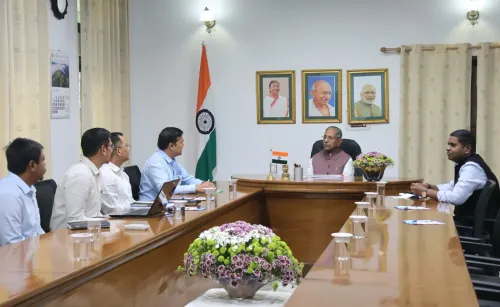
Nagaland Chief Minister Neiphiu Rio on Friday, June 12, 2026, publicly called for urgent central support to address the state's chronic infrastructure deficits, highlighting that Kohima remains the only state capital in India without an airport and pressing for rail and waterway projects across multiple districts.
Context
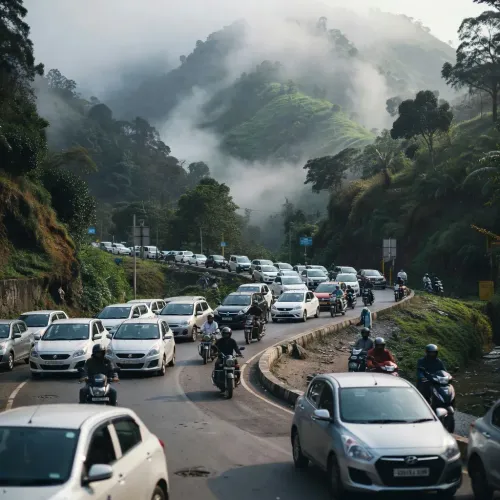
Kohima, the capital of Nagaland, has long stood apart as the sole Indian state capital unserved by its own airport. Residents and officials travelling by air must commute roughly 70 km to Dimapur, the state's largest city and its only aviation and rail hub, a journey made arduous by hilly terrain and limited road quality. CM Rio's post on X framed this gap as a foundational development constraint, urging the Centre to act on multiple connectivity fronts simultaneously.
The Chief Minister specifically sought air connectivity through 'short landing strips in 4 districts,' extension of the Dimapur-Zubza rail line, expedited approval of the Dimapur-Tizit (Dmp-Tizit) rail project, and development of inland waterways in the state. The appeal covers the full spectrum of transport modes — air, rail, and water — reflecting the scale of the connectivity challenge in a landlocked hill state.
Policy Backdrop
The demands sit within the broader architecture of India's Act East Policy, launched in 2014, which designated physical connectivity upgrades across Northeastern states as a strategic priority. Indian Railways sanctioned several Northeast hill projects in the years following, with an explicit emphasis on last-mile links to state capitals and remote districts.
Despite this policy push, persistent gaps have remained in capitals and interior districts of states like Nagaland, where difficult terrain, high construction costs, and complex land-acquisition processes have slowed execution. CM Rio's call for the Dimapur-Zubza rail extension is aimed at bringing the rail network meaningfully closer to Kohima from the west, while the Dmp-Tizit project targets eastern Nagaland districts that remain among the most isolated in the country.
Stakeholders and Impact
The most immediate beneficiaries of improved air and rail access would be Nagaland's residents — particularly those in districts currently reachable only by road — who face elevated costs and travel times for goods, healthcare, and commerce. Short landing strips in 4 districts could open direct air links to regional hubs without requiring full-scale airport construction, a model that has been explored in other hill states.
Northeast traders and businesses stand to gain significantly from inland waterway development, which could reduce logistics costs for bulk cargo. Security and administrative considerations also weigh in: improved connectivity in border-adjacent districts of eastern Nagaland carries strategic significance for the central government beyond purely economic calculations.
What's Next
The immediate watch points are the Union Railway Budget and decisions by the Ministry of Civil Aviation on the short-strip proposals. Formal approval of the Dmp-Tizit rail project — whose current status as of mid-2026 remains pending confirmation — would be a significant signal of central commitment. CM Rio's public articulation of these demands through social media adds political visibility to requests that have circulated through official channels for years.
If the Centre responds with concrete allocations or approvals in the near term, it would mark a meaningful shift in the pace of infrastructure delivery for one of India's most connectivity-deprived state capitals — and set a precedent for how the Northeast's remaining gaps are addressed under the Act East Policy framework.
Point of View
Rail, waterway) in a single post, he frames Nagaland's isolation not as a local administrative shortfall but as an unmet national obligation under the Act East Policy. The timing, ahead of likely budget and ministry planning cycles, suggests a deliberate effort to lock in political attention before allocations are finalised. Kohima's status as the sole airportless state capital is a potent symbol that is difficult for the Centre to dismiss without optics cost. The inland waterways ask is the most ambitious element and, if pursued, would signal a qualitative shift in how Nagaland integrates with the broader Northeast economic corridor.
NationPress
26 Oct 2026
Frequently Asked Questions
Why does Kohima not have an airport?
Kohima, the capital of Nagaland, lacks an airport primarily due to its hilly terrain, which makes standard runway construction technically challenging and expensive. Residents rely on the airport in Dimapur, roughly 70 km away.
What is the Dimapur-Tizit rail project?
The Dimapur-Tizit rail project is a proposed railway line intended to connect Dimapur, Nagaland's main transport hub, with Tizit and other eastern Nagaland districts that currently have no rail access.
What is the Dimapur-Zubza rail line?
The Dimapur-Zubza rail line is an extension project designed to push the existing rail network from Dimapur westward toward Kohima, bringing the state capital closer to rail connectivity.
What are short landing strips and how would they help Nagaland?
Short landing strips are smaller airstrips designed for turboprop or light aircraft, requiring less flat land than full airports. For hilly states like Nagaland, they offer a practical way to provide air access to remote districts without the scale of a conventional airport project.
What is India's Act East Policy and how does it relate to Nagaland?
India's Act East Policy, launched in 2014, prioritises physical and economic connectivity with Southeast Asia through the Northeastern states. For Nagaland, it has meant central funding and sanction for rail and road projects, though execution gaps in remote districts and state capitals like Kohima persist.