CM Rio flags 14 flyovers plan to ease Nagaland urban crunch
Synopsis
Chief Minister Neiphiu Rio has proposed 14 flyovers and elevated corridors to address Nagaland's rapid urbanisation crisis, with Kohima and Dimapur-Chümoukedima together holding nearly 60 per cent of the state's urban population and facing acute traffic congestion and infrastructure strain.
Key Takeaways
Nagaland is recording one of the fastest urbanisation rates in India, straining road and civic infrastructure.
The Kohima and Dimapur-Chümoukedima urban agglomeration accounts for nearly 60 per cent of the state's urban population.
Chief Minister Neiphiu Rio has proposed 14 flyovers and elevated corridors to relieve traffic congestion.
Hill terrain in Kohima and the dense commercial activity in Dimapur make conventional road widening difficult, making elevated solutions a practical option.
Central schemes such as AMRUT and the Ministry of Housing and Urban Affairs are the likely funding pathways for the proposal.
Progress on detailed project reports and state budget allocations will determine whether the proposal moves from announcement to implementation.
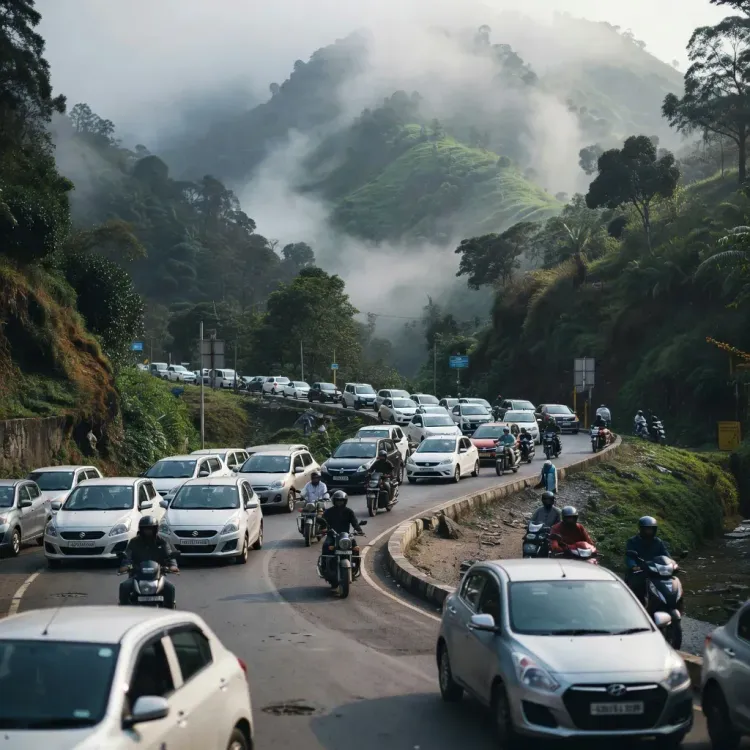
Nagaland Chief Minister Neiphiu Rio on Friday, June 12, 2026, highlighted the state's rapid urbanisation challenge and outlined a proposal for 14 flyovers and elevated corridors to address severe traffic congestion and infrastructure pressure in the state's two dominant urban centres.
Context
Nagaland is witnessing one of the fastest urbanisation rates in the country, with the Kohima and Dimapur-Chümoukedima urban agglomeration together accounting for nearly 60 per cent of the state's urban population. Chief Minister Rio noted that this rapid growth has translated directly into severe traffic congestion and mounting pressure on existing infrastructure. The post, shared on his official X account, framed the flyover proposal as a response to these compounding urban pressures.
The two urban clusters represent starkly different geographies: Kohima, the state capital, sits on steep hill terrain with a constrained road network, while Dimapur, the state's largest commercial hub, and the adjacent town of Chümoukedima form a sprawling lowland agglomeration that serves as Nagaland's primary trade and transport gateway to the rest of the country.
Policy Backdrop
Northeastern Indian states have recorded above-national-average urbanisation rates driven by migration, educational access, and the growth of trade nodes. Hill capitals with limited valley land face acute pressure on arterial roads, a pattern seen across small hill states where urban growth remains spatially concentrated rather than distributed. Elevated infrastructure — flyovers and grade separators — has emerged as a preferred engineering solution in such terrain-constrained settings.
Central schemes such as AMRUT (Atal Mission for Rejuvenating and Urban Transformation) have provided funding channels for urban infrastructure in smaller cities. Any forward movement on the proposed 14 flyovers and elevated corridors in Nagaland would likely require a combination of state budget allocations and central government support routed through the Ministry of Housing and Urban Affairs.
Stakeholders and Impact
Daily commuters in Kohima and Dimapur bear the most immediate burden of the current congestion, with arterial roads often gridlocked during peak hours. Traders and logistics operators in Dimapur — the commercial spine of the state — face direct economic costs from slow freight movement. Residents of Chümoukedima, whose town has effectively merged with the Dimapur urban cluster, are equally affected by the infrastructure deficit.
If the proposed elevated corridors are sanctioned and built, the beneficiary pool extends to the roughly 60 per cent of Nagaland's urban population concentrated in these two agglomerations, with downstream gains for inter-city road connectivity and commercial activity.
What's Next
The immediate next steps will centre on whether detailed project reports for the proposed flyovers have been or will be submitted to the Ministry of Housing and Urban Affairs, and whether the state budget carries specific allocations for the initiative. Any central funding announcement tied to AMRUT or a dedicated northeastern urban infrastructure window would be a significant signal of forward momentum.
As Nagaland's urban population continues to concentrate in Kohima and the Dimapur-Chümoukedima belt, the gap between infrastructure supply and urban demand is likely to widen unless capital investment is front-loaded — making the political and financial follow-through on Chief Minister Rio's proposal a key indicator of the state's urban governance trajectory.
Point of View
High-pressure urban system reflects a more metropolitan lens on northeastern development, aligning with central government narratives around AMRUT-led urban renewal. However, the gap between a stated proposal and a funded, tendered project is wide in hill-state infrastructure, and the political value of the announcement will be tested by the speed of follow-through. The post also implicitly positions the NDPP-led government as proactive on quality-of-life issues ahead of the urban electorate's growing expectations.
NationPress
27 Oct 2026
Frequently Asked Questions
Why is Nagaland facing traffic congestion problems?
Nagaland is experiencing one of the fastest urbanisation rates in India, with nearly 60 per cent of its urban population concentrated in the Kohima and Dimapur-Chümoukedima agglomeration. The hilly terrain of Kohima and the dense commercial activity in Dimapur have made road expansion difficult, leading to severe congestion on existing arterial routes.
What has CM Neiphiu Rio proposed to fix Nagaland's urban traffic?
Chief Minister Neiphiu Rio has proposed the construction of 14 flyovers and elevated corridors across Nagaland's key urban centres to ease traffic congestion and relieve infrastructure pressure caused by rapid urban growth.
What is the Dimapur-Chümoukedima urban agglomeration?
Dimapur is Nagaland's largest commercial city and the state's primary transport gateway, while Chümoukedima is an adjacent town that has effectively merged with it to form a single urban agglomeration — together one of the two major urban clusters that dominate the state's urban population.
How will Nagaland fund the proposed flyovers?
The proposed flyovers would likely require a combination of state budget allocations and central government funding through schemes such as AMRUT (Atal Mission for Rejuvenating and Urban Transformation) routed via the Ministry of Housing and Urban Affairs. No specific funding announcement has been made yet.
How does Nagaland's urbanisation compare to other Indian states?
Northeastern Indian states, including Nagaland, have recorded above-national-average urbanisation rates driven by migration, education, and trade growth. However, urban expansion in Nagaland is spatially concentrated in just two agglomerations, creating sharper infrastructure pressure than in states where growth is more evenly distributed.