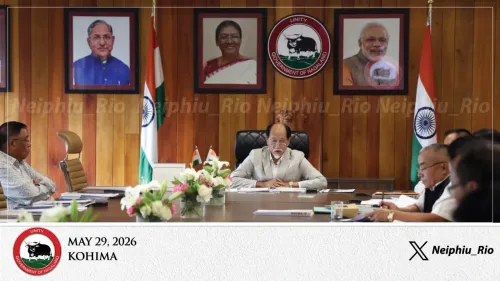
CM Rio Reviews Monsoon Crisis as Floods Hit Nagaland

Synopsis
Nagaland Chief Minister Neiphiu Rio convened an emergency review with the State Disaster Management Authority on 21 July 2026 as incessant monsoon rains triggered landslides, flash floods, and waterlogging. Emergency teams are working to restore connectivity and deliver relief across the state.
Key Takeaways
CM Neiphiu Rio chaired a review meeting with the State Disaster Management Authority on 21 July 2026 .
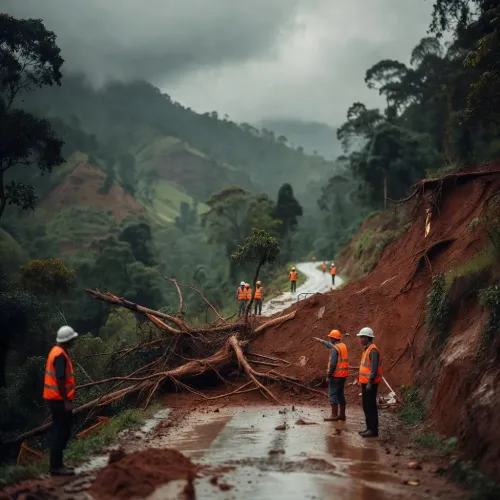
Incessant rainfall has triggered landslides, flash floods, and waterlogging across Nagaland .
Emergency response teams are deployed to deliver relief, restore road connectivity, and protect lives.
The response operates under the Disaster Management Act, 2005 framework, coordinated through the state's disaster authority.
Further central assistance, including possible NDRF deployment, may be sought depending on how the situation develops.
Nagaland Chief Minister Neiphiu Rio on Tuesday, 21 July 2026, convened an emergency review meeting with the State Disaster Management Authority as incessant monsoon rainfall continued to trigger landslides, flash floods, and waterlogging across the state.
Context
Posting on X, CM Rio stated that emergency response teams are 'working to ensure timely relief, restore connectivity, and safeguard lives' amid the deteriorating situation. The meeting signals the state government's activation of its disaster coordination machinery at the height of the monsoon season.
Nagaland's hilly terrain makes it acutely vulnerable to landslides and flash floods during the June–September monsoon window. Road connectivity, which is the lifeline for remote hill communities, is typically the first casualty when heavy rainfall strikes.
Policy Backdrop
The review meeting falls within the framework established by the Disaster Management Act, 2005, which mandates state governments to maintain active State Disaster Management Authorities and coordinate emergency responses through defined protocols. Nagaland has invoked this framework in previous monsoon seasons to mobilise relief for affected districts.
At the national level, the National Disaster Management Authority (NDMA) serves as the apex body overseeing state-level disaster responses. State governments may formally request central assistance, including deployment of National Disaster Response Force (NDRF) teams, when the scale of damage exceeds local capacity.
Stakeholders and Impact
Residents in Nagaland's hilly districts bear the most immediate risk, with landslides threatening homes and flash floods disrupting access to essential services. Severed road links can isolate communities for days, delaying the movement of food, medicine, and emergency personnel.
Emergency response teams deployed by the state are currently focused on three priorities: delivering timely relief to affected populations, restoring road and communication connectivity, and preventing further loss of life. The scale of any request for central reinforcement will depend on how the situation evolves in the coming days.
What's Next
The immediate focus will be on progress reports from emergency teams on the ground and whether CM Rio's government formally seeks NDRF deployment or additional central funds. Monsoon conditions in the Northeast typically persist through September, meaning sustained administrative vigilance will be required over the coming weeks.
The state's ability to restore road connectivity swiftly will be a key indicator of the effectiveness of its disaster management infrastructure — and a test of the coordination between Nagaland's state machinery and central agencies under the NDMA framework.
Point of View
Which remains unquantified. Within the broader pattern of Nagaland's annual monsoon vulnerability, the meeting is procedurally routine but politically important: it positions the state government as proactive ahead of any potential criticism over relief delays. The key question going forward is whether state capacity is sufficient or whether a formal request for central intervention will follow.
NationPress
21 Jul 2026
Frequently Asked Questions
Why did Nagaland CM Neiphiu Rio call an emergency meeting in July 2026?
CM Rio convened the meeting with the State Disaster Management Authority to review the impact of incessant monsoon rainfall that has been causing landslides, flash floods, and waterlogging across Nagaland.
What is the State Disaster Management Authority in Nagaland?
It is the state-level body established under the Disaster Management Act, 2005, responsible for coordinating emergency response, relief operations, and disaster preparedness in Nagaland.
Is Nagaland prone to floods and landslides?
Yes. Nagaland's hilly terrain and heavy monsoon rainfall make landslides and flash floods a recurring annual risk, particularly between June and September each year.
What are emergency teams doing in Nagaland during the floods?
According to CM Rio, teams are focused on delivering timely relief to affected residents, restoring road and communication connectivity, and safeguarding lives across the state.
Can Nagaland request central government help for flood relief?
Yes. Under the NDMA framework, state governments can formally request central assistance including NDRF deployment when local disaster response capacity is insufficient.