CM Rio Appeals for Safe Release of 6 Naga Hostages

Synopsis
Nagaland Chief Minister Neiphiu Rio on June 9, 2026, appealed publicly for the safe release of six Naga hostages, urging a reciprocal humanitarian gesture to build trust and advance the long-stalled Naga peace process.
Key Takeaways
CM Neiphiu Rio on June 9, 2026 publicly called for the safe release of six Naga hostages .
The appeal frames the release as a 'reciprocal and humanitarian' gesture, not a unilateral demand.
Rio explicitly linked the hostage release to advancing 'trust, understanding and dialogue' in the Naga peace process .
The Naga peace process has been ongoing since a 1997 ceasefire , with the landmark 2015 Framework Agreement yet to produce a final accord.
The identity of the parties holding the hostages and the circumstances of the abduction remain unverified.
Responses from armed groups and the Ministry of Home Affairs will be critical in determining next steps.
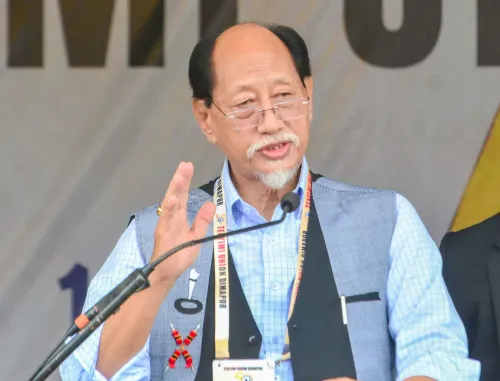
Nagaland Chief Minister Neiphiu Rio on Tuesday, June 9, 2026, publicly appealed for the safe and immediate release of six Naga hostages, urging that the gesture be carried out in a reciprocal and humanitarian manner so that the individuals can return to their families.
Context
CM Rio stated in his post that the release of the hostages should happen 'in a reciprocal and humanitarian manner,' expressing hope that such a step would 'help pave the way for trust, understanding and dialogue.' The appeal is directed at unnamed parties holding the six individuals, and calls for their safe return to loved ones.
The statement explicitly frames the humanitarian gesture as a confidence-building measure, linking the fate of the hostages to the broader goal of 'genuine peace, reconciliation and harmony' in the region.
Policy Backdrop
Nagaland has been at the centre of one of India's longest-running insurgencies, with formal peace efforts dating back to a 1997 ceasefire between the Government of India and various Naga underground factions. The 2015 Framework Agreement between the Centre and the National Socialist Council of Nagaland-Isak Muivah (NSCN-IM) set out broad principles for a political settlement but a final accord has remained elusive.
Earlier, the Shillong Accord of 1975 had attempted a political settlement with Naga underground organisations, underscoring how protracted and layered the peace process has been. Successive state and central governments have pursued dialogue alongside ceasefires to address the insurgency in Northeast India.
Stakeholders and Impact
The most immediate stakeholders are the six Naga hostages and their families, whose safe return is the central demand of CM Rio's appeal. Beyond them, the statement speaks to a wider constituency of Naga civilians who bear the human cost of unresolved political conflict.
Insurgent groups active in the region, as well as the Ministry of Home Affairs in New Delhi, are key actors whose responses will determine whether this appeal translates into any concrete movement. Such public appeals by elected leaders are a recurring feature of Northeast India's peace diplomacy, often intended to maintain pressure and momentum between formal rounds of negotiation.
What's Next
Observers will watch for any response from central security agencies or armed groups operating in and around Nagaland, and whether the appeal is followed by backchannel engagement under the Ministry of Home Affairs framework. A positive humanitarian gesture from the holding party could reopen space for scheduled rounds of formal peace talks.
The Chief Minister's willingness to make the appeal publicly signals that Kohima views transparency and civilian pressure as tools in the peace process — a posture that reflects the broader pattern of sustained, multi-track engagement that has defined the Naga peace process for decades.
Point of View
He implicitly acknowledges the transactional dynamics of insurgency negotiations without abandoning the language of reconciliation. The appeal fits a well-established Northeast India pattern where elected leaders use open statements to signal intent and test responses from groups that do not engage through formal channels. Whether it yields results depends less on Rio's words and more on whether backchannel interlocutors can translate the public appeal into a concrete exchange.
NationPress
23 Oct 2026
Frequently Asked Questions
Who are the six Naga hostages mentioned by CM Rio?
The specific identities and circumstances of the six Naga hostages referenced in CM Rio's June 9, 2026 post have not been officially confirmed. The Chief Minister appealed for their safe release in a reciprocal and humanitarian manner so they can return to their families.
What is the Naga peace process?
The Naga peace process is a decades-long effort to resolve the political conflict in Nagaland between the Government of India and various Naga underground factions. Key milestones include the 1997 ceasefire and the 2015 Framework Agreement with NSCN-IM , though a final settlement is yet to be reached.
What is NSCN-IM and its role in Nagaland?
The National Socialist Council of Nagaland-Isak Muivah (NSCN-IM) is the dominant Naga insurgent faction that signed a Framework Agreement with the Government of India in 2015 , setting out principles for resolving the Naga political issue. It remains a central party in ongoing peace negotiations.
Why did CM Neiphiu Rio make this appeal publicly?
CM Rio made the appeal publicly to maintain pressure and visibility around the Naga peace process. Public statements by elected leaders are a recognised tool in Northeast India's peace diplomacy, intended to signal intent to armed groups and keep civilian concerns at the forefront of negotiations.
What happens next after CM Rio's hostage appeal?
The critical next step is a response from the armed group or groups holding the six hostages, as well as any engagement by the Ministry of Home Affairs . A positive humanitarian gesture could create conditions for renewed formal peace talks between the Centre and Naga factions.