CM Manik Saha Backs Modi's Fast-Track Courts for Paper Leaks

Synopsis
Tripura Chief Minister Dr. Manik Saha has welcomed Prime Minister Narendra Modi's decision to establish fast-track courts for paper leak cases, framing it as a landmark step toward protecting the merit and future of India's millions of competitive exam aspirants.
Key Takeaways
Manik Saha , Chief Minister of Tripura , publicly endorsed PM Narendra Modi 's fast-track court initiative for paper leak cases on 23 July 2026 .
The fast-track courts are designed to deliver swift and strict justice in examination fraud cases affecting competitive exam aspirants across India .
Paper leak scandals have a long history in India, with past cases such as the Vyapam scam in Madhya Pradesh highlighting systemic vulnerabilities.
The initiative aligns with the National Education Policy 2020 's emphasis on merit and transparency in public recruitment and admissions.
Key details — including the number of court benches, their jurisdiction, and any accompanying legislation — are yet to be officially announced.
Millions of competitive exam aspirants stand to benefit if the courts deliver timely convictions that deter future malpractice.
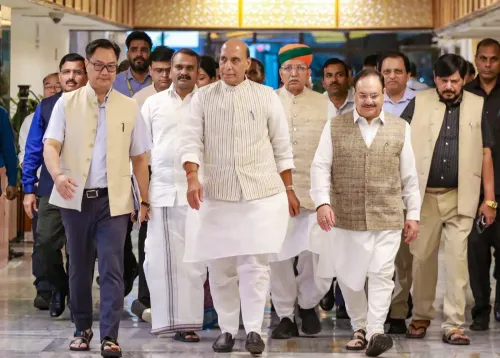
Tripura Chief Minister Dr. Manik Saha on Thursday, 23 July 2026, publicly backed Prime Minister Narendra Modi's decision to set up fast-track courts to adjudicate paper leak cases, calling it a 'transformative and reassuring step' that sends a strong message of accountability to those who undermine the aspirations of India's youth.
Context
In his post on X, Dr. Saha described the move as reflecting the government's 'unwavering commitment to the hard work, merit and future of India's young generation.' He added that the decision 'brings immense hope, fairness and transparency to millions of hardworking students across the nation.' The endorsement from a sitting chief minister underscores the political weight the ruling BJP is placing behind examination integrity as a governance priority.
Paper leak scandals have repeatedly disrupted competitive examinations across India, triggering widespread protests by students who invest years preparing for recruitment and admissions tests. The demand for swift judicial redress has grown louder with each successive incident, putting pressure on both state and central administrations to act decisively.
Policy Backdrop
The push for specialised judicial mechanisms in examination fraud cases is not entirely new. Following high-profile malpractice scandals — including the Vyapam case in Madhya Pradesh in the early 2010s — state governments periodically established special courts or task forces to expedite trials in education-related criminal cases. The current initiative at the central level represents a significant escalation in scope and intent.
The BJP-led administration has consistently linked examination reform to the National Education Policy 2020, which places emphasis on merit, transparency, and systemic accountability in public recruitment and admissions. Fast-track courts, by compressing trial timelines, are intended to deter future offenders through the credible threat of rapid conviction and punishment.
Stakeholders and Impact
The primary beneficiaries of the fast-track court mechanism are the millions of students who appear each year for central and state-level competitive examinations — from civil services and defence recruitment to medical and engineering entrance tests. For these aspirants, a paper leak does not merely mean a postponed exam; it can mean the loss of an entire year's preparation and, in some cases, a narrowing window of eligibility.
Dr. Saha's endorsement also carries regional significance. Tripura, a northeastern state with a large population of first-generation government job aspirants, has a direct stake in ensuring that central recruitment examinations are conducted with integrity. State-level political leaders backing the initiative signals broad intra-party consensus on the issue.
What's Next
Attention will now turn to the operationalisation of the fast-track courts — including the number of designated benches, their geographic spread, and the categories of examination fraud cases that will fall under their jurisdiction. Observers will also watch for any accompanying legislation in Parliament that codifies stricter penalties for paper leaks and related offences, which would give the courts a sharper statutory mandate. The government's ability to deliver visible convictions in a reasonable timeframe will determine whether the initiative translates political intent into lasting deterrence.
Point of View
The ruling dispensation is attempting to convert administrative action into a credible narrative of governance delivery. The move also places pressure on opposition-ruled states to match the centre's stated urgency on examination reform. Whether the courts deliver visible outcomes quickly enough to shape public perception remains the critical variable.
NationPress
22 Oct 2026
Frequently Asked Questions
What are fast-track courts for paper leak cases in India?
Fast-track courts for paper leak cases are specially designated judicial benches intended to expedite trials of individuals accused of leaking question papers for competitive examinations, ensuring quicker convictions and stronger deterrence than ordinary courts.
Why did PM Modi set up fast-track courts for paper leaks?
The decision follows years of recurring examination fraud scandals that disrupted millions of students' careers, creating public demand for swift and credible justice against those who compromise the integrity of competitive exams.
What did Tripura CM Manik Saha say about the fast-track courts?
Dr. Manik Saha called the move a 'transformative and reassuring step,' saying it reflects the government's commitment to the 'hard work, merit and future of India's youth' and brings 'hope, fairness and transparency' to students.
How do paper leaks affect students in India?
Paper leaks force exam cancellations and re-tests, costing aspirants months of preparation time, and in some cases push students beyond their age-eligibility window for government recruitment, effectively ending their chances for certain careers.
What is the history of paper leak cases in India?
India has seen several high-profile examination fraud cases over the decades, including the Vyapam scandal in Madhya Pradesh , which involved mass irregularities in state entrance and recruitment tests and led to prolonged legal proceedings.