Puri backs Modi's fast-track courts for paper leak cases

Synopsis
Union Petroleum Minister Hardeep Singh Puri has endorsed PM Modi's announcement to establish fast-track courts for paper leak cases, calling it a milestone for India's education system and a strong deterrent against examination fraud affecting millions of student aspirants.
Key Takeaways
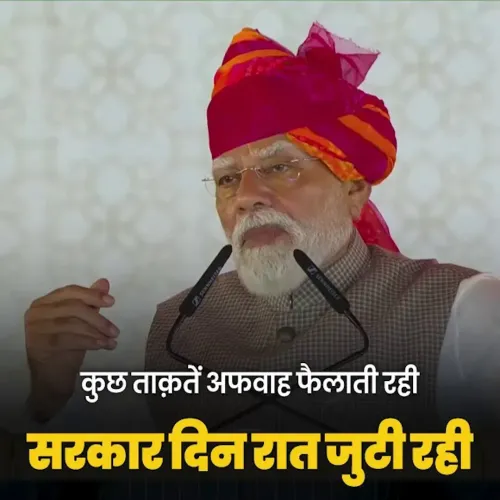
PM Narendra Modi announced the creation of fast-track courts specifically to handle examination paper leak cases.
Union Minister Hardeep Singh Puri publicly backed the move on July 25, 2026 , calling it 'a milestone for our education system.' The courts are intended to deliver 'swift and stringent punishment' and act as a deterrent against organised paper leak networks.
The announcement builds on the Public Examinations (Prevention of Unfair Means) Act, 2024 , which prescribes statutory penalties for examination malpractice.
Millions of students who appear in national and state competitive examinations stand to benefit from faster judicial resolution of leak-related cases.
Key operational details — jurisdiction, number of benches, and coordination with exam bodies — are yet to be formally outlined by the government.
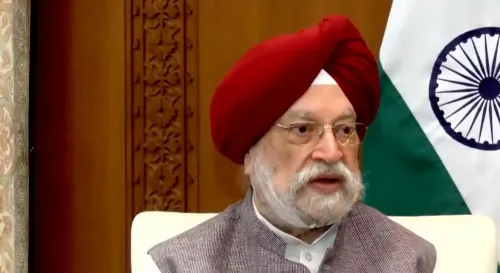
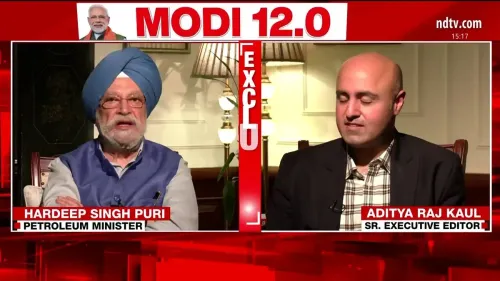
Union Petroleum Minister Hardeep Singh Puri on Friday, July 25, 2026, backed Prime Minister Narendra Modi's announcement to establish fast-track courts to deal with examination paper leak cases, calling it 'a milestone for our education system' that will deliver speedy justice to affected students.
Context
Puri, in his post on X, said the fast-track courts would 'ensure swift and stringent punishment for the culprits of paper leaks' and serve as 'a strong deterrent against such crimes.' He framed the move as a direct intervention to address a malaise that has repeatedly disrupted the aspirations of young exam aspirants across India.
The minister's endorsement comes in the wake of PM Modi's formal announcement — the specifics of which are expected to be detailed by the government — on setting up a dedicated judicial mechanism for examination fraud cases.
Policy Backdrop
India has grappled with recurring paper leak scandals in high-stakes competitive examinations, including national-level medical entrance tests and state-level recruitment drives. These incidents have drawn widespread public anger and eroded confidence in the examination ecosystem.
Parliament enacted the Public Examinations (Prevention of Unfair Means) Act, 2024, prescribing penalties for malpractices including paper leaks in national-level tests — a legislative step that laid the groundwork for stronger enforcement. The proposed fast-track courts would represent the judicial arm of this broader crackdown, complementing existing statutory penalties with time-bound legal proceedings.
Fast-track courts have previously been deployed in India for cases involving crimes against women and other matters of urgent public interest, establishing a precedent for specialised benches designed to cut through the backlog of the regular court system.
Stakeholders and Impact
The primary beneficiaries of the proposed mechanism are the millions of students who appear each year for competitive examinations — from engineering and medical entrance tests to Union Public Service Commission and state public service commission exams. Leaks not only invalidate their preparation but often force costly and time-consuming re-examinations.
For aspirants from smaller towns and economically weaker backgrounds, delays in examination cycles translate directly into delayed employment and financial hardship. Swift judicial resolution through fast-track courts could reduce the limbo period that follows a leak-related cancellation.
Examination regulatory bodies, coaching institutes, and state governments — which often administer their own competitive tests — will also be watching the design of the courts' jurisdiction closely, as it will determine how far the mechanism's reach extends beyond centrally conducted examinations.
What's Next
The government is expected to outline the operational framework for the fast-track courts, including their jurisdiction, the number of benches to be established, staffing norms, and how they will coordinate with bodies such as the National Testing Agency and state examination boards.
If implemented swiftly, the courts could mark a structural shift in how examination fraud is prosecuted in India — moving from sporadic police action and prolonged trials to a dedicated, time-bound judicial channel that sends an unambiguous signal to organised paper-leak networks.
Point of View
Not merely an education ministry initiative. Coming after years of public fury over high-profile exam leaks, the move fits a pattern of the ruling dispensation using specialised judicial mechanisms to demonstrate decisive action on issues with mass electoral resonance. The real test will be in implementation: whether the courts are constituted quickly, adequately staffed, and given clear jurisdiction over both central and state examinations. Without those specifics, the announcement risks being seen as a political signal rather than a structural fix.
NationPress
22 Oct 2026
Frequently Asked Questions
What are fast-track courts for paper leaks in India?
Fast-track courts are specialised judicial benches designed to adjudicate cases within a fixed, shortened timeframe. PM Modi announced dedicated fast-track courts to try paper leak cases swiftly and impose stringent punishments, aiming to deter examination fraud.
What did Hardeep Singh Puri say about the fast-track courts?
Union Petroleum Minister Hardeep Singh Puri said PM Modi's announcement to set up fast-track courts will ensure swift and stringent punishment for paper leak culprits, calling it 'a milestone for our education system.'
What is the Public Examinations (Prevention of Unfair Means) Act 2024?
It is a central law enacted in 2024 that prescribes penalties for malpractices — including paper leaks — in national-level public examinations. The fast-track courts are expected to complement this legislation by providing a faster judicial channel for prosecution.
Which exams have been affected by paper leaks in India?
India has seen paper leak controversies in several high-stakes examinations, including national medical entrance tests and various state-level recruitment and public service commission exams, triggering re-examinations and widespread student protests.
When will the fast-track courts for paper leaks be set up?
The government has not yet released an official timeline. Details on jurisdiction, number of benches, staffing, and coordination with examination bodies are awaited following PM Modi's announcement.