CM Manik Saha Pays Tribute to Birsa Munda on Janjatiya Gaurav Diwas
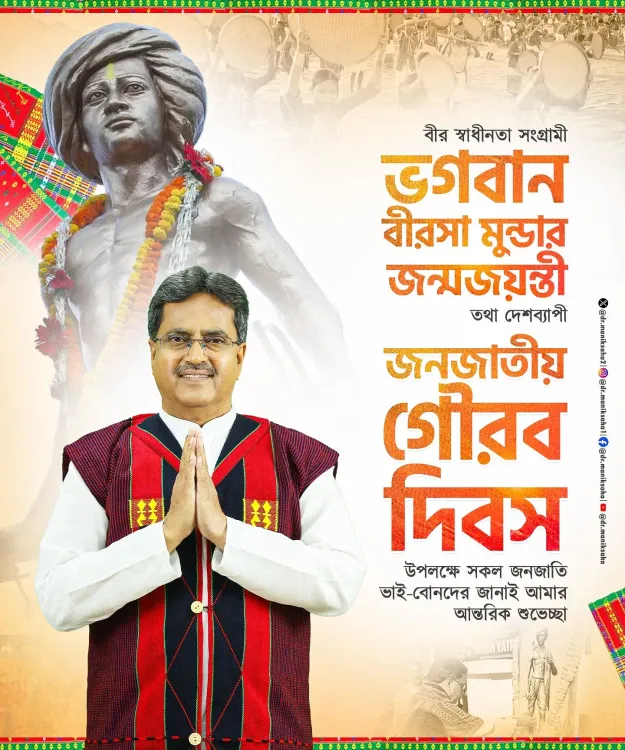
Synopsis
Tripura Chief Minister Dr. Manik Saha marked Janjatiya Gaurav Diwas on 15 November by honouring Bhagwan Birsa Munda and reaffirming the state's commitment to tribal empowerment in education, healthcare, and livelihoods, guided by PM Modi's vision.
Key Takeaways
Janjatiya Gaurav Diwas is observed every 15 November , declared by the Government of India in 2021 to honour tribal contributions to the freedom struggle.
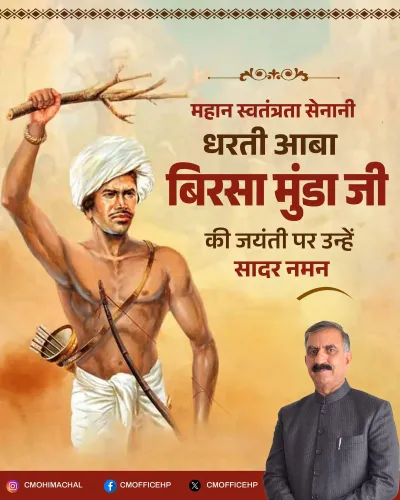
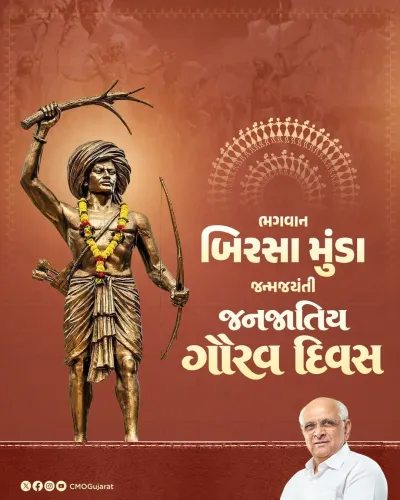
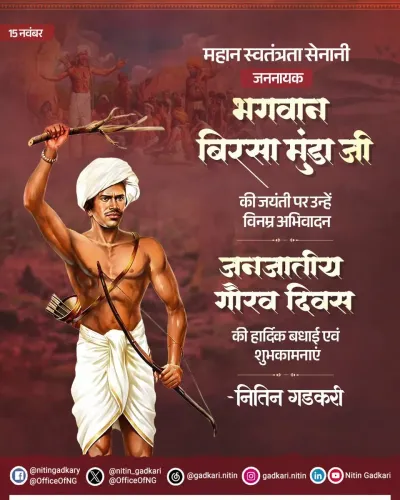
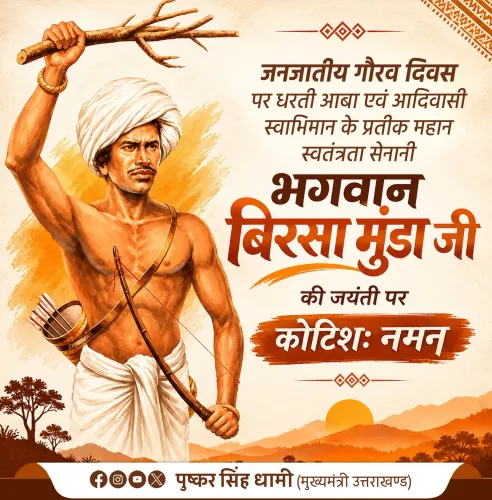
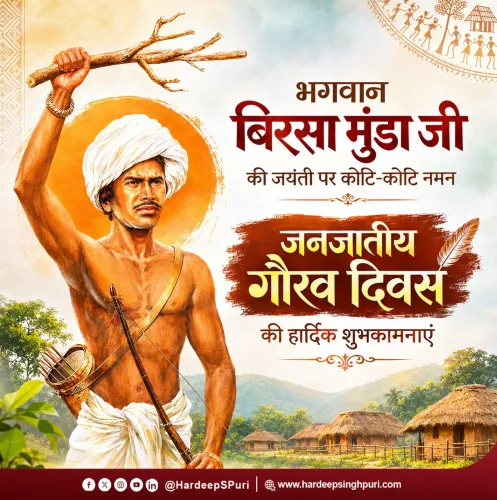
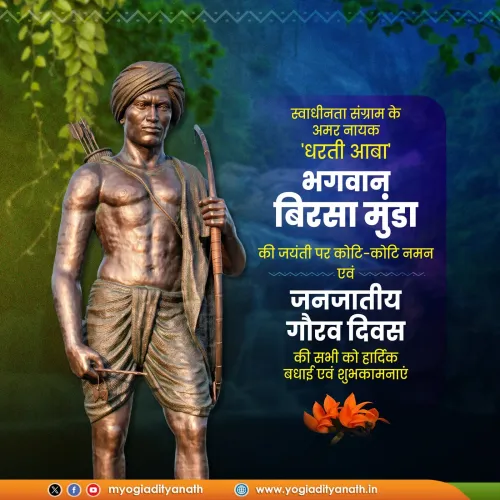
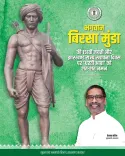
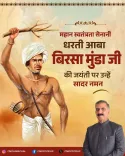
Bhagwan Birsa Munda , known as Dharti Aaba , led the Munda Rebellion against British colonial rule and remains a central icon of India's tribal identity.
Tripura has a tribal population exceeding 30 per cent , including Tripuri, Reang, and other Janajati groups.
Manik Saha pledged state commitment to preserving tribal heritage and empowering families through education, healthcare, and sustainable livelihoods .
The statement frames Tripura's tribal agenda as directly aligned with PM Narendra Modi's national vision for Scheduled Tribe welfare.
Every year on 15 November, India pauses to remember a young tribal leader who shook the foundations of British colonial rule — and in Tripura, Chief Minister Dr. Manik Saha marked Janjatiya Gaurav Diwas 2026 with a tribute to Bhagwan Birsa Munda, honouring the icon's birth anniversary and renewing the state's commitment to its tribal communities.
Who Was Dharti Aaba — and Why November 15 Matters
Bhagwan Birsa Munda, reverently called Dharti Aaba (Father of the Earth), was a 19th-century tribal leader from present-day Jharkhand who led the Munda Rebellion against British colonial exploitation of indigenous land and labour. He remains one of India's most potent symbols of indigenous resistance — a figure who unified tribal communities at a time when such unity carried a death sentence. His legacy is not confined to history textbooks; it lives in the daily identity of millions of Scheduled Tribe families across the country.
In 2021, the Government of India declared 15 November as Janjatiya Gaurav Diwas — National Tribal Pride Day — to formally recognise tribal contributions to India's freedom struggle and to anchor that recognition in an annual, institutionalised observance. The date was chosen deliberately: Birsa Munda's birth anniversary, a signal that the nation's oldest freedom fighters would no longer be a footnote.
Tripura's Tribal Heartland and What the CM Pledged
Tripura is one of India's most tribal-intensive states, with over 30 per cent of its population comprising Janajati communities — including the Tripuri, Reang, and several other indigenous groups whose cultures, languages, and livelihoods are inseparable from the state's identity. That demographic reality makes the day politically and socially significant in a way that goes beyond ceremonial tribute.
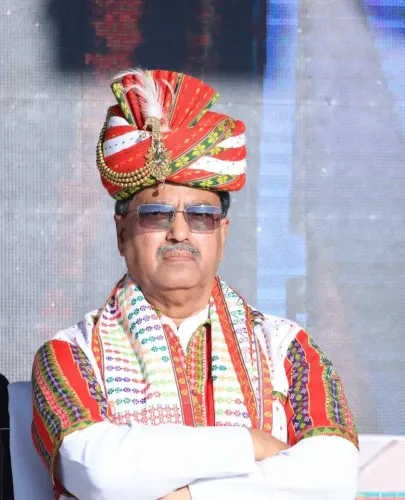
Dr. Saha, who has led the state since 2022, framed his message around action as much as reverence. 'The Tripura Government is committed to preserving our vibrant Janajati heritage while empowering every tribal family with education, healthcare and sustainable livelihoods,' he wrote — directly linking the symbolic weight of the day to on-the-ground delivery. The statement aligns with the broader central government pattern of pairing tribal recognition with targeted welfare programmes in the Northeast.
Modi Government's Push: Symbol Into Policy
The institutionalisation of Janjatiya Gaurav Diwas is part of a wider effort by Prime Minister Narendra Modi's government to bring tribal welfare into the mainstream national conversation — through commemorations, dedicated ministry attention, and state-level execution of schemes aimed at Scheduled Tribe populations. Dr. Saha explicitly invoked PM Modi's 'vision' as the guiding framework for Tripura's tribal empowerment agenda, signalling alignment between state and central priorities.
What to watch now: whether Janjatiya Gaurav Diwas in Tripura translates into the announcement or expansion of specific education, health, or livelihood programmes for tribal families — the kind of concrete follow-through that turns an annual observance into a policy milestone.
Birsa Munda fought for land, dignity, and self-determination. The question that hangs over every Janjatiya Gaurav Diwas celebration is simple: how much closer are his people to those three things?
Point of View
CM Saha is simultaneously performing cultural reverence and signalling policy continuity ahead of any future electoral cycle. The institutionalisation of Birsa Munda's legacy as a national symbol reflects a deliberate reframing: tribal history is no longer peripheral to India's independence narrative but central to it. Whether this symbolic elevation converts into measurable gains for Janajati families in Tripura remains the critical test.
NationPress
15 Nov 2026
Frequently Asked Questions
What is Janjatiya Gaurav Diwas and why is it celebrated on 15 November?
Janjatiya Gaurav Diwas is India's National Tribal Pride Day, observed every 15 November — the birth anniversary of tribal icon Bhagwan Birsa Munda . The Government of India declared it in 2021 to honour the contributions of tribal communities to the country's freedom struggle.
Who was Bhagwan Birsa Munda?
Bhagwan Birsa Munda , called Dharti Aaba or Father of the Earth, was a 19th-century tribal leader from present-day Jharkhand who led the Munda Rebellion against British colonial exploitation of indigenous land and people.
What did Tripura CM Manik Saha say on Janjatiya Gaurav Diwas 2026?
CM Dr. Manik Saha paid tribute to Birsa Munda and stated that the Tripura Government is committed to preserving Janajati heritage while empowering every tribal family with education, healthcare, and sustainable livelihoods, guided by PM Modi's vision.
How large is Tripura's tribal population?
Tripura has one of India's highest proportions of tribal residents, with over 30 per cent of the state's population belonging to Janajati communities, including the Tripuri, Reang, and several other indigenous groups.
When did the Indian government declare 15 November as Janjatiya Gaurav Diwas?
The Government of India declared 15 November as Janjatiya Gaurav Diwas in 2021 , under the Modi government, specifically to recognise tribal leaders' role in India's independence movement.