HP CM Office Pays Tribute to Birsa Munda on Janjatiya Gaurav Diwas
Synopsis
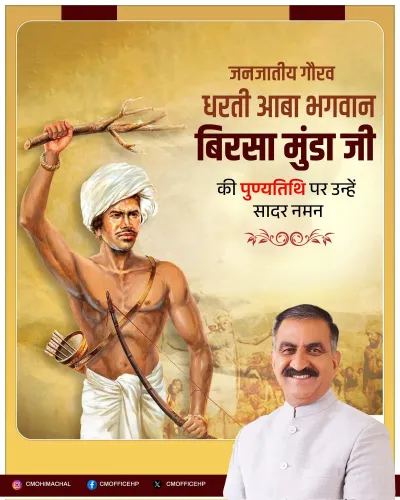
The Chief Minister's Office of Himachal Pradesh honoured Birsa Munda — revered as Dharti Aaba — on his birth anniversary, celebrated nationally as Janjatiya Gaurav Diwas, recalling his defining struggle for tribal rights over jal, jungle and jameen.
Key Takeaways
Birsa Munda's birth anniversary, 15 November , is observed nationally as Janjatiya Gaurav Diwas , instituted by the Government of India in 2021 .
The Chief Minister's Office of Himachal Pradesh paid tribute on 15 November 2026 , honouring Munda's legacy of fighting for tribal rights over water, forests, and land.
Birsa Munda, born in 1875 in the Chotanagpur region, led the Ulgulan movement against British colonial land policies and died in custody in 1900 , aged 25.
His central demand — jal, jungle aur jameen — remains foundational to India's tribal rights discourse and influenced the Forest Rights Act of 2006 .
Himachal Pradesh's tribal districts, including Kinnaur and Lahaul-Spiti , participate annually in Janjatiya Gaurav Diwas observances.
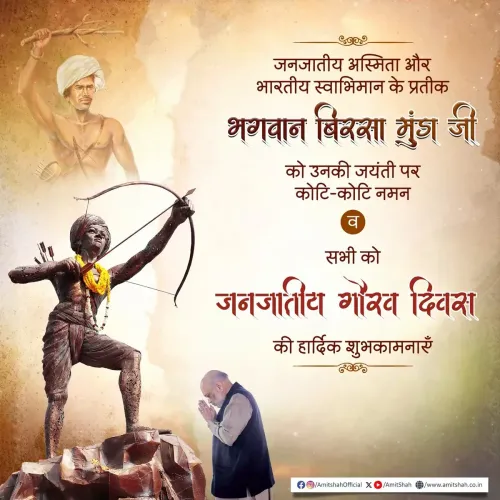
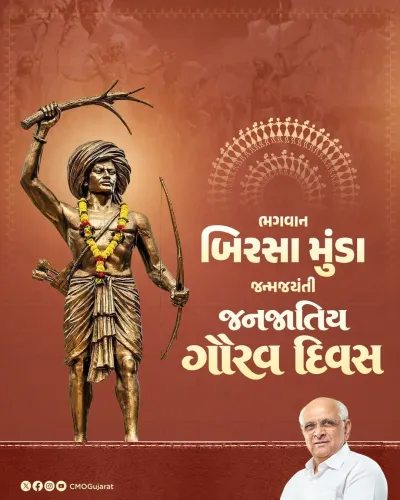
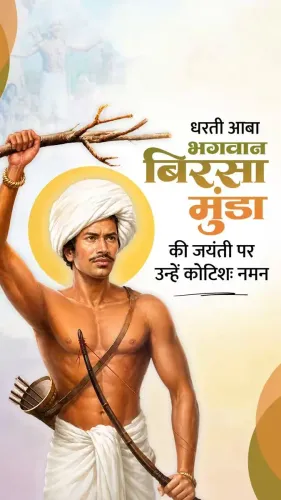
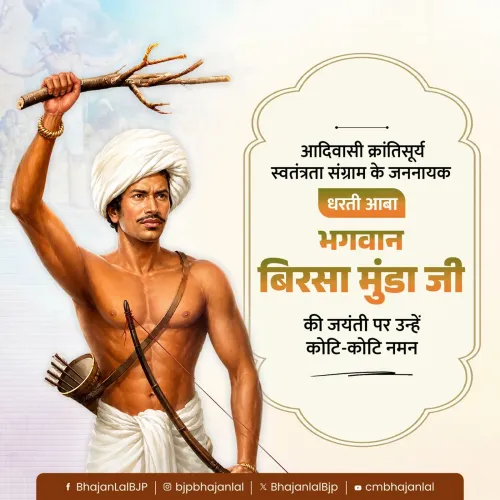
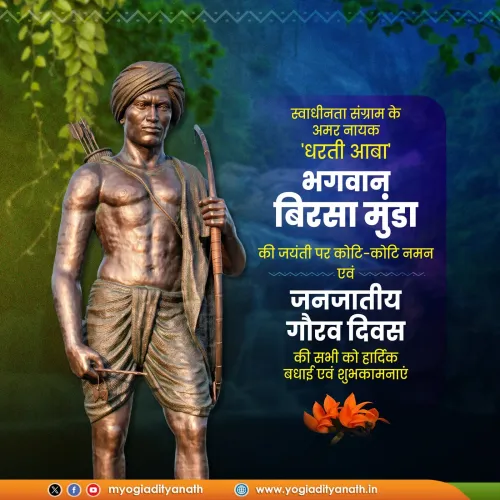
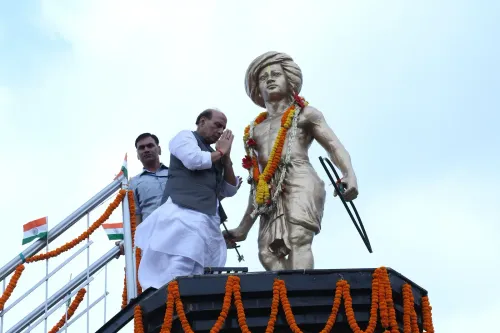
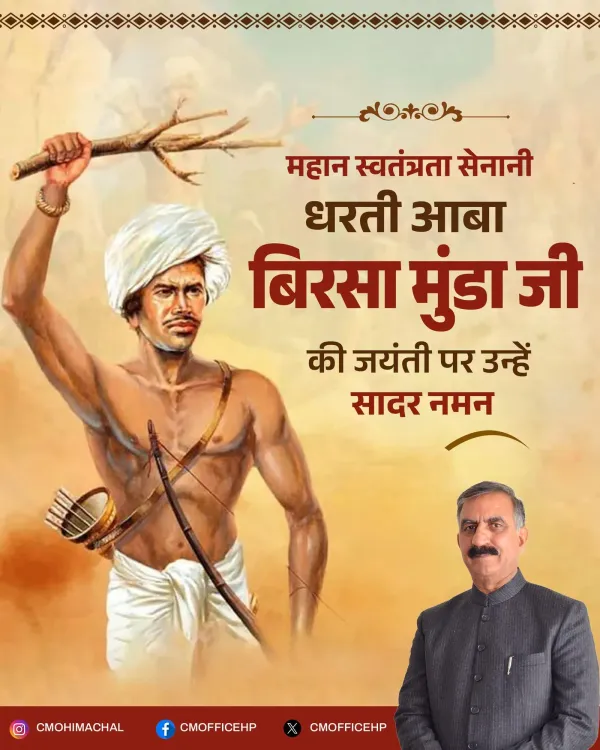
On the birth anniversary of Birsa Munda — the tribal freedom fighter revered as Dharti Aaba (Father of the Earth) — the Chief Minister's Office of Himachal Pradesh offered a respectful tribute on Sunday, 15 November 2026, honouring a man who gave his life defending the rights of indigenous communities over land, forests, and water.
The post, shared in Hindi, reads: 'Respectful homage on the birth anniversary of great freedom fighter Dharti Aaba Birsa Munda ji, who raised his voice for the rights of jal, jungle and jameen. He dedicated his life to the protection of tribal rights and folk culture. His struggle-filled life is an inspiration for all.'
Who Was Birsa Munda — and Why the Title 'Dharti Aaba'
Birsa Munda, born on 15 November 1875 in the Chotanagpur region of present-day Jharkhand, became the defining voice of the Ulgulan — the Great Tumult — a late-19th-century uprising that challenged British colonial land policies dismantling indigenous forest rights. His followers called him Dharti Aaba, a title that captured his near-mythic status as a protector of the earth itself. He died in British custody in 1900, aged just 25, but the movement he ignited reshaped how colonial administrators — and later, independent India — understood tribal land tenure.
His central demand was deceptively simple and profoundly radical: jal, jungle aur jameen — water, forest, and land — belong to the people who live by them. That three-word phrase still anchors debates over forest rights legislation and Adivasi displacement more than a century later.
Janjatiya Gaurav Diwas: A National Observance Around One Date
In 2021, the Government of India formally designated 15 November as Janjatiya Gaurav Diwas — Tribal Pride Day — timed precisely to Birsa Munda's birth anniversary and intended to commemorate the contributions of tribal freedom fighters across the country. The observance gave institutional weight to what had long been a grassroots memorial, and state governments now mark the day with official messages, cultural events, and, in some cases, announcements of welfare measures for Scheduled Tribe communities.
Himachal Pradesh, home to significant tribal populations in districts such as Kinnaur, Lahaul-Spiti, and Chamba, participates in this national observance each year — the CM Office's tribute forming part of a broader state acknowledgment of Adivasi heritage and rights.
A Legacy That Still Shapes India's Forest Rights Discourse
Birsa Munda's struggle did not end with his death. The Forest Rights Act of 2006 — which granted individual and community rights to tribal populations over forestland they had historically cultivated — is widely understood as a legislative descendant of the demands his movement first articulated. For tribal communities still navigating land tenure disputes, displacement for infrastructure projects, or shrinking forest access, the anniversary is not purely historical. It is an annual reckoning with promises still in progress.
Tributes like the one from the Himachal CM Office serve as reminders that the values Munda fought for — indigenous cultural preservation, community control over natural resources, dignity before the state — remain live political and policy questions in India's tribal heartlands.
India remembers Dharti Aaba not simply as a chapter in a history textbook, but as the original voice of a demand the country is still learning to fully honour.
Point of View
Whose mountainous tribal belts hold both ecological and electoral significance, the tribute aligns with a national pattern of re-centering Adivasi figures in the mainstream freedom-struggle narrative — a project that picked up institutional momentum from 2021 onward. The reference to jal, jungle aur jameen is never merely rhetorical: it invokes an unfinished policy conversation about forest rights, displacement, and community governance that no state government can afford to treat as settled. How that rhetoric translates into concrete protections for tribal communities in Himachal's tribal districts will be the real measure of what the tribute means.
NationPress
15 Nov 2026
Frequently Asked Questions
When is Birsa Munda's birth anniversary?
Birsa Munda was born on 15 November 1875 . His birth anniversary is now observed nationally as Janjatiya Gaurav Diwas (Tribal Pride Day) every year on this date.
What is Janjatiya Gaurav Diwas and when was it started?
Janjatiya Gaurav Diwas was instituted by the Government of India in 2021 on 15 November to honour tribal freedom fighters, with Birsa Munda's birth anniversary chosen as the anchor date.
Why is Birsa Munda called Dharti Aaba?
Dharti Aaba means 'Father of the Earth' in the Mundari tradition. The title was given to Birsa Munda by his followers in recognition of his near-sacred status as a protector of tribal land and community life.
What was the Ulgulan movement led by Birsa Munda?
The Ulgulan , meaning 'The Great Tumult,' was a late-19th-century tribal uprising led by Birsa Munda in the Chotanagpur region against British colonial policies that stripped indigenous communities of rights over their forests and land.
What tribal districts does Himachal Pradesh have?
Himachal Pradesh's major tribal districts include Kinnaur , Lahaul-Spiti , and parts of Chamba , home to Scheduled Tribe communities whose land and forest rights connect directly to the legacy Birsa Munda championed.