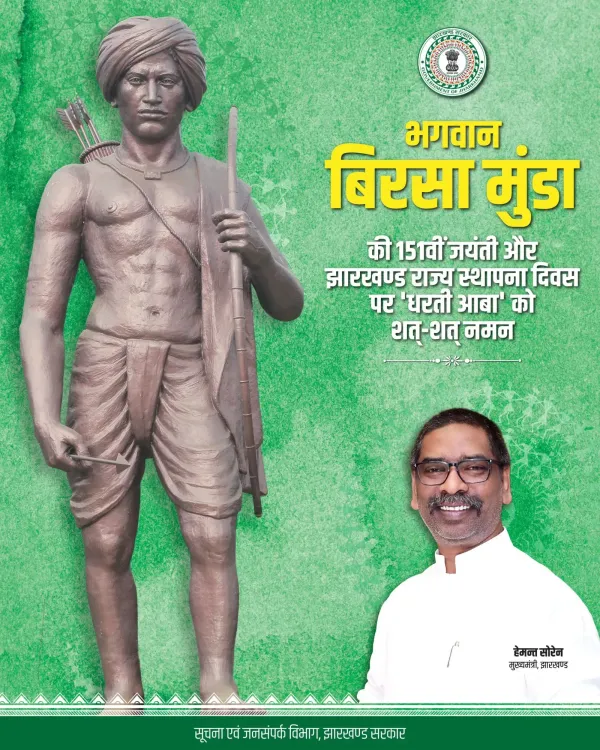
Jharkhand CMO honours Birsa Munda on 151st birth anniversary
Synopsis
On 15 November 2026, Jharkhand's Chief Minister's Office paid tribute to Birsa Munda on his 151st birth anniversary, which coincides with the state's 26th Foundation Day — a date chosen in 2000 to permanently link Jharkhand's identity to its most revered tribal freedom fighter.
Key Takeaways
15 November 2026 marks Birsa Munda's 151st birth anniversary and Jharkhand's 26th Foundation Day simultaneously.
The Chief Minister's Office of Jharkhand opened the day with a formal tribute, addressing all state residents.
Birsa Munda, born 1875 , led the Munda Rebellion (Ulgulan) against British colonial land policies in the Chota Nagpur region.
Jharkhand was formed on 15 November 2000 , carved out of southern Bihar, with the date chosen to honour Birsa Munda's birth anniversary.
The honorific 'Dharati Aaba' ('Father of the Earth') remains the most revered title for Birsa Munda among Adivasi communities in Jharkhand.
Annual Foundation Day events routinely combine official celebrations with renewed focus on tribal welfare, land rights, and Adivasi cultural preservation .
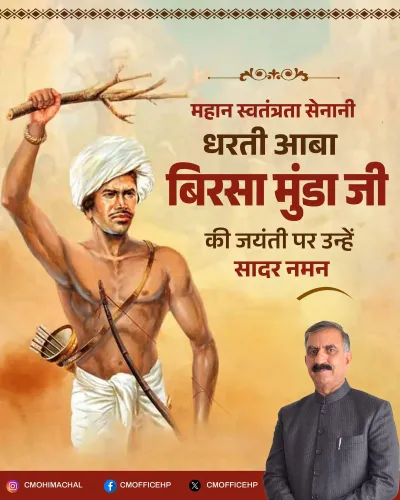
Twenty-six years after a date was chosen to carry two meanings at once, Jharkhand marks its 26th Foundation Day on 15 November 2026 — and the name that anchors the celebration is the same one that anchored the state's very birth: Birsa Munda. The Chief Minister's Office of Jharkhand opened the day with a solemn tribute to the tribal icon, extending warm wishes to every resident of the state on what is simultaneously his 151st birth anniversary.
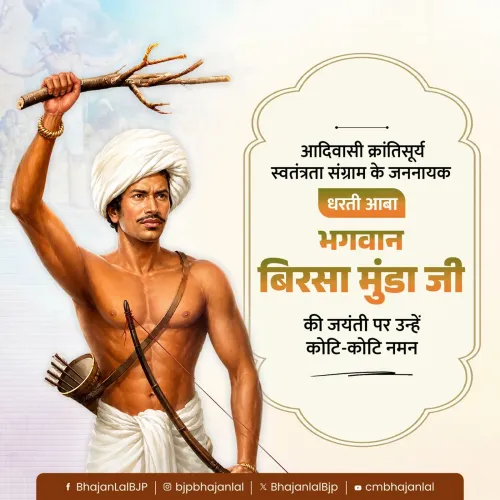
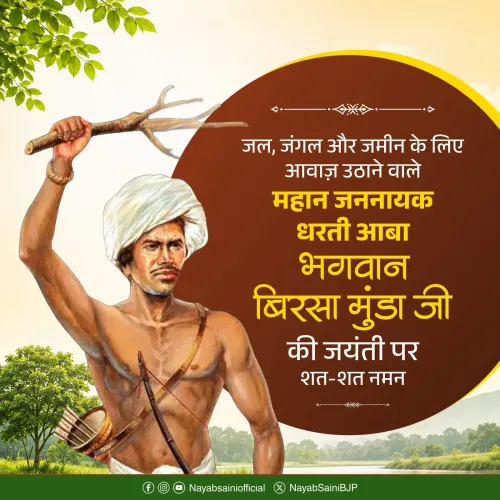
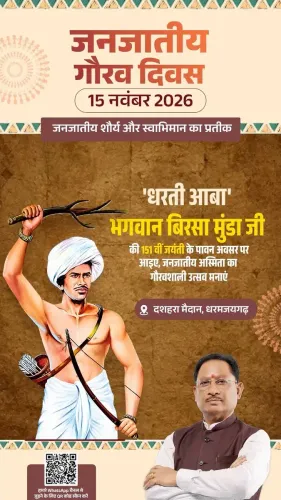
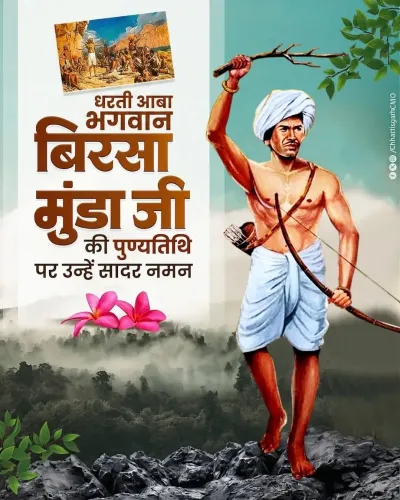
Posting on X at 8:47 AM IST, the official CMO handle wrote: 'Dharati Aaba ko shat-shat naman' — a hundredfold salute to Dharati Aaba, the 'Father of the Earth', the honorific by which Jharkhand's tribal communities have long revered Birsa Munda. The post carried the hashtags #Jharkhand and #BirsaMunda, signalling both the official and the deeply personal register of the day.Who was Birsa Munda — and why does the state begin with his name?
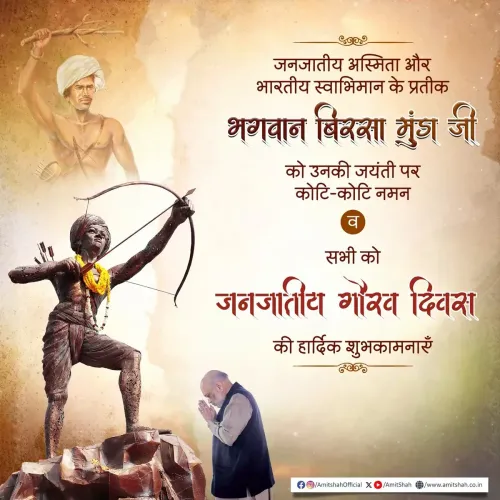
Birsa Munda was born on 15 November 1875 in the Chota Nagpur region, in what was then undivided Bihar under British colonial administration. By his mid-twenties he had become the most consequential voice of Adivasi resistance in the subcontinent, leading the Munda Rebellion — known in the community as Ulgulan, or 'the great tumult' — against both colonial land-seizure policies and missionary encroachment on tribal culture. He died in 1900, aged just twenty-five, yet his image never dimmed. When the demand for a separate tribal state crystallised over decades of post-Independence politics, his birthday was the natural anchor. Jharkhand was carved out of southern Bihar on 15 November 2000, the date chosen precisely to fuse the new state's identity with Birsa Munda's legacy. The union was deliberate and permanent — every Foundation Day is, by design, also a tribute.A day woven into Jharkhand's tribal identity
Annual observances in Jharkhand are rarely just ceremonial. Successive governments have used the Foundation Day platform to highlight Adivasi cultural preservation and to announce or renew welfare schemes targeted at scheduled tribes, who make up a significant share of the state's population. Birsa Munda's image — forest freedom fighter, spiritual leader, defender of tribal land rights — remains the most potent political and cultural symbol available to any Jharkhand administration. The CMO's early-morning post sets the official tone: reverent, rooted in community memory, and addressed to 'samast rajyavasiyon' — all residents of the state — not just one constituency. As Jharkhand enters its twenty-seventh year, the question the Foundation Day always quietly asks is whether the promises embedded in the state's founding — land, identity, and self-determination for its tribal communities — are being kept. The tribute is annual. The reckoning is ongoing.Point of View
So honouring him is not optional symbolism — it is constitutional identity politics in the most literal sense. The choice of 15 November as Foundation Day was itself a political act, binding every future government to this annual reckoning with tribal history. What makes this year's observance notable is the 151st milestone, a number that carries extra ceremonial weight and may invite larger programmatic announcements around Adivasi welfare. For the ruling dispensation, how visibly it translates the tribute into policy — on land rights, forest access, and scheduled-tribe welfare — will be watched closely by Jharkhand's substantial tribal electorate.
NationPress
15 Nov 2026
Frequently Asked Questions
Why is Jharkhand Foundation Day celebrated on 15 November?
Jharkhand was formed on 15 November 2000 from southern Bihar, and the date was deliberately chosen to coincide with the birth anniversary of tribal icon Birsa Munda , permanently linking the state's identity to his legacy.
Who was Birsa Munda?
Birsa Munda (1875–1900) was an Adivasi leader from the Chota Nagpur region who led the Munda Rebellion (Ulgulan) against British colonial land-seizure policies and missionary encroachment, becoming the most revered tribal freedom fighter in Jharkhand's history.
What does 'Dharati Aaba' mean?
Dharati Aaba is a tribal honorific meaning 'Father of the Earth' in the Mundari tradition. It is the most widely used reverential title for Birsa Munda across Jharkhand's Adivasi communities.
How old is Jharkhand in 2026?
Jharkhand turns 26 years old on 15 November 2026 , having been established as a separate state on 15 November 2000.
What is Birsa Munda's birth anniversary in 2026?
15 November 2026 marks Birsa Munda's 151st birth anniversary . He was born on 15 November 1875 in the Chota Nagpur region.