CM Manik Saha Pays Tribute on Police Commemoration Day
Synopsis
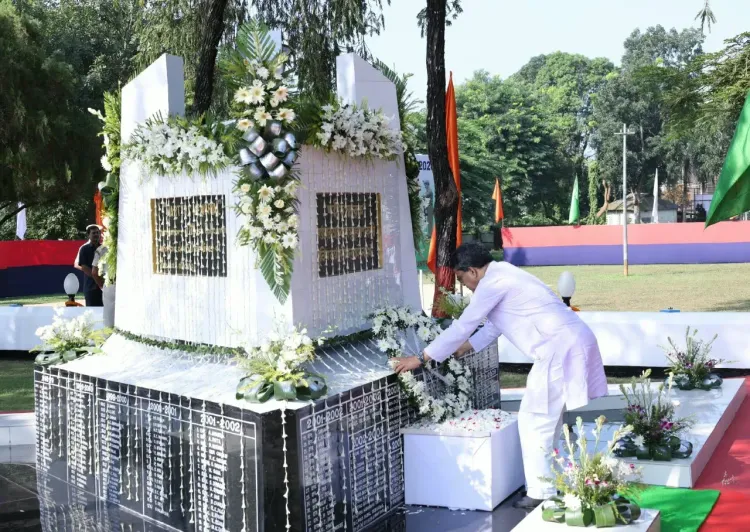
Tripura Chief Minister Dr. Manik Saha joined the Police Commemoration Day observance at Manoranjan Debbarma Smriti Stadium on 21 October 2026, honouring police personnel killed in the line of duty and expressing gratitude to their families.
Key Takeaways
Manik Saha attended the Police Commemoration Day observance at Manoranjan Debbarma Smriti Stadium, A.D.
Nagar on 21 October 2026 .
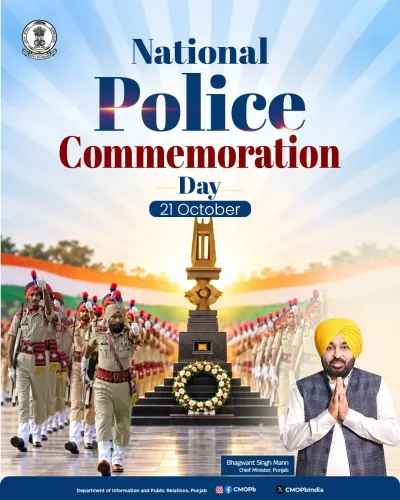
Police Commemoration Day is held every year on 21 October to honour police personnel who died in the line of duty.
The observance was instituted in 1960 to mark the 1959 ambush in which ten CRPF personnel were killed by Naga insurgents.
Saha expressed gratitude to the families and colleagues of fallen officers and pledged to forever honour their sacrifice.
Tripura , with its history of insurgency and a long border with Bangladesh , has a particularly significant police martyrdom legacy.
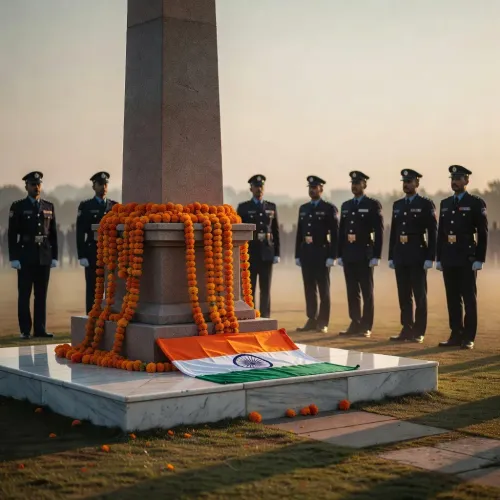
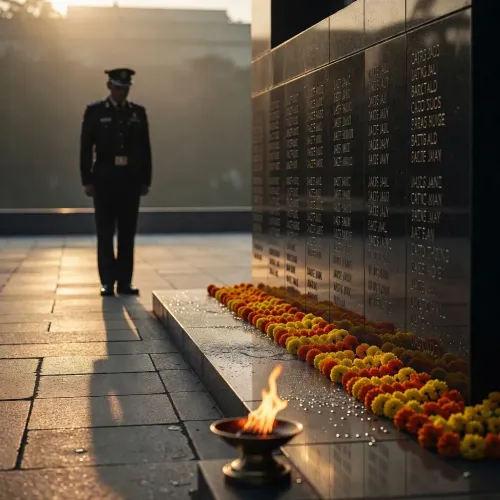
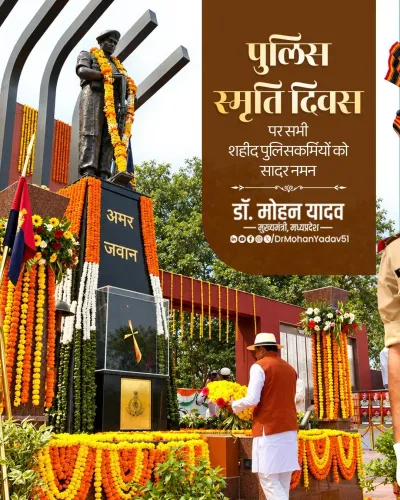
On a morning that belongs to the fallen, Tripura Chief Minister Dr. Manik Saha stood at Manoranjan Debbarma Smriti Stadium, A.D. Nagar, on 21 October 2026 to observe Police Commemoration Day — the one day each year the nation pauses to honour police personnel who gave everything in the line of duty.
A date etched in sacrifice: the origins of 21 October
Police Commemoration Day is not a recent invention. It was instituted in 1960, one year after a devastating ambush on 21 October 1959 in which ten CRPF personnel were killed by Naga insurgents — a moment that forced the young republic to confront the mortal cost of policing its frontiers. Since then, the date has become a fixed point of national remembrance, observed from Ladakh to Kanyakumari, from Assam to Tripura.
Dr. Saha paid what he called 'heartfelt tributes' to those who made 'the supreme sacrifice,' expressing his 'deepest gratitude to their families and colleagues, whose strength and sacrifice stand as a testament to their unwavering commitment to the nation.' The words carry specific weight in Tripura, a northeastern state that shares a border with Bangladesh and carries decades of counter-insurgency history in its police forces' institutional memory.
Tripura's police, the border, and the cost of duty
Tripura's police forces have not been bystanders in India's security story. The state's terrain — forested hills, a long international border, a not-so-distant past of active insurgency — meant its officers faced threats that went well beyond routine law enforcement. The families gathered at observances like today's carry that specific, regional weight alongside the national one.
Chief ministers across India participate in local Police Commemoration Day ceremonies, but the gesture carries more texture in states where policing has historically intersected with counter-insurgency operations. In that sense, Saha's presence at the stadium is both a constitutional duty and a contextually loaded act of solidarity.
A salute, and what follows
Dr. Saha closed his tribute with a simple, direct pledge: 'We salute our brave heroes and will forever honour their supreme sacrifice.' The language is solemn and deliberate — no political framing, no policy announcement, just a chief minister standing before the memory of the fallen. The families of martyred officers, whose welfare often depends on state-level schemes and central disbursements, will watch whether today's tribute translates into sustained institutional support in the months ahead.
Point of View
But they carry policy subtext: the visibility of a state's top executive at such events signals the government's posture toward police welfare and martyrs' families. For Dr. Saha, attending in Tripura — a state still processing the institutional legacy of decades of counter-insurgency — adds a layer of regional significance beyond national symbolism. The real test of these tributes lies downstream: in budget allocations for police modernisation and in the speed and adequacy of ex-gratia and pension disbursements to families of fallen officers. A solemn word on a commemoration day is the beginning of a promise, not its fulfilment.
NationPress
21 Oct 2026
Frequently Asked Questions
What is Police Commemoration Day and when is it observed?
Police Commemoration Day is observed every year on 21 October across India to honour police personnel who were killed in the line of duty. It was instituted in 1960 to mark the 1959 ambush in which ten CRPF jawans were killed by Naga insurgents.
Where did Tripura CM Manik Saha attend Police Commemoration Day in 2026?
Dr. Manik Saha attended the observance at Manoranjan Debbarma Smriti Stadium, A.D. Nagar , Tripura, on 21 October 2026 .
Why is Police Commemoration Day significant for Tripura?
Tripura has a long history of insurgency and shares an international border with Bangladesh , meaning its police forces have historically faced serious threats. The state's officers and their families carry a particular legacy of sacrifice that makes the annual observance especially meaningful.
Who was Manik Saha before becoming Chief Minister of Tripura?
Dr. Manik Saha is a BJP leader and dentist-turned-politician who became Chief Minister of Tripura in 2022 . He leads the state government and represents the BJP in the northeast.
What did Manik Saha say on Police Commemoration Day 2026?
Dr. Saha paid tribute to officers who made 'the supreme sacrifice,' expressed 'deepest gratitude' to their families and colleagues, and pledged that the nation would 'forever honour their supreme sacrifice.'