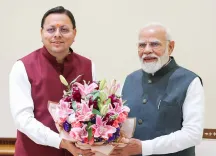
CM Sai Seeks 10 km Cluster Norm for Bastar in PMGSY-IV
Synopsis
Chief Minister Vishnu Dev Sai has urged the Centre to expand the PMGSY-IV cluster radius from 500 metres to 10 kilometres for Bastar, arguing that current norms exclude the division's scattered tribal villages from all-weather road connectivity.
Key Takeaways
CM Vishnu Dev Sai has formally demanded a special provision under PMGSY-IV for Bastar's geographic conditions.
The current PMGSY cluster norm defines a habitation group within a 500-metre radius; Sai has sought expansion to 10 kilometres .
Bastar is a seven-district division in southern Chhattisgarh with dense forests, tribal populations, and historically poor road infrastructure.
Special provisions for LWE-affected districts under PMGSY were first introduced from 2016 onward, setting a precedent for norm relaxations.
The Ministry of Rural Development must now respond; its decision will determine eligibility for dozens of remote habitations.
Deep inside Bastar — where dense forests swallow roads and villages sit kilometres apart — a standard government yardstick is quietly blocking connectivity. Chief Minister Vishnu Dev Sai has formally demanded that the Centre rewrite that yardstick for Chhattisgarh's most remote division under the fourth phase of the Pradhan Mantri Gram Sadak Yojana (PMGSY-IV).
The 500-Metre Problem in a 10-Kilometre Landscape
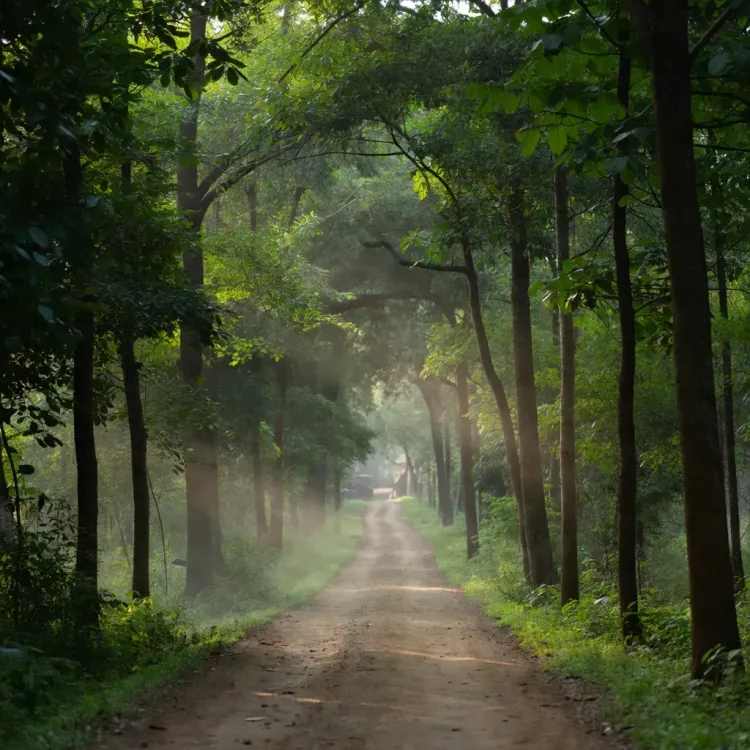
Under current PMGSY norms, a 'cluster' — the unit that qualifies a group of habitations for road connectivity — is defined by a 500-metre radius. In a densely populated plains village, that radius comfortably captures most households. In Bastar's forested interior, it captures almost nothing. Villages are scattered across vast terrain, often separated by kilometres of jungle, and the 500-metre rule leaves the most isolated communities structurally ineligible for new roads.
CM Sai has requested that the cluster radius be expanded to 10 kilometres for Bastar's geographic conditions — a twenty-fold increase that would bring far-flung tribal hamlets within the scheme's ambit. The demand was made with an explicit goal: connect the maximum number of remote villages to all-weather road networks.
Bastar's Long Road to Last-Mile Connectivity
PMGSY was launched in 2000 to give every unconnected rural habitation an all-weather road, and it has since evolved through multiple phases. Special provisions for Left Wing Extremism (LWE)-affected districts were introduced from 2016 onward, acknowledging that security and logistical constraints in regions like Bastar demand a different playbook. Yet the cluster-definition bottleneck has persisted.
Bastar — a seven-district division in southern Chhattisgarh — remains among the most challenging road-construction zones in India. Difficult terrain, forest cover, and historically poor infrastructure have combined to leave a significant share of its tribal population without reliable road access. State governments across central and eastern India have repeatedly pushed the Centre for norm relaxations on exactly this issue, and the Centre has incrementally accommodated such requests in earlier phases.
What the Centre's Response Will Determine
The ball is now in the Ministry of Rural Development's court. If New Delhi accepts the 10 km cluster proposal, Chhattisgarh could unlock road projects for dozens of habitations that currently fall outside PMGSY's eligibility criteria — changing the daily reality for tribal communities who depend on passable roads for markets, schools, and healthcare.
A precedent exists: the scheme has bent for geography before. The question is whether PMGSY-IV will codify that flexibility for Bastar before the phase's project lists are finalised.
For Bastar's villages, the distance between connected and stranded is not 500 metres — it never was. CM Sai's demand is a formal acknowledgement of that gap, and the Centre's answer will determine how many of those villages finally get a road to the world.
Point of View
And securing a norm change under PMGSY-IV would be a concrete deliverable. The Centre's willingness to accommodate the request will signal how seriously New Delhi treats last-mile connectivity in LWE-sensitive zones as a governance — not just a security — priority.
NationPress
16 Sept 2026
Frequently Asked Questions
What is the PMGSY cluster norm and why does it matter for Bastar?
A PMGSY 'cluster' is a group of habitations within a defined radius that qualifies for rural road connectivity funding. The current norm sets this at 500 metres — a distance too small to capture Bastar's widely scattered tribal villages, leaving many ineligible for new roads.
What has CM Vishnu Dev Sai demanded under PMGSY-IV for Bastar?
CM Sai has requested that the Centre allow a 10-kilometre radius to define a cluster under PMGSY-IV for Bastar, replacing the existing 500-metre norm, so that more remote villages can qualify for all-weather road connectivity.
Has the Centre made special provisions for Bastar under PMGSY before?
Yes. Special provisions for Left Wing Extremism-affected districts — which include parts of Bastar — were introduced under earlier PMGSY phases from 2016 onward, acknowledging the unique security and logistical challenges of such regions.
What happens next after CM Sai's demand?
The Ministry of Rural Development must evaluate and respond to the request. If accepted, Chhattisgarh could unlock PMGSY-IV road projects for habitations currently outside the scheme's eligibility criteria in Bastar.