CM Sai pushes for Bastar road cluster norms under PMGSY-IV
Synopsis
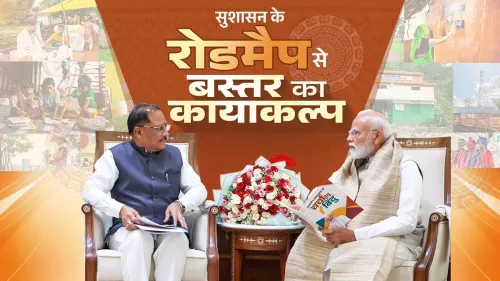
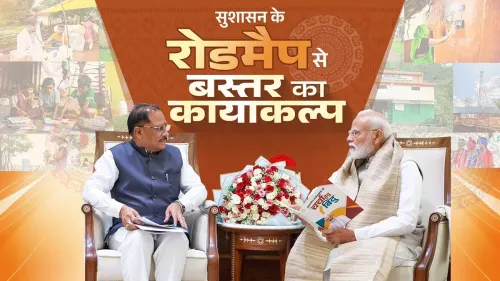
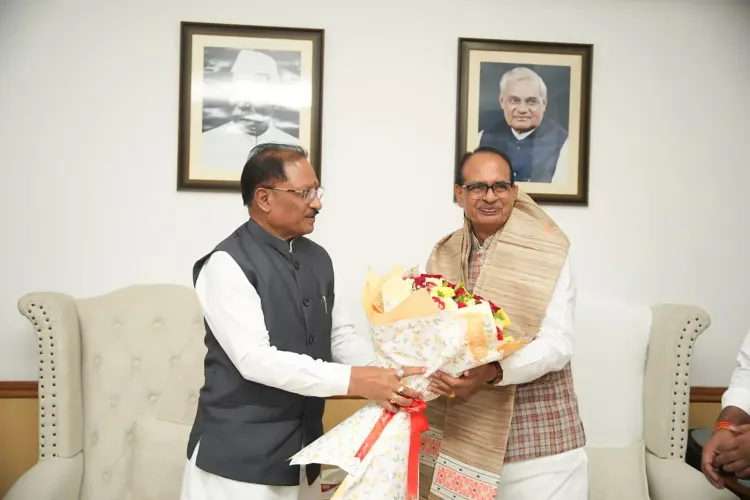
Chhattisgarh CM Vishnu Deo Sai met Union Minister Shivraj Singh Chouhan in New Delhi on July 31, 2026, proposing that remote Bastar habitations within a 10-km radius be treated as a single cluster under PMGSY-IV — mirroring a norm already applied in Arunachal Pradesh — to unlock road connectivity for tribal settlements long excluded by standard eligibility thresholds.
Key Takeaways
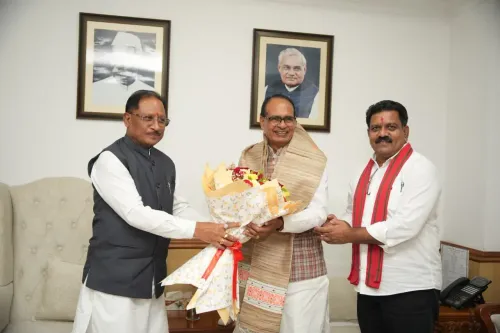
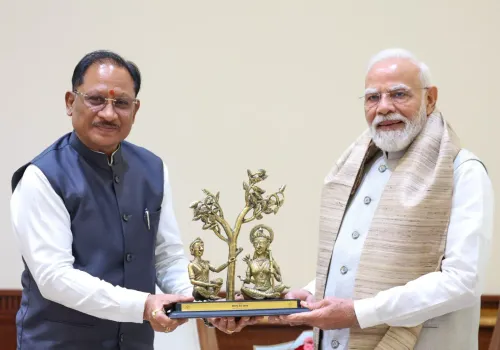
CM Vishnu Deo Sai met Union Minister Shivraj Singh Chouhan in New Delhi on July 31, 2026 to discuss rural road connectivity for Bastar division .
The proposal seeks to treat all habitations within a 10-kilometre radius as a single cluster under PMGSY-IV , mirroring a norm already in use in Arunachal Pradesh .
The cluster approach is designed to help Bastar's scattered tribal settlements cross PMGSY's minimum population eligibility thresholds.
Deputy Chief Minister Vijay Sharma was present at the meeting, underscoring the state government's unified push on the issue.
Union Minister Chouhan indicated he would take the necessary initiative on the proposal; formal sanction is the critical next step.
PMGSY has been operational since 2000 ; its fourth phase targets precisely the remote habitations that earlier rounds missed.
The last mile in Bastar may finally get a road — and a fighting chance at the mainstream. Chhattisgarh Chief Minister Vishnu Deo Sai travelled to New Delhi on Friday, July 31, 2026, to press Union Minister Shivraj Singh Chouhan for a critical tweak in how India's rural road programme counts remote settlements in one of the country's most difficult terrains.
The 10-km cluster proposal — and why it matters
Under the existing Pradhan Mantri Gram Sadak Yojana (PMGSY) framework, habitations typically must meet minimum population thresholds to qualify for a new all-weather road. In Bastar's dense forests and scattered tribal settlements, thousands of hamlets simply never make the cut. CM Sai proposed a fix borrowed from Arunachal Pradesh: treat all habitations within a 10-kilometre radius as a single cluster, pooling their populations to cross the eligibility threshold. The logic is straightforward — Bastar's geography is as forbidding as the Northeast's, so its villages deserve the same accommodation.
Deputy Chief Minister Vijay Sharma accompanied CM Sai at the meeting, signalling that Chhattisgarh is pushing this as a government-level priority, not a routine bureaucratic request. Union Minister Chouhan, who oversees both rural development and agriculture at the Centre, indicated he would take the necessary initiative to move the proposal forward — though no formal sanction has yet been announced.
Bastar's long road to connectivity
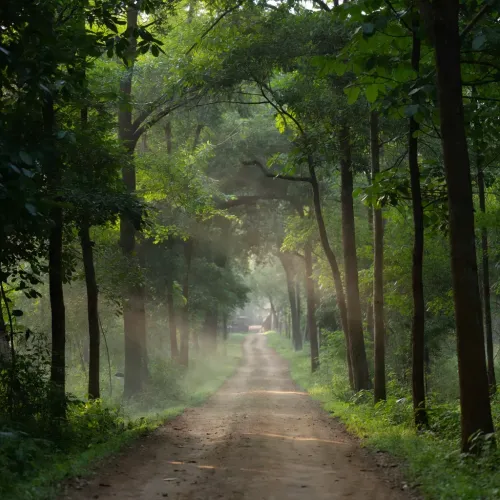
PMGSY was launched in 2000 to connect unconnected rural habitations with all-weather roads across India. Its fourth phase, PMGSY-IV, sharpens the focus on precisely the kind of remote, underserved pockets that earlier rounds left behind. For Bastar division — a region defined by large tribal populations, thick forest cover, and decades of Naxal conflict — standard distance and population norms have consistently meant exclusion. The cluster approach, if adopted, would directly address that structural gap.
Chhattisgarh governments have sought similar relaxations before, recognising that insurgency-affected and forested districts cannot be measured by the same yardstick as the plains. What is new this time is the explicit Arunachal precedent on the table and the direct ministerial-level conversation to back it.
What the proposal needs to clear
The immediate next step is formal inclusion of the 10-km cluster norm in Chhattisgarh's PMGSY-IV project list, followed by sanction from the Union Ministry of Rural Development. CM Sai framed the meeting's outcome in direct terms: 'बस्तर के अंतिम छोर तक विकास की राह और मजबूत होगी' — 'the path of development to the farthest corner of Bastar will grow stronger.'
A road into a Bastar hamlet is rarely just a road. It is the supply chain for a health worker, the route a child takes to school, and the corridor that makes a village legible to the state. If New Delhi formalises the cluster norm, it could unlock connectivity for habitations that have waited a quarter-century since PMGSY's launch.
Point of View
Rather than waiting for a top-down revision. For the BJP, which governs both Chhattisgarh and the Centre, securing this concession would be a tangible deliverable in a region where the party has staked its post-Naxal development narrative. The meeting also signals that PMGSY-IV is becoming a live arena for state-level lobbying, with geography and tribal demography as the key bargaining chips. Whether the Ministry formalises the norm or leaves it as a case-by-case discretion will determine how much of Bastar's last mile actually gets paved.
NationPress
15 Sept 2026
Frequently Asked Questions
What is the 10-km cluster proposal for Bastar under PMGSY-IV?
CM Vishnu Deo Sai has proposed that all habitations located within a 10-kilometre radius of each other in Bastar be counted as a single cluster for PMGSY-IV eligibility, allowing their combined population to meet the scheme's threshold for road sanction — a norm already applied in Arunachal Pradesh.
What is PMGSY-IV and how is it different from earlier phases?
PMGSY-IV is the fourth phase of the Pradhan Mantri Gram Sadak Yojana, launched originally in 2000. The latest phase focuses specifically on upgrading roads and connecting remote habitations that previous phases left uncovered, with an emphasis on difficult terrain and underserved regions.
Why does Bastar need special provisions under PMGSY?
Bastar's terrain is densely forested with sparse, scattered tribal settlements that individually fall below PMGSY's minimum population norms. Standard eligibility rules have historically excluded thousands of hamlets, making special cluster-based provisions necessary to extend connectivity to the region.
Who is Shivraj Singh Chouhan and what is his role in this matter?
Shivraj Singh Chouhan is the Union Minister for Rural Development and Agriculture, the ministry that administers PMGSY. He met CM Sai on July 31, 2026, and indicated he would take the necessary initiative to advance the cluster norm proposal for Bastar.
What happens next after CM Sai's meeting with the Union Minister?
The critical next step is formal inclusion of the 10-km cluster norm in Chhattisgarh's PMGSY-IV project list and subsequent sanction by the Union Ministry of Rural Development. No formal approval has been announced yet.