CM Sai: 11,808 manuscripts documented in Chhattisgarh in 3 months
Synopsis
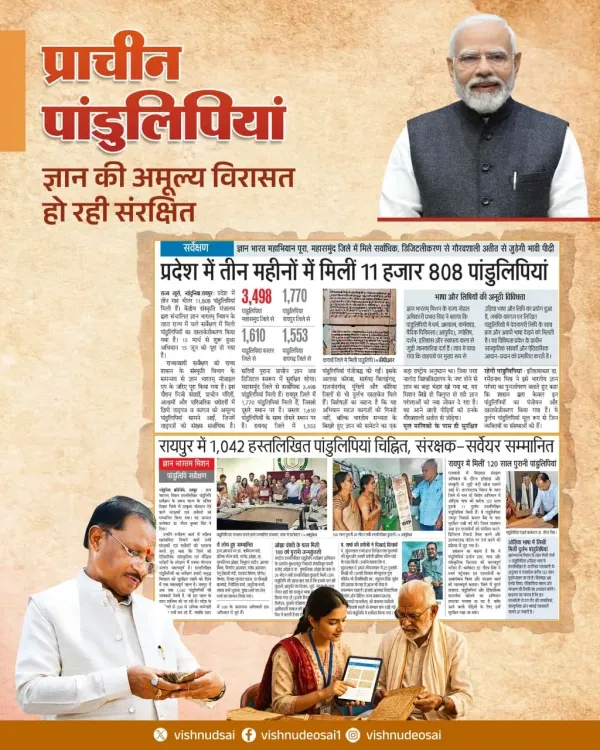
Chhattisgarh Chief Minister Vishnu Deo Sai announced that 11,808 ancient manuscripts were documented in three months under the Gyan Bharatam Mission, with scientific conservation and digitisation under way across the state to preserve and globally promote India's traditional knowledge heritage.
Key Takeaways
11,808 ancient manuscripts documented in Chhattisgarh in just three months under the Gyan Bharatam Mission .
The drive covers discovery, scientific conservation , and digitisation of manuscripts across the state.
The Gyan Bharatam Mission is a central initiative under the Ministry of Culture , building on the National Mission for Manuscripts launched in 2003 .
Chhattisgarh holds significant repositories of Sanskrit, Hindi, and regional-language manuscripts linked to temples and traditional learning centres.
The initiative aims to give India's spiritual traditions and traditional knowledge a new global platform, beyond domestic preservation.
Results from Chhattisgarh are expected to feed into a national manuscript database, with Ministry of Culture reviews likely to follow.
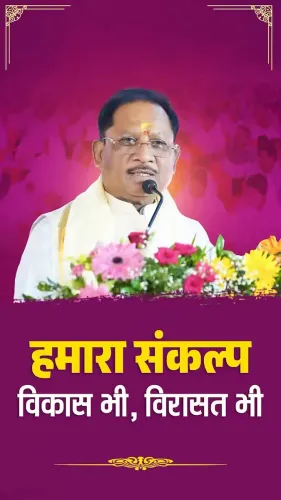
Chhattisgarh Chief Minister Vishnu Deo Sai announced on Friday, 19 June 2026 that the state has documented 11,808 ancient manuscripts in just three months under the Gyan Bharatam Mission, describing the effort as a landmark step in preserving India's cultural and spiritual heritage. The Chief Minister shared the update on X, highlighting the ongoing drive for scientific conservation and digitisation of these manuscripts across the state.
Context
In his post, CM Sai wrote: 'ज्ञान भारतम् मिशन' के तहत छत्तीसगढ़ में मात्र तीन महीनों के भीतर 11,808 प्राचीन पांडुलिपियों का दस्तावेजीकरण — meaning, 'Under the Gyan Bharatam Mission, within just three months in Chhattisgarh, 11,808 ancient manuscripts have been documented.' He described the manuscripts as 'priceless heritage of culture and knowledge' (संस्कृति और ज्ञान की अमूल्य धरोहर). The Chief Minister emphasised that the initiative goes beyond mere preservation, aiming to give India's spiritual traditions, cultural identity, and traditional knowledge a new global standing.
Policy Backdrop
The Gyan Bharatam Mission is a central government initiative overseen by the Ministry of Culture for systematic documentation, scientific conservation, and digitisation of ancient Indian manuscripts. It builds on the National Mission for Manuscripts, launched in 2003, which sought to locate, document, and digitise India's vast manuscript holdings — estimated to number in the millions across the country. Chhattisgarh, a central Indian state with significant tribal populations and repositories of Sanskrit, Hindi, and regional-language manuscripts linked to temples and traditional learning centres, has emerged as an active participant in this federal effort. State-level drives under missions such as Gyan Bharatam feed documented records into national heritage databases, combining physical conservation with digital archiving.
Stakeholders and Impact
The documentation drive directly benefits heritage scholars, researchers, and Chhattisgarh's cultural institutions, who gain structured access to manuscripts that may otherwise remain scattered or deteriorate over time. Local communities, particularly those associated with traditional learning centres and temples that have custodied these texts for generations, are also key stakeholders in the conservation process. The emphasis on digital archiving ensures that scholars globally can eventually access these texts, aligning with the broader goal of projecting India's traditional knowledge — spanning Ayurveda, philosophy, and classical literature — on the world stage.
What's Next
Attention will now turn to whether Chhattisgarh's pace of documentation translates into a verified contribution to the national manuscript database, with the Ministry of Culture expected to conduct review meetings that could include expansion announcements for other states. The drive's success in Chhattisgarh may also serve as a model for accelerating similar campaigns in states with comparable manuscript wealth. A national dashboard tracking digitised holdings across states remains a closely watched development for heritage scholars and policymakers alike.
Point of View
Using manuscript documentation as a visible metric of governance delivery. The Gyan Bharatam Mission sits within a broader pattern of BJP-ruled states accelerating cultural preservation drives that simultaneously serve policy and political branding objectives. The emphasis on 'global recognition' of traditional knowledge reflects an increasingly prominent strand of Indian soft-power strategy, linking domestic heritage work to international cultural diplomacy. Whether the pace of documentation translates into accessible, verified digital archives will be the real test of the mission's long-term impact.
NationPress
19 Sept 2026
Frequently Asked Questions
What is the Gyan Bharatam Mission?
The Gyan Bharatam Mission is a central government initiative under the Ministry of Culture aimed at systematically locating, documenting, scientifically conserving, and digitising ancient Indian manuscripts to preserve and globally promote India's traditional knowledge heritage.
How many manuscripts were documented in Chhattisgarh under Gyan Bharatam Mission?
According to Chief Minister Vishnu Deo Sai, 11,808 ancient manuscripts were documented in Chhattisgarh within three months under the Gyan Bharatam Mission.
What types of manuscripts are found in Chhattisgarh?
Chhattisgarh holds repositories of Sanskrit, Hindi, and regional-language manuscripts, many of which are linked to temples and traditional learning centres across the state.
What is the National Mission for Manuscripts?
The National Mission for Manuscripts was launched in 2003 by the Ministry of Culture to locate, document, and digitise India's vast manuscript holdings, forming the policy foundation for later initiatives like the Gyan Bharatam Mission.
Why is digitisation of ancient manuscripts important?
Digitisation ensures that manuscripts which may otherwise deteriorate or remain inaccessible are preserved permanently and made available to scholars globally, supporting research into India's traditional knowledge in fields such as Ayurveda, philosophy, and classical literature.