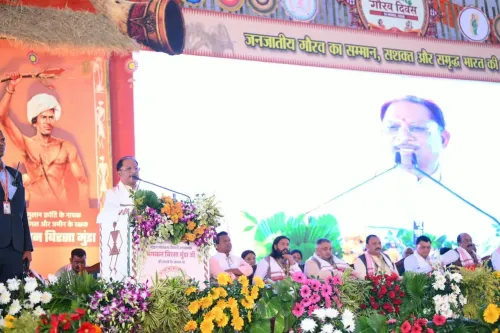
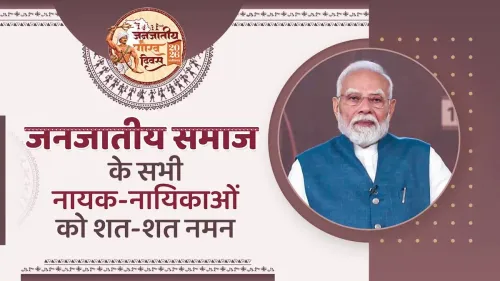
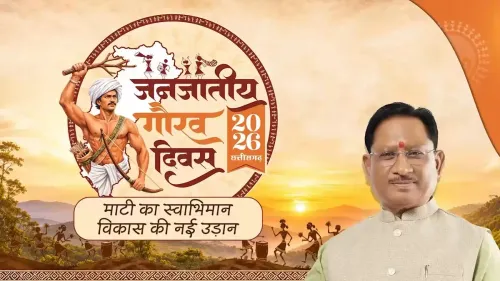
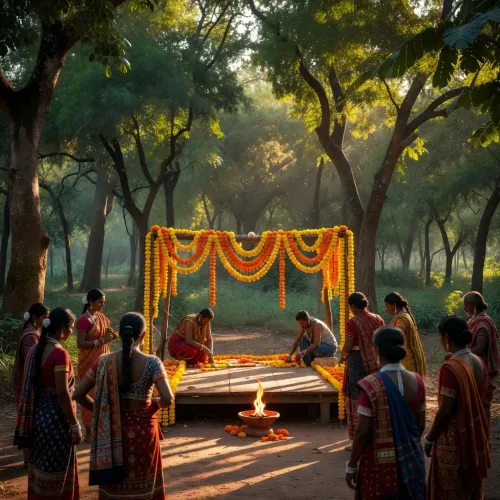
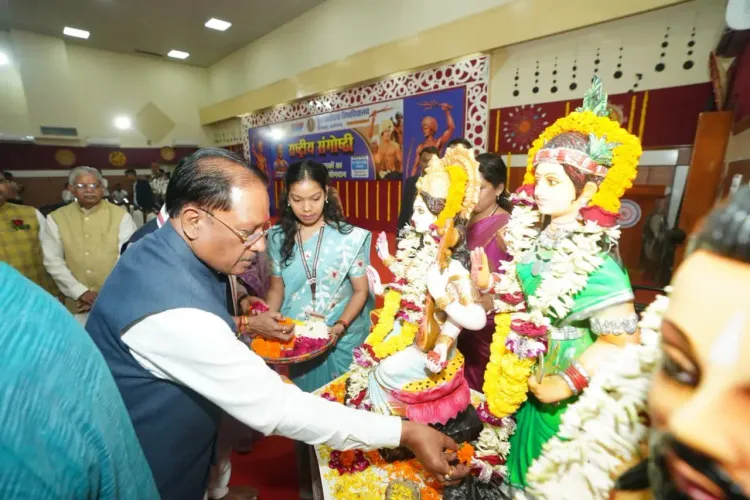
CM Sai at Janjatiya Gaurav Diwas seminar in Bilaspur
Synopsis
Chhattisgarh CM Vishnu Deo Sai attended the Janjatiya Gaurav Diwas national seminar at Guru Ghasidas Central University, Bilaspur, honouring tribal freedom fighters and pledging education, employment, and cultural preservation for tribal communities.
Key Takeaways
Chhattisgarh CM Vishnu Deo Sai attended the Janjatiya Gaurav Diwas national seminar at Guru Ghasidas Central University, Bilaspur on 16 November 2026 .
Janjatiya Gaurav Diwas is observed on 15 November , the birth anniversary of tribal hero Bhagwan Birsa Munda , and was instituted by the central government in 2021 .
Sai pledged better access to education, employment and progress for tribal youth while preserving tribal culture and traditions.
He invoked the goal of a viksit Chhattisgarh (developed Chhattisgarh) built on full tribal participation.
Chhattisgarh's scheduled-tribe population is roughly 30 per cent of the state, making tribal outreach central to governance and electoral strategy.
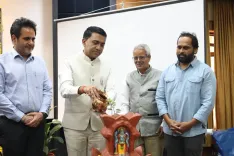
A gallery full of tribal history, a central university campus in Bilaspur, and a Chief Minister invoking the sacrifices of freedom fighters — Chhattisgarh Chief Minister Vishnu Deo Sai attended a national seminar on Janjatiya Gaurav Diwas at Guru Ghasidas Central University on Monday, 16 November 2026, marking the annual observance meant to honour India's tribal heroes and their role in building the nation.
What Janjatiya Gaurav Diwas commemorates — and why Bilaspur matters
Janjatiya Gaurav Diwas falls on 15 November every year — the birth anniversary of Bhagwan Birsa Munda, the Jharkhand-born tribal leader whose armed resistance against colonial rule made him an enduring symbol of indigenous dignity. The Government of India instituted the observance in 2021 to formally recognise the contributions of tribal communities to India's freedom struggle and post-independence nation-building. Hosting this year's national seminar, Guru Ghasidas Central University — itself named after the revered Satnami saint and social reformer of Chhattisgarh — gave the occasion a layered resonance: a university bearing the name of a tribal visionary, now a stage for reaffirming that legacy.
CM Sai's pledge: roots, confidence, and a developed Chhattisgarh
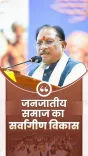
Speaking at the event, Sai recalled the 'sahas, swabhiman aur balidan' (courage, self-respect and sacrifice) that fill the pages of tribal history. He framed his government's commitment in concrete terms: preserving tribal culture and traditions while opening 'better opportunities in education, employment and progress' for the younger generation. 'Our sushasan sarkar (good governance government) aims that tribal society stays connected to its roots, moves forward with self-confidence, and plays its full part in building a viksit Chhattisgarh (developed Chhattisgarh),' he said.
Chhattisgarh has one of the largest scheduled-tribe populations in India — roughly 30 per cent of the state — spread across forested districts that have historically lagged on education and employment indicators. For the BJP government that Sai leads since December 2023, tribal outreach is both a governance priority and a persistent electoral axis in a state where tribal seats are decisive.
The pattern behind the platform
BJP administrations at the Centre and in tribal-majority states have consistently paired cultural commemoration with welfare messaging — using occasions like Janjatiya Gaurav Diwas to announce or amplify schemes on forest rights, scholarships, skill training, and infrastructure in Scheduled Areas. The Bilaspur seminar sits squarely in that playbook. Whether it produces fresh scheme announcements for Chhattisgarh's tribal belts — from Bastar to Surguja — will be the measure of the day's words.
What is already clear: for a Chief Minister navigating both development demands and deep cultural identity, standing in a lecture hall named after a tribal saint and invoking the memory of Birsa Munda is a signal aimed as much at the state's future as its past.
Point of View
Where tribal communities form nearly a third of the electorate. The 'good governance' framing he used positions the state administration as a facilitator of both identity and opportunity, pre-empting opposition narratives about tribal alienation. What gives the pledge weight or exposes it as ceremony will be the specific education and employment programmes that follow in tribal districts like Bastar and Surguja. For now, the symbolism of a BJP Chief Minister speaking at a university named after a Satnami reformer on the anniversary of Birsa Munda's birth is itself a carefully constructed political and cultural statement.
NationPress
16 Nov 2026
Frequently Asked Questions
What is Janjatiya Gaurav Diwas and when is it celebrated?
Janjatiya Gaurav Diwas is a national observance held every year on 15 November , the birth anniversary of tribal freedom fighter Bhagwan Birsa Munda . The Government of India instituted it in 2021 to honour the contributions of tribal communities to India's independence struggle and nation-building.
Why was the Janjatiya Gaurav Diwas seminar held at Guru Ghasidas Central University?
Guru Ghasidas Central University in Bilaspur, Chhattisgarh is named after the revered tribal saint and social reformer Guru Ghasidas, making it a symbolically significant venue for a seminar on tribal heritage and contributions.
Who is Vishnu Deo Sai and what is his role in Chhattisgarh?
Vishnu Deo Sai is a BJP leader who has been serving as the Chief Minister of Chhattisgarh since December 2023 . He is known for his focus on tribal welfare and state development.
What did CM Vishnu Deo Sai promise for tribal communities at the Bilaspur seminar?
CM Sai pledged to preserve tribal culture and traditions while providing the younger generation with better opportunities in education, employment, and progress , as part of his government's commitment to building a developed Chhattisgarh.
How large is the tribal population in Chhattisgarh?
Scheduled tribes constitute roughly 30 per cent of Chhattisgarh's total population, concentrated in forested districts like Bastar and Surguja, making tribal welfare a central theme of state governance and politics.