CM Sai Marks Janjatiya Gaurav Divas in Bilaspur
Synopsis
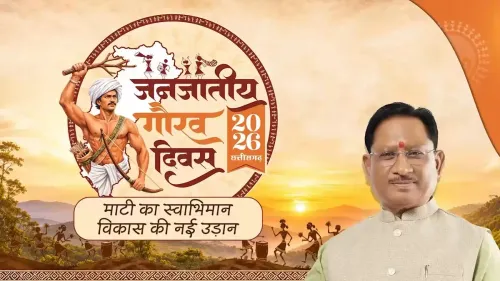
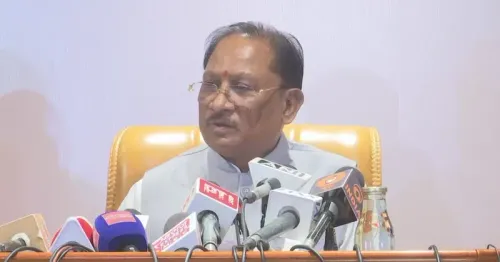
Chhattisgarh Chief Minister Vishnu Deo Sai attended the Janjatiya Gaurav Divas ceremony in Bilaspur on 16 November 2026, honouring the legacy of Bhagwan Birsa Munda on the national tribal observance day declared by the Centre in 2021.
Key Takeaways
Janjatiya Gaurav Divas was observed on 15–16 November 2026 with a state-level ceremony in Bilaspur, Chhattisgarh .
Chief Minister Vishnu Deo Sai attended the event, reinforcing the BJP government's tribal outreach in a state where over 30 percent of the population are Scheduled Tribe members.
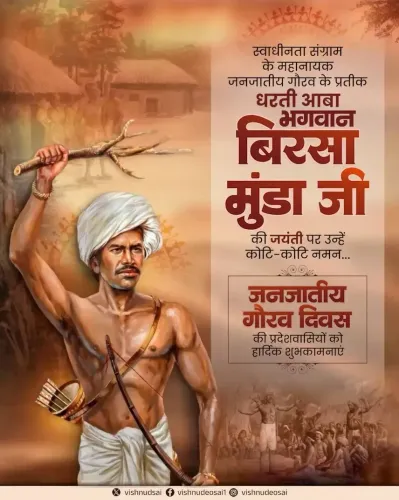
The observance honours Bhagwan Birsa Munda , the 19th-century tribal leader whose birth anniversary falls on 15 November .
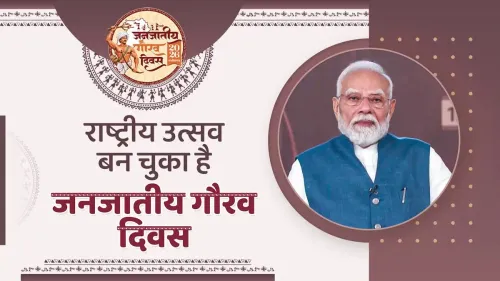
The Government of India declared 15 November as Janjatiya Gaurav Divas in 2021 , making it a national tribal heritage day.
Chhattisgarh governments have consistently used tribal commemorative events to highlight welfare programmes alongside cultural identity.
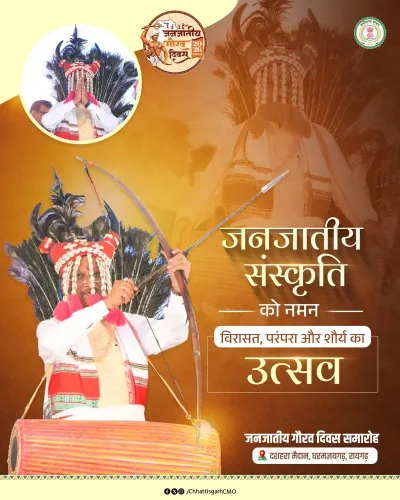
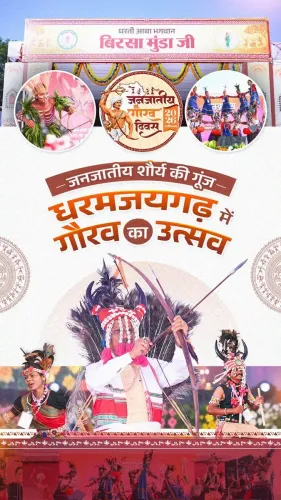
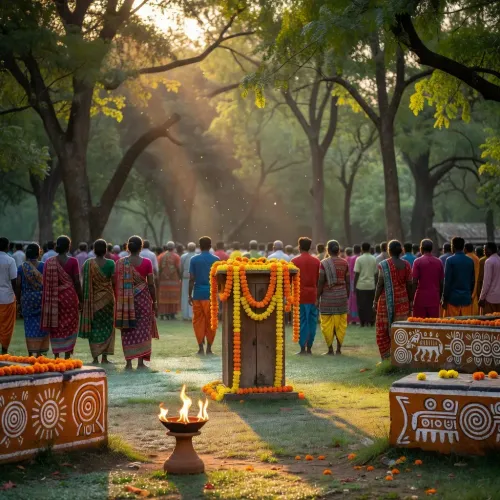
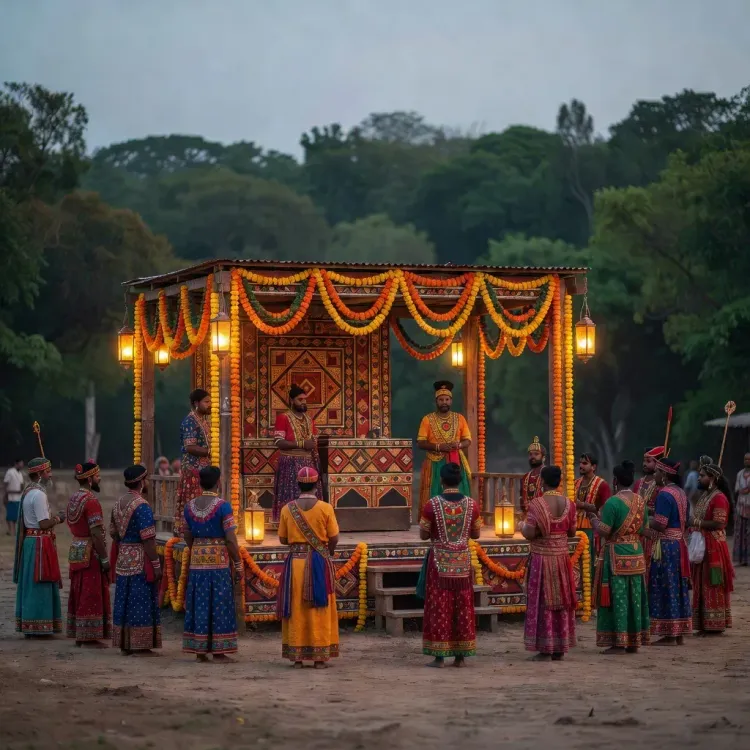
On the birth anniversary of Bhagwan Birsa Munda, Chhattisgarh Chief Minister Vishnu Deo Sai joined tribal communities in Bilaspur on Monday, 16 November 2026 for the Janjatiya Gaurav Divas celebrations — a national observance that has become one of the most significant days on India's tribal cultural calendar.
A day rooted in Birsa Munda's legacy
Janjatiya Gaurav Divas is observed every year on 15 November, the birth anniversary of Bhagwan Birsa Munda, the 19th-century tribal leader and freedom fighter who led his people against colonial exploitation in the forests of what is now Jharkhand. The Government of India formally declared the day a national observance in 2021, anchoring it to Munda's enduring place in India's freedom struggle and tribal consciousness.
Chhattisgarh carries particular weight in this story. With over 30 percent of its population belonging to Scheduled Tribes, the state is home to some of India's most culturally distinct indigenous communities. For them, the day is not merely ceremonial — it is an affirmation of identity, heritage, and political visibility.
Bilaspur as the stage for 2026
Bilaspur, one of Chhattisgarh's major cities and a key administrative hub, hosted the state-level programme this year. Chief Minister Sai's presence signals the BJP-led state government's continued emphasis on aligning its governance calendar with the national tribal observance framework established in 2021.
Chhattisgarh administrations across political lines have used events tied to tribal icons and festivals to spotlight welfare programmes and cultural pride simultaneously. The BJP state leadership, with CM Sai at the helm since December 2023, has maintained and extended that approach — weaving commemorative days into a broader outreach strategy aimed at the state's large tribal electorate and communities.
Why this moment matters beyond the ceremony
Janjatiya Gaurav Divas has evolved since its 2021 declaration into a platform where both state and central governments signal intent on tribal development — from forest rights and healthcare to education and livelihood schemes. The Bilaspur event sits within that pattern: a public, high-visibility affirmation that tribal heritage and welfare remain on the political agenda.
What programmes or welfare commitments the Chhattisgarh government highlighted in Bilaspur will be worth tracking as the state looks toward its own tribal-welfare roadmap for 2027.
Birsa Munda once rallied his people with the cry 'Abua disum, abua raj' — 'Our land, our rule.' More than a century later, the echo of that assertion still shapes how India's tribal communities measure the promises made in their name.
Point of View
Allowing them to simultaneously celebrate tribal cultural identity and reinforce outreach to Scheduled Tribe communities ahead of electoral cycles. Chhattisgarh, with its 30-plus percent tribal population, is especially high-stakes terrain — events like the Bilaspur programme are rarely just ceremonial. CM Sai's visible participation continues a pattern of aligning state governance with the national tribal calendar, a strategy that blends cultural legitimacy with welfare optics. The real measure of intent, as always, will be in the schemes announced and followed through.
NationPress
16 Nov 2026
Frequently Asked Questions
What is Janjatiya Gaurav Divas and why is it celebrated on 15 November?
Janjatiya Gaurav Divas is a national observance declared by the Government of India in 2021 to honour tribal heritage and culture. It is held on 15 November each year because that is the birth anniversary of Bhagwan Birsa Munda, the revered 19th-century tribal leader and freedom fighter.
Who is Bhagwan Birsa Munda?
Bhagwan Birsa Munda was a 19th-century tribal leader and freedom fighter who led his community in resistance against colonial exploitation in the forests of present-day Jharkhand. He is venerated as a symbol of tribal pride and self-determination across India.
Why did CM Vishnu Deo Sai attend the Janjatiya Gaurav Divas event in Bilaspur?
As Chief Minister of Chhattisgarh, Vishnu Deo Sai participated in the state-level Janjatiya Gaurav Divas ceremony in Bilaspur on 16 November 2026 to mark the national observance and affirm his government's engagement with the state's large tribal communities.
What is the tribal population of Chhattisgarh?
Over 30 percent of Chhattisgarh's population belongs to Scheduled Tribes, making it one of India's states with the highest proportion of indigenous tribal communities.
When did Vishnu Deo Sai become Chief Minister of Chhattisgarh?
Vishnu Deo Sai assumed office as Chief Minister of Chhattisgarh in December 2023 after the BJP won the state assembly elections.