CM Sai Highlights PM JANMAN's Push for Tribal Welfare
Synopsis
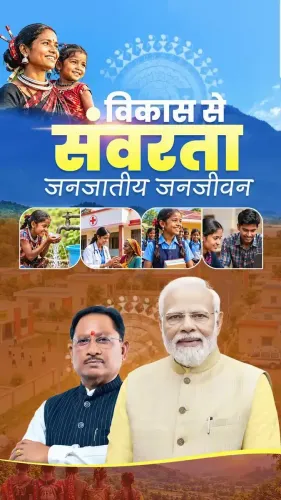
On Janjatiya Gaurav Diwas, Chhattisgarh Chief Minister Vishnu Deo Sai highlighted PM JANMAN's role in delivering education, health, housing and roads to India's 75 Particularly Vulnerable Tribal Groups, crediting the initiative to PM Narendra Modi's leadership.
Key Takeaways
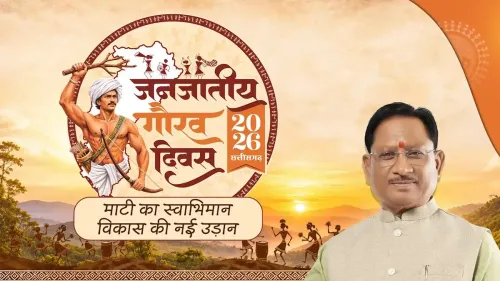
Janjatiya Gaurav Diwas , observed on 15 November , marks the birth anniversary of tribal icon Birsa Munda and anchors the government's annual tribal welfare messaging.
PM JANMAN (Pradhan Mantri Janjati Adivasi Nyaya Maha Abhiyan) was launched in 2023 to saturate 75 PVTG communities with basic services.
The scheme targets four specific pillars: education, healthcare, housing, and road connectivity — the precise services CM Sai named in his post.
Chhattisgarh hosts a significant PVTG population, making it a key state for PM JANMAN's implementation and progress tracking.
CM Vishnu Deo Sai , himself from a tribal background, has consistently spotlighted central tribal welfare initiatives since taking office.
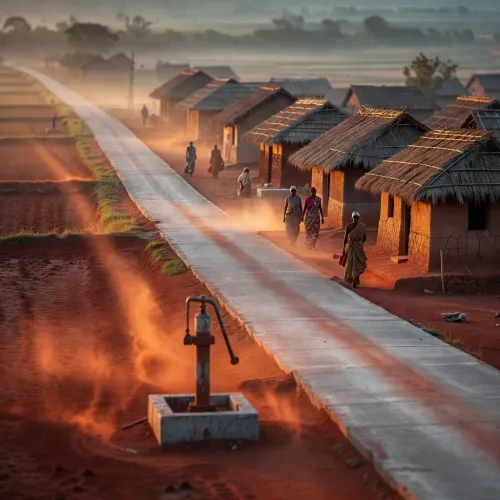
On Janjatiya Gaurav Diwas, the annual tribute to tribal icon Birsa Munda observed every 15 November, Chhattisgarh Chief Minister Vishnu Deo Sai pointed to a quiet but consequential shift unfolding in India's most isolated hamlets — schools reaching children who had none, roads connecting villages that maps barely acknowledged, and health care arriving where it had long been absent.
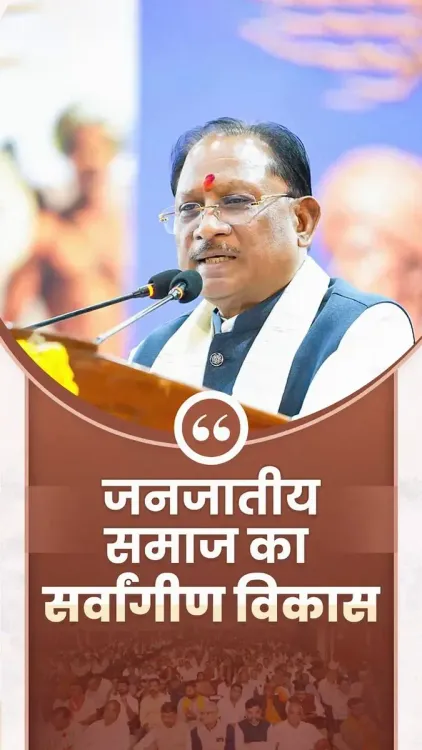
Posting on 16 November 2026, CM Sai wrote: 'Aaj janjatiya samaj ke samagra vikas ko nayi gati mil rahi hai' — 'Today, the holistic development of tribal society is gaining new momentum' — crediting the direction set by Prime Minister Narendra Modi and specifically naming the PM Janjati Adivasi Nyaya Maha Abhiyan (PM JANMAN) as the vehicle carrying that momentum.
What PM JANMAN targets — and why PVTGs are different
Not all tribal communities face the same barriers. India officially recognises 75 Particularly Vulnerable Tribal Groups (PVTGs) — communities defined by pre-agricultural lifestyles, geographic isolation, low literacy, and stagnant or declining populations. Mainstream development programmes have historically bypassed them entirely.
Announced in 2023, PM JANMAN was designed with saturation as its mandate: every PVTG household, in every identified hamlet, to receive the full stack of basic services — education, healthcare, housing, and road connectivity. CM Sai's post underlines that the scheme is delivering precisely these four pillars to communities that standard welfare architecture had consistently failed to reach.
Chhattisgarh's stake in the tribal mission
Chhattisgarh is home to a substantial share of India's PVTG population, making it one of the states where PM JANMAN's footprint is most consequential. Chief Minister Sai — himself from a tribal background and a consistent voice for Scheduled Tribe welfare within the BJP — has made amplifying central tribal initiatives a defining feature of his administration since taking office.
The timing of the post, a day after Janjatiya Gaurav Diwas, is deliberate. The occasion — built around the birth anniversary of Birsa Munda, the 19th-century tribal freedom fighter from Jharkhand — has become the central government's annual moment to stock-take tribal welfare commitments and renew them in public view.
The longer arc: tribal India and the infrastructure gap
Since 2014, successive Union Budgets have progressively expanded the tribal sub-plan allocation, and dedicated missions for Scheduled Tribe areas have multiplied. PM JANMAN represents the sharpest point of that effort — a targeted, named programme for the communities deepest inside the exclusion zone. What remains to be tracked is how infrastructure targets translate into ground-level outcomes, and whether the next Union Budget carries supplementary allocations to maintain pace.
For the families living in PVTG hamlets across Chhattisgarh and beyond, the question was never ideological. It was always concrete: a road, a school, a clinic, a home. The measure of this mission will be counted in those four things — and nothing else.
Point of View
The benchmark is now set: PM JANMAN's credibility will be tested by verifiable infrastructure outcomes in PVTG hamlets, not by the frequency of anniversary posts. The long-term arc — whether saturation-model welfare can outlast electoral cycles — remains the most consequential question.
NationPress
16 Nov 2026
Frequently Asked Questions
What is PM JANMAN scheme?
PM JANMAN , or Pradhan Mantri Janjati Adivasi Nyaya Maha Abhiyan , is a central government scheme launched in 2023 aimed at providing saturation coverage of basic services — education, health, housing, and road connectivity — to India's 75 Particularly Vulnerable Tribal Groups (PVTGs) .
Who are Particularly Vulnerable Tribal Groups (PVTGs)?
PVTGs are 75 tribal communities in India identified by the government as the most marginalised, characterised by pre-agricultural lifestyles, geographic isolation, very low literacy rates, and stagnant or declining populations. They receive special targeted welfare under schemes like PM JANMAN.
What is Janjatiya Gaurav Diwas and when is it celebrated?
Janjatiya Gaurav Diwas is observed every year on 15 November to mark the birth anniversary of tribal freedom fighter Birsa Munda and to recognise the contributions of tribal communities to India's history and culture.
Why did CM Vishnu Deo Sai post about tribal welfare?
Chhattisgarh Chief Minister Vishnu Deo Sai posted on 16 November 2026 , a day after Janjatiya Gaurav Diwas , to highlight the progress of PM JANMAN in reaching PVTG communities with education, health, housing and roads, crediting PM Modi's leadership for the initiative's momentum.
What services does PM JANMAN provide to tribal communities?
PM JANMAN targets four core services for PVTG communities: education (schools and learning access), healthcare (medical facilities), housing (pucca homes), and road connectivity (linking isolated hamlets to the mainstream infrastructure network).