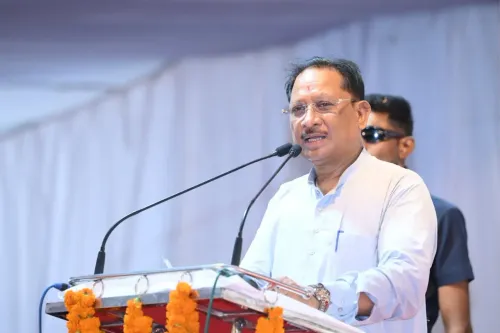
CM Sai flags off anti-drug padayatra week in Raipur
Synopsis
Chhattisgarh CM Vishnu Deo Sai has spotlighted a padayatra week in Raipur under the national Nasha Mukt Bharat Abhiyan, signalling executive support for the anti-drug drive as the state looks to extend the campaign across all districts.
Key Takeaways
CM Vishnu Deo Sai pinned the Nasha Mukt Bharat Abhiyan padayatra week announcement on 30 September 2026 .
The event is being held in Raipur , Chhattisgarh's state capital.
The Nasha Mukt Bharat Abhiyan was launched nationally in 2020 by the Ministry of Social Justice and Empowerment.
Padayatras are a frontline community-engagement tool under the campaign, targeting youth and affected families.
Similar marches are expected to be rolled out in other Chhattisgarh districts following the Raipur week.
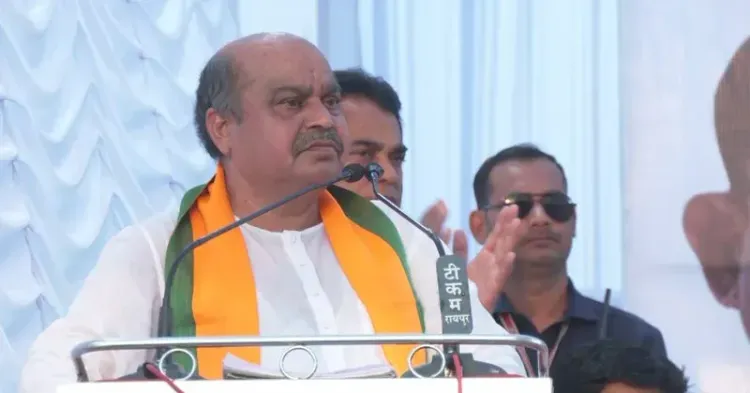
A week-long march against drug abuse is under way in Raipur, the capital of Chhattisgarh, as the state government doubles down on its commitment to the national Nasha Mukt Bharat Abhiyan. Chhattisgarh Chief Minister Vishnu Deo Sai pinned the announcement on his official X account on Wednesday, 30 September 2026, drawing attention to the padayatra week being organised under the campaign.
What the padayatra week means for Raipur
The padayatra — a people's march — is one of the most visible grassroots tools deployed under the Nasha Mukt Bharat Abhiyan, translating a national policy directive into street-level action. Marchers move through neighbourhoods, carrying the message of de-addiction directly to communities, particularly young people, who are the campaign's primary audience. Raipur, as the state capital, sets the tone for similar mobilisations that are expected to follow in other Chhattisgarh districts.
The national campaign behind the march
The Nasha Mukt Bharat Abhiyan was launched in 2020 by the Ministry of Social Justice and Empowerment to tackle substance abuse through community awareness, institutional outreach, and de-addiction support. State governments have since adopted the framework, organising local events — marches, workshops, and awareness weeks — to give the national campaign a tangible, community-facing presence. Chhattisgarh's padayatra week in Raipur is precisely this kind of state-level activation.
CM Sai's welfare push since taking office
Vishnu Deo Sai assumed charge as Chief Minister in December 2023, and social welfare and public-health messaging have formed a consistent strand of his administration's public outreach. By personally pinning the padayatra week on his feed, Sai is signalling direct executive endorsement of the anti-drug drive — a visible nudge for district administrations and civil society across the state to engage.
The real test will come when similar marches roll out beyond Raipur into Chhattisgarh's smaller towns and rural belts, where substance abuse challenges are often most acute and awareness infrastructure thinnest.
Point of View
CM Sai is lending direct political capital to what can sometimes be a routinely executed central scheme — a move that nudges district officials to treat it as a priority rather than a checkbox. The Nasha Mukt Bharat Abhiyan has long needed stronger state-level ownership to move beyond awareness events into measurable de-addiction outcomes. For the BJP government in Chhattisgarh, visibly leading on a welfare and public-health theme also broadens the party's social outreach beyond its traditional strongholds. The real benchmark will be whether Raipur's momentum translates into sustained, district-level programming across the state.
NationPress
30 Sept 2026
Frequently Asked Questions
What is the Nasha Mukt Bharat Abhiyan?
The Nasha Mukt Bharat Abhiyan is a national anti-drug campaign launched in 2020 by India's Ministry of Social Justice and Empowerment to combat substance abuse through community awareness programmes and de-addiction outreach.
What is a padayatra in the context of this campaign?
A padayatra is a people's march conducted through neighbourhoods and communities to spread awareness — in this case, about the harms of drug and substance abuse — directly to residents, especially youth.
Where is the Nasha Mukt Bharat Abhiyan padayatra week being held?
The padayatra week is being organised in Raipur, the capital city of Chhattisgarh.
Who is Vishnu Deo Sai and when did he become CM of Chhattisgarh?
Vishnu Deo Sai is the Chief Minister of Chhattisgarh and a BJP leader who assumed office in December 2023.
Will similar anti-drug marches be held in other parts of Chhattisgarh?
Based on the broader pattern of the Nasha Mukt Bharat Abhiyan, similar padayatra events are expected to be rolled out in other Chhattisgarh districts following the Raipur week, though specific schedules have not been confirmed.