CM Sai attends satsang in Janjgir-Champa, calls for anti-drug movement
Synopsis
Chief Minister Vishnu Deo Sai attended the Satya Nijnaam Satsang Sammelan in Janjgir-Champa on 14 June 2026, planted a red sandalwood sapling, and called on youth to join a de-addiction people's movement while reiterating the BJP government's zero-tolerance stance on corruption.
Key Takeaways
CM Vishnu Deo Sai attended the Satya Nijnaam Satsang Sammelan at village Pondi (Racha) , Nawagarh block, Janjgir-Champa, on 14 June 2026 .
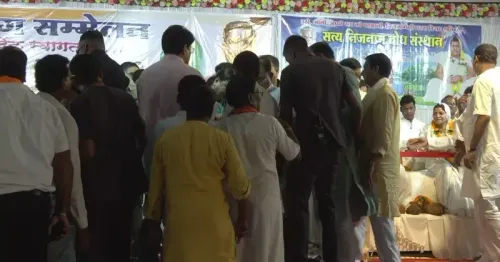
He received blessings from Sadguru Satya Kabaddidas Ji and Gurumata Satya Leela Devi Ji at the Satya Nijnaam Bodh Sansthan .
CM Sai planted a red sandalwood sapling at the ashram as a message of environmental conservation.
He called for making nasha-mukti (de-addiction) a jan-andolan (people's movement) to keep youth away from substance abuse.
The Chief Minister reiterated the state government's commitment to sushasan, transparency, and zero tolerance on corruption .
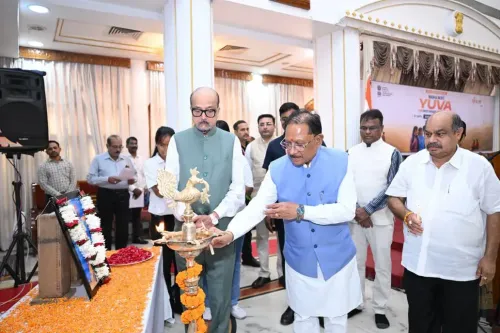
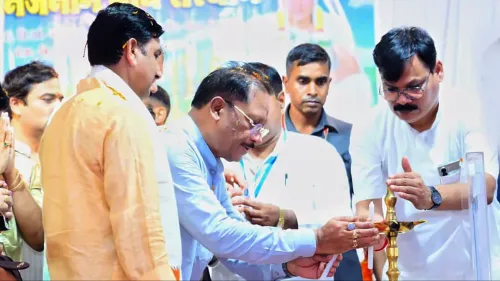
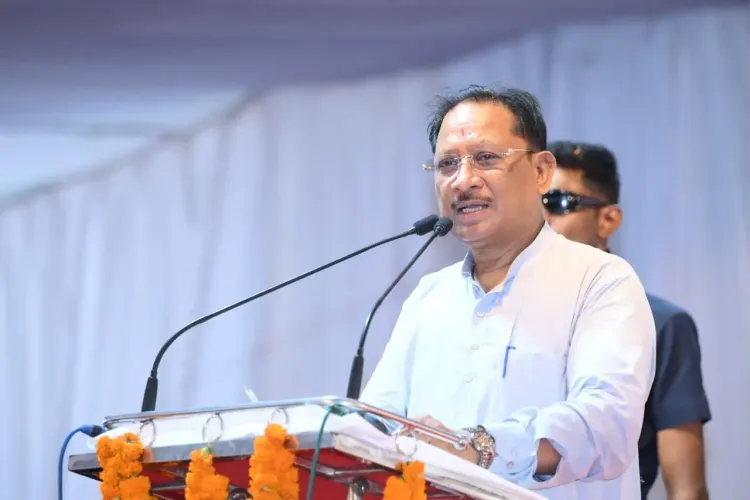
Chief Minister Vishnu Deo Sai attended the Satya Nijnaam Satsang Sammelan at the Satya Nijnaam Bodh Sansthan in village Pondi (Racha), Nawagarh block, Janjgir-Champa district, on Sunday, 14 June 2026, combining a spiritual visit with a public call to make de-addiction a mass movement.
Context
The Chief Minister's Office of Chhattisgarh shared that CM Sai received blessings from Parampoojya Sadguru Satya Kabaddidas Ji (revered spiritual head) and Poojniya Gurumata Satya Leela Devi Ji (the revered Gurumata) at the ashram. He also planted a red sandalwood sapling within the ashram premises, conveying a message of environmental conservation.
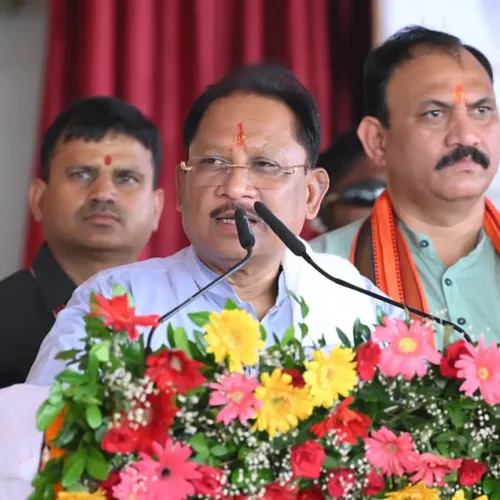
Addressing the gathering, CM Sai called on youth to stay away from substance abuse and urged that nasha-mukti (de-addiction) be turned into a jan-andolan — a people's movement. He also outlined the state government's welfare schemes, its commitment to sushasan (good governance), transparency, and a zero-tolerance policy on corruption.
Policy Backdrop
The BJP government in Chhattisgarh, which took office in December 2023 after winning the state assembly elections, has repeatedly placed sushasan, transparency, and anti-corruption at the centre of its administrative agenda. CM Sai, a tribal leader with a long background as a Member of Parliament and state minister focused on rural and tribal welfare, has used public platforms to reinforce these priorities since assuming office.
The use of spiritual and community gatherings to amplify social-welfare messaging — particularly on substance abuse — reflects a pattern seen across BJP-ruled states since 2014. Tree-planting at such events has similarly become a recurring feature of state-level environmental outreach campaigns.
Stakeholders and Impact
The primary audience for the nasha-mukti appeal is rural youth in districts such as Janjgir-Champa, where access to de-addiction infrastructure remains limited. Spiritual institutions like the Satya Nijnaam Bodh Sansthan serve as influential community nodes in such areas, giving the government's messaging a wider reach than administrative channels alone.
The red sandalwood planting, while ceremonial, feeds into the state's broader environmental conservation narrative and signals an alignment between cultural events and ecological responsibility. Welfare scheme outreach at such gatherings also helps connect rural residents directly with government programmes.
What's Next
The district-level rollout of the Nasha Mukti campaign across Chhattisgarh will be a key indicator of whether Sunday's call translates into structured action. Observers will also watch for any new guidelines on welfare-scheme delivery or anti-corruption measures in the next state assembly session. The government's ability to institutionalise the jan-andolan framing — beyond individual events — will determine the campaign's long-term impact on substance abuse in rural communities.
Point of View
Repeated consistently since the December 2023 election mandate, signals that the party intends to keep governance optics central ahead of future electoral cycles. The red sandalwood planting adds an environmental layer that broadens the event's symbolic register without committing to specific policy deliverables. Whether the jan-andolan framing produces measurable district-level outcomes in Janjgir-Champa will be the real test of this approach.
NationPress
14 Sept 2026
Frequently Asked Questions
Why did CM Vishnu Deo Sai visit Janjgir-Champa on 14 June 2026?
CM Sai attended the Satya Nijnaam Satsang Sammelan at the Satya Nijnaam Bodh Sansthan in village Pondi (Racha), Nawagarh block, where he received blessings from the ashram's spiritual leaders and addressed a gathering on de-addiction and good governance.
What is the Satya Nijnaam Bodh Sansthan?
The Satya Nijnaam Bodh Sansthan is a spiritual ashram located in village Pondi (Racha) in the Nawagarh block of Janjgir-Champa district, Chhattisgarh, that hosts satsang events combining religious discourse with social messaging.
What did CM Sai say about nasha-mukti at the satsang?
CM Sai called on youth to stay away from substance abuse and urged that de-addiction (nasha-mukti) be made a jan-andolan — a people's movement — involving broad community participation.
What tree did CM Sai plant at the ashram?
CM Sai planted a red sandalwood sapling within the ashram premises as a symbolic message of environmental conservation.
What is the Chhattisgarh government's stance on corruption?
The BJP government in Chhattisgarh, in office since December 2023, has stated a zero-tolerance policy on corruption and has consistently emphasised sushasan (good governance) and transparency as core administrative priorities.