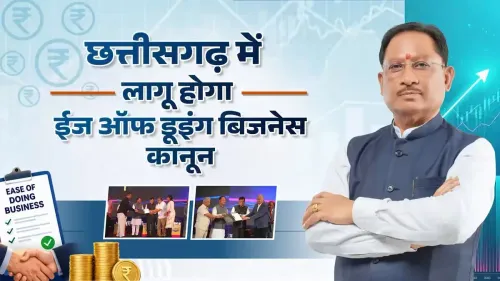
CM Sai Hails Chhattisgarh Ease of Doing Business Bill
Synopsis
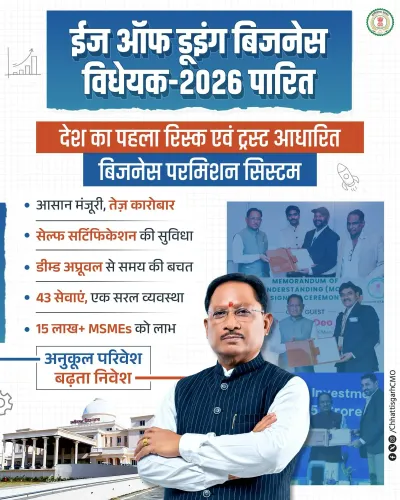
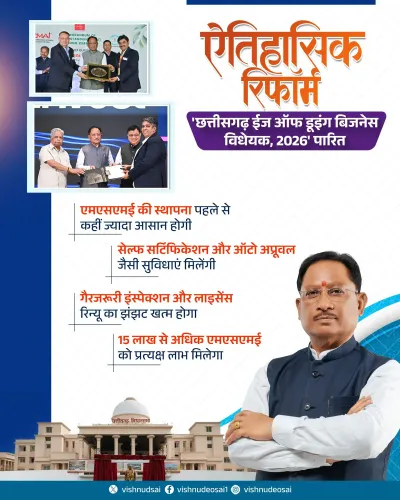
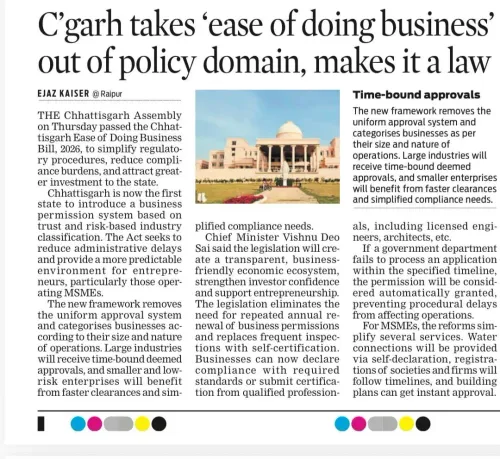
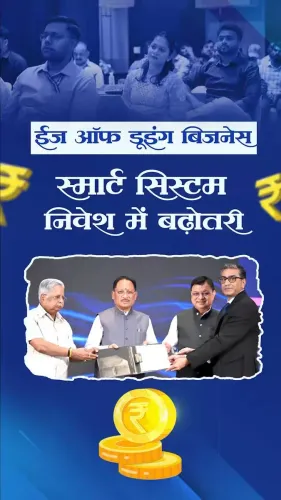
Chhattisgarh Chief Minister Vishnu Deo Sai on 20 July 2026 hailed the Assembly passage of the Ease of Doing Business Bill, pledging to make the state India's top destination for enterprise, investment, and youth employment through simpler, transparent, and time-bound regulatory processes.
Key Takeaways
The Chhattisgarh Legislative Assembly passed the Ease of Doing Business Bill on or before 20 July 2026 .
Chief Minister Vishnu Deo Sai described the bill as a step toward making Chhattisgarh the country's most trusted and attractive state for enterprise and investment.
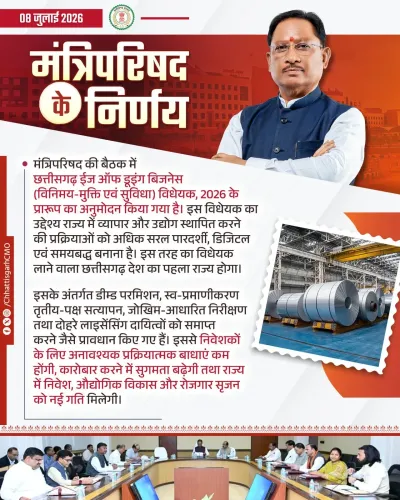
The legislation aims to make business processes simple, transparent, and time-bound , reducing regulatory compliance burdens.
The bill is expected to generate employment and self-employment opportunities for Chhattisgarh's youth.
The reform aligns with the Government of India's Make in India and state-level Ease of Doing Business framework launched in 2014–15.
Implementation rules and the state's performance on national EoDB rankings will be the key metrics to watch going forward.
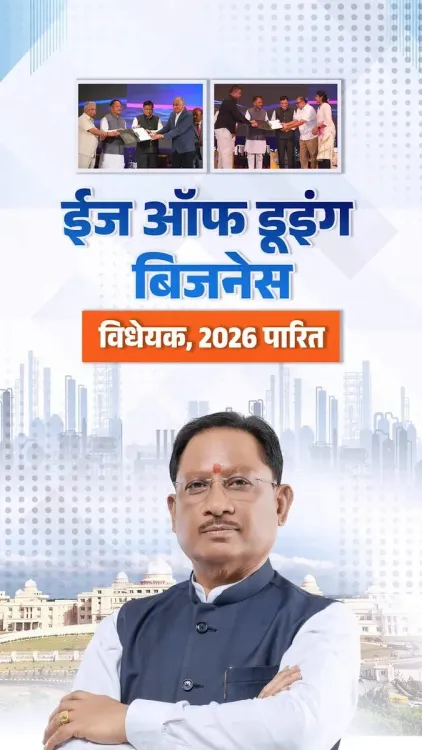
Chhattisgarh Chief Minister Vishnu Deo Sai on Monday, 20 July 2026 welcomed the passage of the Ease of Doing Business Bill in the Chhattisgarh Legislative Assembly, calling it a decisive step toward making the state the country's most trusted and attractive destination for enterprise, investment, and employment.
Context
In a post on X, Chief Minister Sai stated, 'हमारा संकल्प है कि छत्तीसगढ़ उद्यम, निवेश और रोजगार के लिए देश का सबसे भरोसेमंद और आकर्षक राज्य बने' ['Our resolve is that Chhattisgarh becomes the most trusted and attractive state in the country for enterprise, investment, and employment']. He described the newly passed bill as an important step toward creating an investment-friendly environment, expanding industries, and generating new employment opportunities. The Chief Minister added that the initiative would make processes 'simple, transparent, and time-bound,' giving fresh momentum to investment and creating avenues of employment and self-employment for the state's youth.
Policy Backdrop
The bill fits squarely within the competitive federalism framework that took shape after the Government of India launched its Make in India initiative and state-level Ease of Doing Business rankings in 2014–15. Those rankings were designed to push states to reduce regulatory compliance costs, streamline approvals, and improve the overall business climate. Chhattisgarh, a resource-rich state in central India with substantial mineral wealth, has been seeking to diversify its economic base beyond extraction into manufacturing and services. The new legislation reflects that strategic ambition, signalling the Vishnu Deo Sai government's intent to position the state as a competitive investment hub since he assumed office in December 2023.
Stakeholders and Impact
The bill is expected to benefit multiple groups: domestic and foreign investors looking for predictable regulatory environments, industries seeking faster clearances for expansion, and most prominently, the state's youth population, which stands to gain from both direct employment in new enterprises and self-employment opportunities. Across India, similar ease-of-doing-business reforms have typically centred on single-window clearance systems and time-bound approvals that reduce the friction and cost of setting up and running businesses. If implemented effectively, such measures can shorten the gap between investment intent and actual on-ground activity.
What's Next
Attention will now turn to the framing of implementation rules and the operational timeline under the new law. Analysts and industry bodies will watch whether Chhattisgarh translates the legislative intent into measurable improvements in its position on national ease-of-doing-business assessments. Any early investment commitments announced in the wake of the bill's passage will be a key indicator of market confidence in the reforms. The state government's ability to operationalise single-window and time-bound mechanisms will ultimately determine whether the legislation delivers on Chief Minister Sai's stated resolve.
Point of View
And Chhattisgarh's mineral-rich but services-light economy makes it a natural candidate for such reforms. The real test, as with most EoDB legislation across Indian states, will be in the subordinate rules and the actual speed of clearances rather than the statute itself. If the state can demonstrate measurable improvements in time-to-approval metrics, it could meaningfully shift investor perception of Chhattisgarh as an industrial destination.
NationPress
20 Oct 2026
Frequently Asked Questions
What is the Chhattisgarh Ease of Doing Business Bill?
The Chhattisgarh Ease of Doing Business Bill is legislation passed by the Chhattisgarh Legislative Assembly to streamline and simplify regulatory approvals for businesses, with the goal of making processes more transparent and time-bound to attract investment and create employment.
Why did CM Vishnu Deo Sai support the Ease of Doing Business Bill?
Chief Minister Vishnu Deo Sai stated that the bill aligns with his government's resolve to make Chhattisgarh the most trusted and attractive state in India for enterprise, investment, and employment, particularly for the youth.
How does this bill benefit youth in Chhattisgarh?
By attracting more investment and enabling faster business expansion, the bill is expected to generate both direct employment opportunities and self-employment avenues for Chhattisgarh's young population.
How does Chhattisgarh's EoDB Bill relate to the Make in India initiative?
The bill is part of the broader competitive federalism framework promoted by the Government of India since 2014–15, under which states enact ease-of-doing-business reforms to improve national rankings and attract domestic and foreign investment.
What happens next after the Chhattisgarh Ease of Doing Business Bill is passed?
The focus will shift to framing implementation rules, setting up operational mechanisms such as single-window clearances, and tracking whether the state improves its position on national ease-of-doing-business assessments.