CM Sai's Rural Bus Scheme Expands Village Connectivity in Chhattisgarh
Synopsis
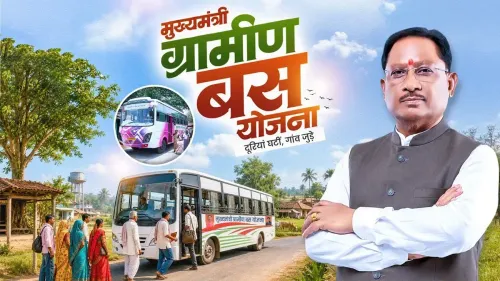
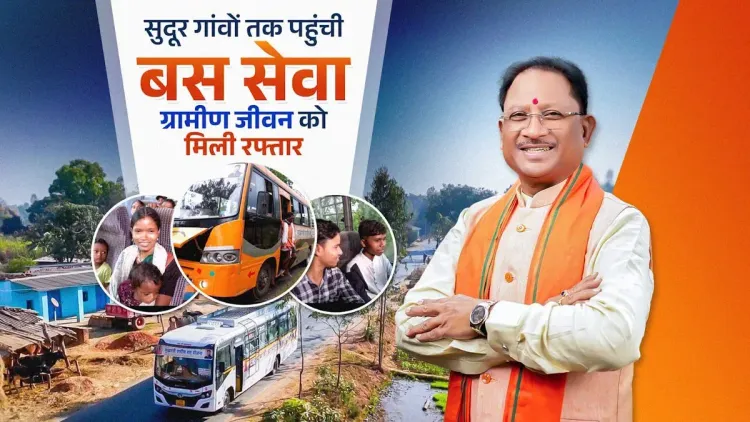
The Chief Minister's Office of Chhattisgarh on 31 May 2026 spotlighted the Mukhya Mantri Gramin Bus Yojana, positioning the state-run rural bus scheme as a gateway to education, employment, health, and self-reliance for lakhs of villagers under CM Vishnu Deo Sai's government.
Key Takeaways
The Chief Minister's Office of Chhattisgarh promoted the Mukhya Mantri Gramin Bus Yojana on 31 May 2026 as central to the state's rural development agenda.
Chief Minister Vishnu Deo Sai has led the BJP government in Chhattisgarh since December 2023 , with rural connectivity a stated early priority.
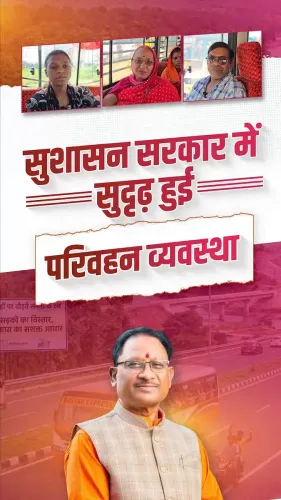
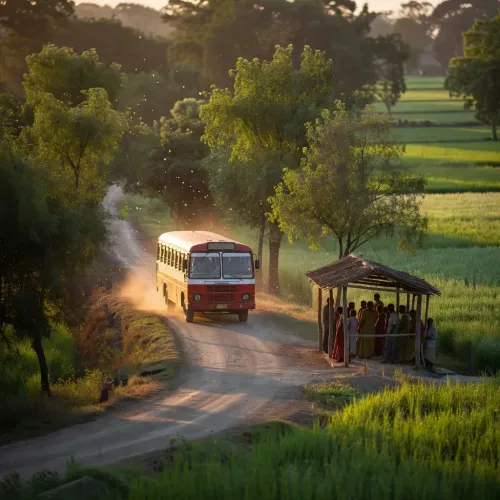
The scheme aims to link villages with towns, improving access to education, healthcare, employment, and markets for lakhs of rural residents.
The government frames the initiative as more than transport — describing it as a driver of self-reliance and broader prosperity.
The approach mirrors rural bus models implemented in other Indian states such as Madhya Pradesh and Rajasthan .
District-wise rollout progress and future route expansions remain key metrics to watch in upcoming state budget announcements.
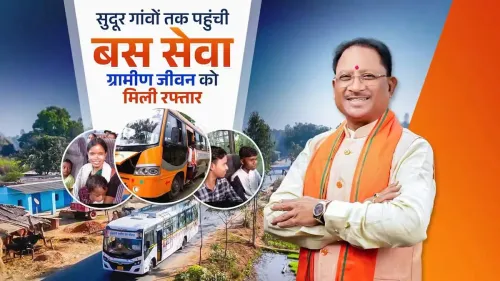
The Chief Minister's Office of Chhattisgarh reaffirmed on 31 May 2026 the Vishnu Deo Sai government's commitment to rural development through the Mukhya Mantri Gramin Bus Yojana, describing the scheme as a transformative link between villages and towns across the state.
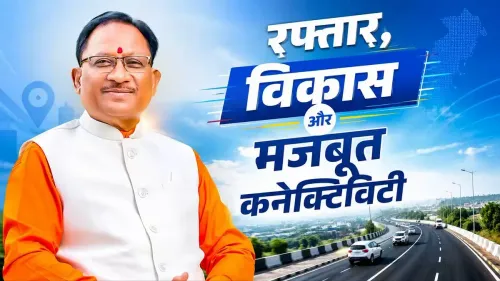
The post, shared in Hindi, captures the administration's guiding principle: 'जहां कनेक्टिविटी बढ़ेगी, वहां अवसर बढ़ेंगे' ('Where connectivity grows, opportunity will grow'). It further states that the rural bus initiative is opening 'new conveniences, new hope, and new opportunities' for lakhs of people living in rural areas of the state.
Context
Chhattisgarh, a central Indian state formed in 2000, has a large rural and tribal population for whom physical access to towns has historically been limited. Poor last-mile connectivity has long constrained residents' ability to reach schools, hospitals, and employment centres. The Mukhya Mantri Gramin Bus Yojana is the Sai government's direct policy response to this structural gap.
The official post frames the scheme not merely as a transport measure but as a conduit for education, employment, healthcare, and self-reliance — 'केवल परिवहन नहीं, बल्कि शिक्षा, रोजगार, स्वास्थ्य और आत्मनिर्भरता की नई कड़ी' ('not just transport, but a new link for education, employment, health, and self-reliance').
Policy Backdrop
Following the BJP government's formation in December 2023 under Chief Minister Vishnu Deo Sai, rural transport augmentation was identified as a priority within the administration's early policy agenda. The scheme aligns with a wider national pattern in which Indian states have deployed targeted rural bus services to address last-mile connectivity, drawing on models developed in states such as Madhya Pradesh and Rajasthan.
These state-level initiatives typically operate alongside central road infrastructure programmes, combining improved road networks with subsidised or state-funded bus services to make access economically viable for remote communities.
Stakeholders and Impact
The primary beneficiaries of the scheme are rural residents and village communities across Chhattisgarh, particularly those in areas where private transport operators have found routes commercially unviable. For students, the scheme can reduce dropout rates linked to distance; for patients, it can mean timely access to district hospitals; for job-seekers, it can open daily commutes to urban employment markets.
The government's framing — connecting villages to towns as a driver of prosperity — reflects a policy consensus that physical connectivity produces compounding gains across social sectors, not only in transport statistics.
What's Next
Observers and policymakers will watch the district-wise rollout progress of the Mukhya Mantri Gramin Bus Yojana and any supplementary budget allocations or route expansions announced in the next state fiscal statement. The scheme's reach and frequency of service will be key indicators of whether the government's stated vision translates into measurable improvements in rural mobility across Chhattisgarh.
If the initiative sustains momentum, it could serve as a model for other states grappling with comparable rural connectivity deficits, reinforcing the case for state-led transport intervention as a development tool.
Point of View
People-facing infrastructure in states with large rural electorates. By framing a transport scheme as a vehicle for education, health, and self-reliance, the administration is attempting to convert a logistical programme into a multi-sector development story — a politically durable message in a state where tribal and rural voters are decisive. The connectivity-as-prosperity framing also aligns with central government rhetoric on infrastructure-led growth, suggesting deliberate policy coherence between Raipur and New Delhi. Whether the scheme delivers at scale will ultimately be tested by route coverage data and ridership figures rather than official communications.
NationPress
15 Oct 2026
Frequently Asked Questions
What is the Mukhya Mantri Gramin Bus Yojana in Chhattisgarh?
The Mukhya Mantri Gramin Bus Yojana is a state-run rural bus service initiative in Chhattisgarh designed to connect villages with towns, improving residents' access to education, healthcare, employment, and markets.
Who launched the Mukhya Mantri Gramin Bus Yojana?
The scheme is an initiative of the Chhattisgarh government led by Chief Minister Vishnu Deo Sai, who took office in December 2023 following the BJP's victory in the state assembly elections.
How does the rural bus scheme benefit villagers in Chhattisgarh?
The scheme provides regular bus connectivity between rural areas and towns, enabling villagers to access schools, hospitals, and job markets that were previously difficult to reach due to poor last-mile transport links.
Is Chhattisgarh the only Indian state with a rural bus scheme?
No. Several Indian states including Madhya Pradesh and Rajasthan have implemented similar rural bus initiatives to address last-mile connectivity gaps, reflecting a broader national policy consensus on transport-led rural development.
What is the Chhattisgarh government's vision for rural connectivity?
The Vishnu Deo Sai government has stated that improving connectivity will directly increase opportunities and prosperity in rural areas, positioning transport infrastructure as a foundation for gains in education, health, and local employment.