CM Sai Champions Rural Bus Scheme for Chhattisgarh Villages
Synopsis
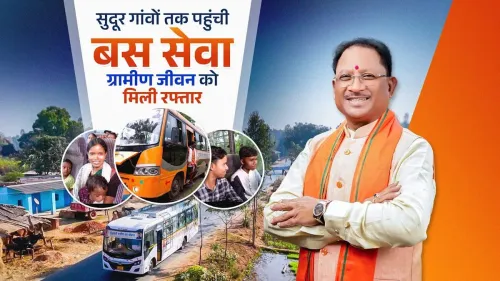
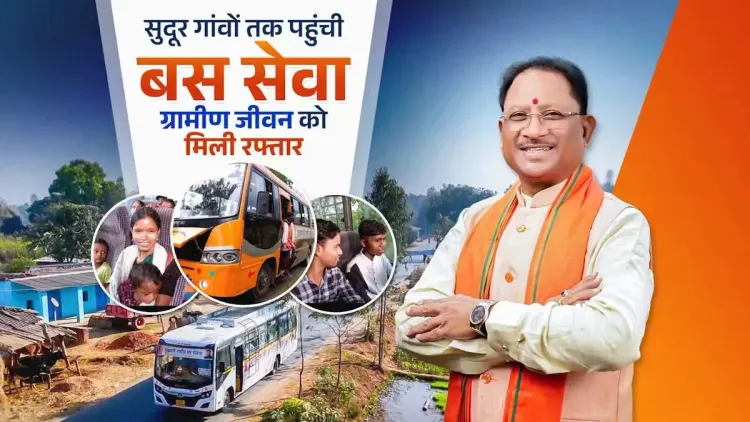
Chhattisgarh Chief Minister Vishnu Deo Sai has reaffirmed the Mukhyamantri Gramin Bus Yojana, framing expanded rural bus services as a pathway to education, health, employment, and self-reliance for lakhs of villagers across the state.
Key Takeaways
CM Vishnu Deo Sai publicly championed the Mukhyamantri Gramin Bus Yojana on 31 May 2026 , calling it a vehicle for inclusive development.
The scheme aims to connect remote Chhattisgarh villages to urban centres, targeting improved access to education, healthcare, and employment.
Rural residents, students, patients, and daily-wage workers are among the primary intended beneficiaries.
The initiative complements central road-building programmes such as PMGSY , which have expanded all-weather rural roads in the state.
CM Sai framed the scheme as central to building a 'new Chhattisgarh' where connectivity directly drives prosperity and development pace.
District-level route expansion and fleet additions are expected to be tracked as key performance indicators in upcoming government reviews.
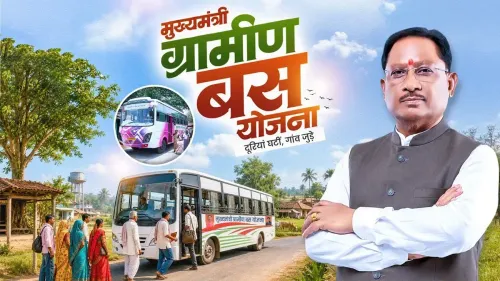
Chhattisgarh Chief Minister Vishnu Deo Sai on Sunday, 31 May 2026 invoked the principle of inclusive development as he reaffirmed his government's commitment to the Mukhyamantri Gramin Bus Yojana, a state scheme designed to connect remote villages with urban centres through expanded bus services.
Context
In a post on X, CM Sai framed rural connectivity as the cornerstone of meaningful progress, writing: 'Vikas tabhi sarthak hai, jab uski roshni samaj ke antim vyakti tak pahunche' — 'Development is meaningful only when its light reaches the last person in society.' The statement echoes the Gandhian and Ambedkarite principle of last-mile inclusion that has long anchored India's welfare discourse.
He described the Mukhyamantri Gramin Bus Yojana as opening 'new conveniences, new hopes, and new opportunities' for lakhs of people in rural areas of Chhattisgarh, positioning the scheme as far more than a transport initiative.
Policy Backdrop
Since Chhattisgarh's formation in November 2000, successive state governments have operated rural bus routes through state transport mechanisms to bridge the connectivity gap in a state where tribal and forest communities are spread across difficult terrain. The current BJP administration, which took office in December 2023 after a decisive assembly election victory, has sought to build on this legacy by explicitly linking transport access to outcomes in education, health, and employment.
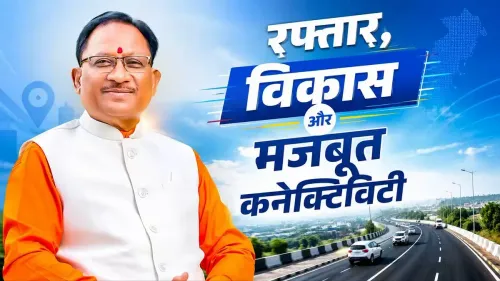
The scheme sits alongside complementary central infrastructure such as the Pradhan Mantri Gram Sadak Yojana (PMGSY), which has steadily expanded all-weather road networks in rural Chhattisgarh, providing the road base on which new bus routes can operate. CM Sai articulated a clear formula: 'Where connectivity grows, opportunities will grow. Where facilities reach, prosperity will come. Where access becomes easier, the pace of development will accelerate.'
Stakeholders and Impact
The scheme's primary beneficiaries are rural residents — particularly students who need reliable transport to reach schools and colleges, patients seeking access to district hospitals and primary health centres, and daily-wage workers commuting to urban employment markets. For Chhattisgarh's significant tribal population, affordable and regular bus connectivity can reduce dependence on expensive private transport options.
Women travelling for healthcare, including maternal and child health services, and small farmers accessing mandis (agricultural markets) in nearby towns stand to benefit directly from expanded route coverage. The scheme's framing as a driver of 'self-reliance' (aatmanirbharta) signals an intent to reduce economic isolation in villages that have historically been underserved.
What's Next
District-level reviews of new routes, fleet additions, and passenger numbers are expected to serve as early performance indicators for the scheme. Observers will watch for supplementary budget provisions or fresh route tenders in the next assembly session that could signal the scale of the government's planned expansion. CM Sai's public reaffirmation of the scheme suggests it will remain a flagship of the BJP government's rural outreach ahead of future electoral cycles in Chhattisgarh.
If the scheme succeeds in systematically linking villages to urban services, it could offer a replicable model for other central Indian states grappling with similar rural-urban access deficits — making Chhattisgarh a test case for transport-led inclusive development.
Point of View
And the BJP is keen to demonstrate tangible last-mile delivery after its 2023 mandate. By explicitly linking a transport scheme to education, health, and employment outcomes, the government is attempting to broaden the political dividend of infrastructure spending beyond roads and bridges. The 'last person in society' framing is a deft rhetorical move that borrows from the inclusive development vocabulary associated with both Mahatma Gandhi and Dr B.R. Ambedkar, lending moral weight to what is essentially a state bus-route expansion. Whether the scheme delivers at scale will depend on route viability, fleet maintenance, and budget sustainability — factors that will be tested in the assembly sessions ahead.
NationPress
18 Oct 2026
Frequently Asked Questions
What is the Mukhyamantri Gramin Bus Yojana in Chhattisgarh?
The Mukhyamantri Gramin Bus Yojana is a Chhattisgarh state government scheme to extend bus services to rural and remote villages, aiming to improve residents' access to education, healthcare, employment, and markets in nearby towns.
Who launched the Mukhyamantri Gramin Bus Yojana?
The scheme is being implemented under the BJP government led by Chief Minister Vishnu Deo Sai, who took office in December 2023 after the party's assembly election victory in Chhattisgarh.
How does rural bus connectivity help villagers in Chhattisgarh?
Reliable bus services reduce travel costs for students reaching schools, patients accessing hospitals, and workers commuting to urban job markets — directly addressing economic and social isolation in remote areas.
What is CM Vishnu Deo Sai's vision for rural development in Chhattisgarh?
CM Sai has stated that development is meaningful only when it reaches the last person in society, and his government frames rural connectivity as a driver of education, health, employment, and self-reliance outcomes.
How does the Mukhyamantri Gramin Bus Yojana relate to PMGSY?
The Pradhan Mantri Gram Sadak Yojana has expanded all-weather rural roads in Chhattisgarh, providing the road infrastructure on which the state's rural bus routes under the Mukhyamantri Gramin Bus Yojana can operate more effectively.