CM Sai Rallies NSS Volunteers for Viksit Bharat Vision
Synopsis
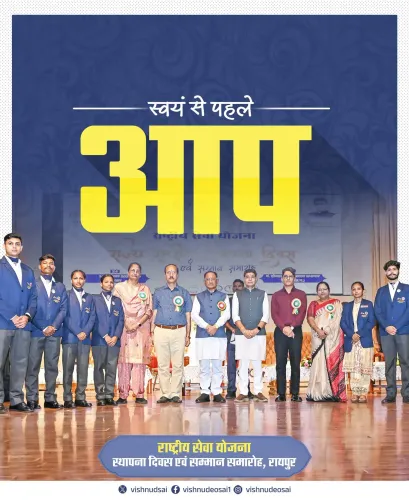
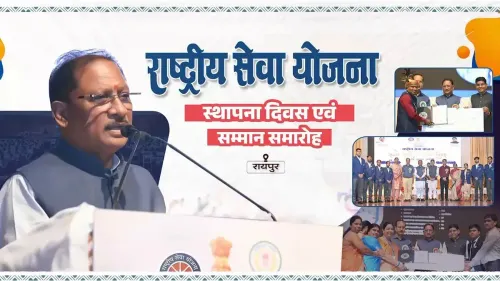
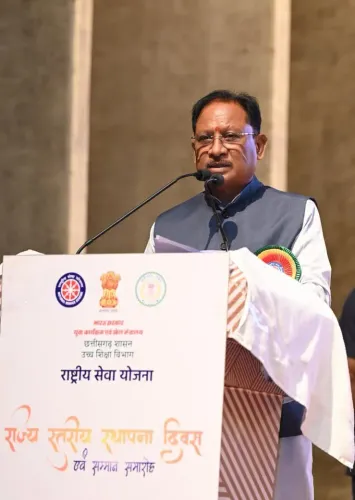
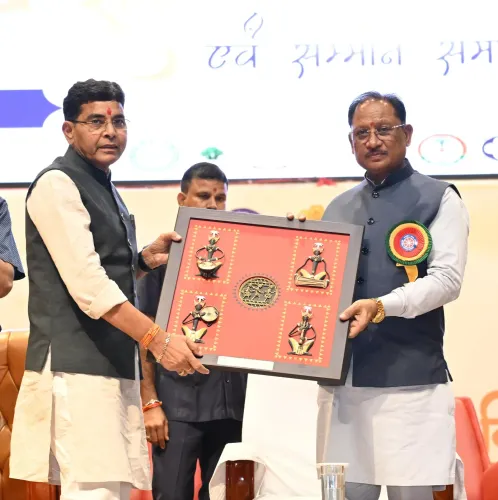
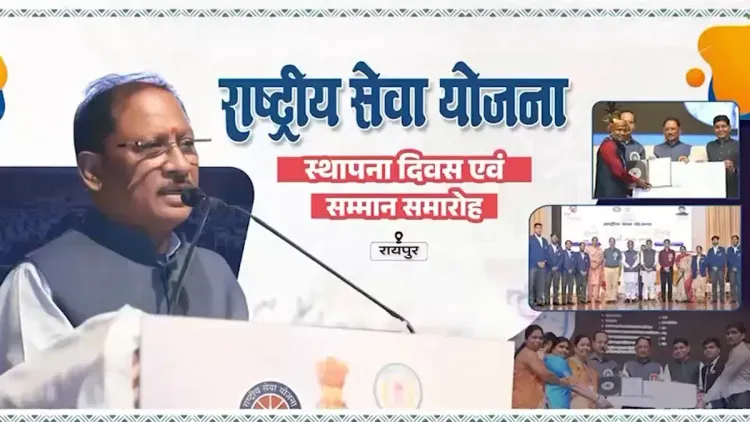
Chief Minister Vishnu Deo Sai addressed the state-level NSS Foundation Day and felicitation ceremony in Chhattisgarh on 25 September 2026, calling on youth volunteers to play an active role in nation-building under the Viksit Bharat 2047 vision.
Key Takeaways
CM Vishnu Deo Sai addressed the NSS State-Level Foundation Day and felicitation ceremony in Chhattisgarh on 25 September 2026 .
He called on NSS volunteers to actively participate in social service and nation-building as part of the Viksit Bharat vision.
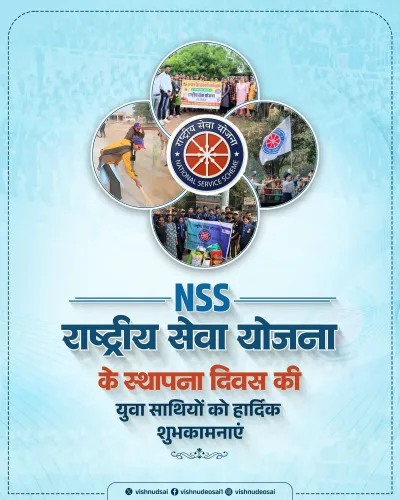
The National Service Scheme was originally launched on 24 September 1969 under the Ministry of Youth Affairs and Sports — making this its 57th anniversary .
The event was held under the #SevaSankalpAbhiyan campaign, a recurring service-pledge initiative of the Chhattisgarh government.
The address aligns with the post-2023 BJP state government's broader strategy of connecting local youth programming to central development goals.
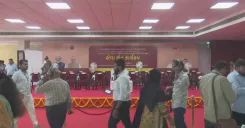
On the founding anniversary of one of India's oldest youth-service movements, Chief Minister Vishnu Deo Sai stood before a hall of young volunteers in Chhattisgarh and delivered a pointed call to action — urging them to become the living foundation of a developed nation.
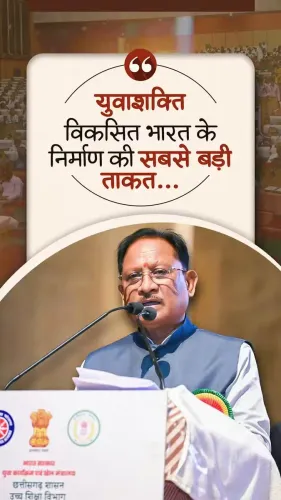
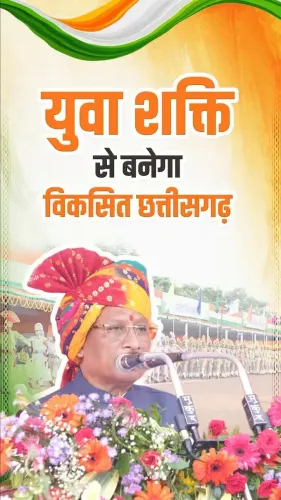
Speaking at the state-level Foundation Day and felicitation ceremony of the National Service Scheme (NSS) on Friday, 25 September 2026, CM Sai framed the occasion in unmistakably national terms. 'Yuva shakti, seva bhavna aur rashtra nirman ka sankalp' — youth power, the spirit of service, and the resolve for nation-building — he declared, are the strong foundations of both a Viksit Bharat and a developed Chhattisgarh.
A 57-Year Movement Still Finding New Purpose
The National Service Scheme was launched on 24 September 1969 — exactly 57 years before this ceremony — under the Union Ministry of Youth Affairs and Sports, with a mandate to draw students out of classrooms and into communities. The idea was straightforward: institutionalise volunteerism, connect educated youth to the grassroots. Decades later, the programme operates across universities and colleges nationwide, with its famous motto 'Not Me, But You' anchoring a philosophy of self-sacrifice over self-interest.
In Chhattisgarh, the BJP government that came to power after the 2023 assembly elections has consistently sought to align state-level youth programming with the Centre's Viksit Bharat 2047 vision — the national ambition to achieve developed-nation status by India's centenary of independence. CM Sai's address fit squarely within that framing, positioning NSS volunteers not merely as community helpers but as architects of a larger civilisational project.
Seva Sankalp Abhiyan and the Governance Messaging
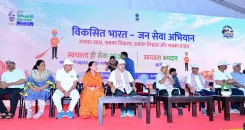
The ceremony was also flagged under the #SevaSankalpAbhiyan banner — a service-pledge campaign that has become a recurring motif in the state government's public outreach. The consistent invocation of 'seva' (service) language reflects a deliberate governance communication strategy: tying administrative priorities to a moral register that resonates with both volunteers and the broader public.
For the NSS volunteers in attendance, the Chief Minister's call was both ceremonial and substantive — an encouragement to translate the programme's founding ideals into active, measurable community contribution as the state and country push toward ambitious development benchmarks.
Youth programmes alone do not build nations — but moments like these, when a state's top executive publicly invests political capital in student volunteerism, have a way of deciding whether the next generation shows up.
Point of View
The Chhattisgarh government signals alignment with central priorities while simultaneously building a grassroots mobilisation narrative ahead of future electoral cycles. The Seva Sankalp Abhiyan branding adds a campaign layer to what might otherwise be a routine anniversary event. Whether such messaging translates into measurable youth policy outcomes will depend on how the state institutionalises these moments beyond the ceremonial stage.
NationPress
25 Sept 2026
Frequently Asked Questions
What is the NSS Foundation Day and when is it celebrated?
NSS Foundation Day marks the anniversary of the National Service Scheme, which was launched on 24 September 1969 . It is observed annually to honour student volunteers and recommit to the programme's mission of community service and nation-building.
What did CM Vishnu Deo Sai say at the NSS ceremony in Chhattisgarh?
CM Sai called on NSS volunteers to play an active role in society and national service, stating that 'youth power, the spirit of service, and the resolve for nation-building' are the foundations of both a developed Chhattisgarh and a developed India.
What is the Seva Sankalp Abhiyan in Chhattisgarh?
The Seva Sankalp Abhiyan is a service-pledge campaign promoted by the Chhattisgarh state government, frequently invoked at youth and community events to reinforce a governance messaging around citizen participation and social service.
What is Viksit Bharat and how does it relate to NSS?
Viksit Bharat is the national vision articulated by the central government to make India a developed nation by 2047 , the centenary of independence. The Chhattisgarh government has aligned NSS activities with this framework, positioning youth volunteers as contributors to that broader development goal.
Who is Vishnu Deo Sai?
Vishnu Deo Sai is the Chief Minister of Chhattisgarh, in office since December 2023 , representing the Bharatiya Janata Party. His administration has emphasised service-oriented governance and alignment with central development schemes.