CM Sai: Chhattisgarh draws ₹8 lakh crore investment in 2.5 years
Synopsis
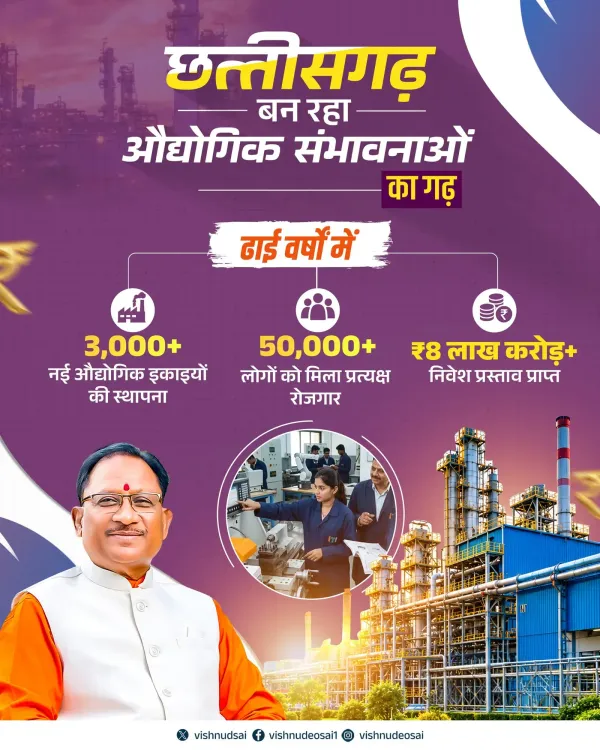
Chief Minister Vishnu Deo Sai says Chhattisgarh has attracted investment proposals worth over ₹8 lakh crore and established more than 3,000 new industrial units in two-and-a-half years, crediting the state's new industrial policy and Ease of Doing Business reforms.
Key Takeaways
₹8 lakh crore-plus in investment proposals received by Chhattisgarh in the last two and a half years .
More than 3,000 new industrial units have been established across the state during this period.
Chief Minister Vishnu Deo Sai credited the state's new industrial policy and Ease of Doing Business reforms as key drivers.
Thousands of new employment opportunities have been created for the state's youth as a result of the industrial expansion.
The BJP government is positioning Chhattisgarh as a diversified industrial hub beyond its traditional mineral and extractive economy.
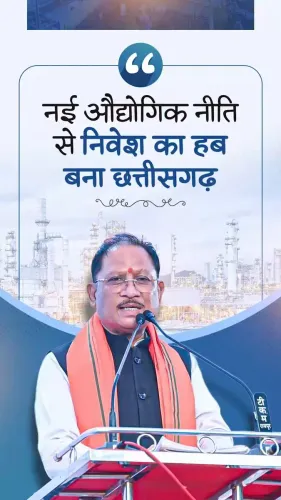
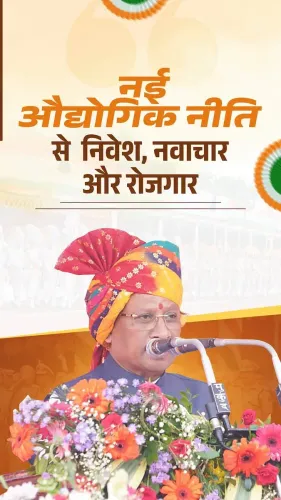
In two and a half years, Chhattisgarh has pulled in investment proposals worth more than ₹8 lakh crore — a number that signals a state actively repositioning itself as one of central India's most competitive industrial destinations. Chhattisgarh Chief Minister Vishnu Deo Sai posted those figures on X on Sunday, October 4, 2026, framing them as proof that good governance and a reformed business environment can move the needle fast.
In his post, CM Sai wrote: 'सुशासन सरकार के निरंतर प्रयासों से छत्तीसगढ़ उद्योग और निवेश के नए केंद्र के रूप में तेजी से उभर रहा है' — 'Through the sustained efforts of the good-governance government, Chhattisgarh is rapidly emerging as a new hub of industry and investment.' He pointed to the state's new industrial policy and the effective implementation of Ease of Doing Business reforms as the twin engines behind the surge.
3,000-plus new industrial units and the jobs they carry
Beyond the headline investment figure, CM Sai flagged a ground-level consequence that matters more to most Chhattisgarh residents: the establishment of more than 3,000 new industrial units across the state. Each unit is a node of employment, and together they have, according to Sai, created thousands of new jobs for the state's youth. That detail matters in a state where the industrial base has historically been concentrated around steel, minerals, and power — and where diversification has been a long-standing policy ambition.
Industrial policy and Ease of Doing Business as the stated levers
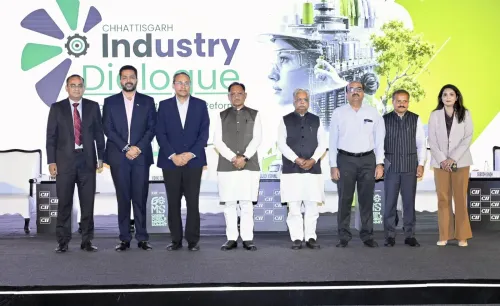
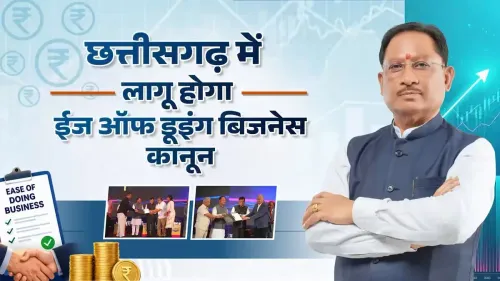
The Chief Minister specifically credited two policy instruments for the momentum. The first is Chhattisgarh's new industrial policy, which the BJP government introduced after taking office, designed to streamline approvals and offer competitive incentives to investors. The second is the state's push on Ease of Doing Business rankings — a Centre-driven framework that grades states on how quickly and transparently they process licences, land allotments, environmental clearances, and tax registrations. High scores on that index have increasingly become a proxy signal for institutional readiness that national and global investors use when shortlisting states.
Together, Sai's post frames the ₹8 lakh crore figure not as a windfall but as the direct, measurable output of deliberate governance choices — a political narrative that positions the BJP administration's two-and-a-half-year record as an industrial turnaround story ahead of the state's eventual electoral cycle.
Chhattisgarh's pivot: from mineral corridor to diversified investment magnet
Chhattisgarh sits on some of India's richest deposits of coal, iron ore, and limestone, and for decades its industrial identity was inseparable from those extractive sectors. The current push, as reflected in Sai's messaging, is to layer manufacturing, processing, and new-economy industries on top of that mineral base — turning a resource-rich state into a destination for a broader range of capital. Whether the ₹8 lakh crore in proposals translates into equivalent ground-level investment is the question investors, policymakers, and Chhattisgarh's young workforce will be watching closely in the months ahead.
Point of View
Arriving well ahead of any election cycle and designed to cement the BJP's credibility on economic delivery in a state it wrested back in late 2023. The ₹8 lakh crore figure — even as a proposal tally rather than deployed capital — gives the administration a bold benchmark to own. It also slots neatly into the broader BJP playbook of using Ease of Doing Business metrics as a visible, Centre-endorsed scorecard. The emphasis on 3,000-plus industrial units and youth employment signals an effort to translate macro investment numbers into a micro-level story that voters in smaller towns and semi-urban areas can actually feel.
NationPress
4 Oct 2026
Frequently Asked Questions
How much investment has Chhattisgarh received in the last 2.5 years?
According to Chief Minister Vishnu Deo Sai, Chhattisgarh has received investment proposals worth more than ₹8 lakh crore over the past two and a half years.
How many new industrial units have been set up in Chhattisgarh recently?
CM Vishnu Deo Sai stated that more than 3,000 new industrial units have been established in Chhattisgarh, generating thousands of jobs for the state's youth.
What policies are driving Chhattisgarh's industrial growth?
The state's new industrial policy and its implementation of Ease of Doing Business reforms have been cited by CM Sai as the primary drivers of the investment surge.
Is Chhattisgarh improving in Ease of Doing Business rankings?
The CM's post claims effective implementation of Ease of Doing Business frameworks has been central to attracting over ₹8 lakh crore in investment proposals, suggesting a meaningful improvement in business environment.
Which party governs Chhattisgarh currently?
Chhattisgarh is currently governed by the BJP, with Vishnu Deo Sai serving as Chief Minister after the party's victory in the late 2023 state assembly elections.