CM Sai Visits Kosrangi Village, Distributes SVAMITVA Property Cards
Synopsis
Chief Minister Vishnu Deo Sai visited village Kosrangi in Arang block on 22 May 2026 under the Sushasan Tihar initiative, distributing SVAMITVA property title deeds to eligible rural residents and reviewing ground-level progress of welfare schemes in Chhattisgarh.
Key Takeaways
CM Vishnu Deo Sai visited village Kosrangi , Arang development block , on 22 May 2026 under the Sushasan Tihar programme.
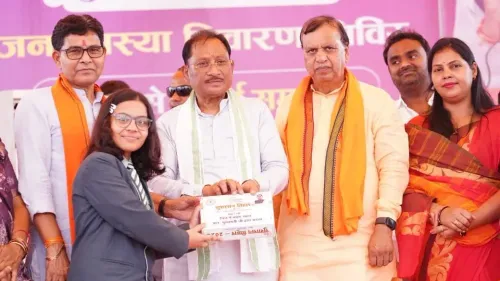
Property title deeds ( patta ) were distributed to eligible villagers under the central SVAMITVA Scheme .
SVAMITVA uses drone-based surveys to map rural residential land and issue legally valid ownership documents.
Legal property ownership will enable beneficiaries to access bank loans , PM Awas Yojana , and other welfare schemes.
The scheme was launched by the Government of India in April 2020 under the Ministry of Panchayati Raj.
Chhattisgarh's rollout fits a broader national push to formalise rural land records and boost financial inclusion.
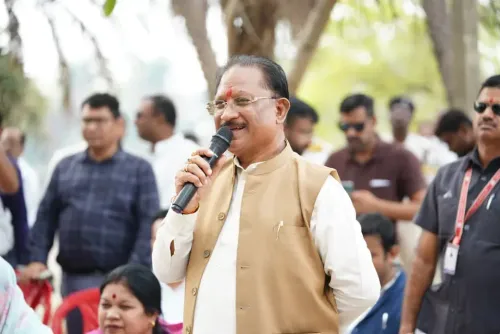
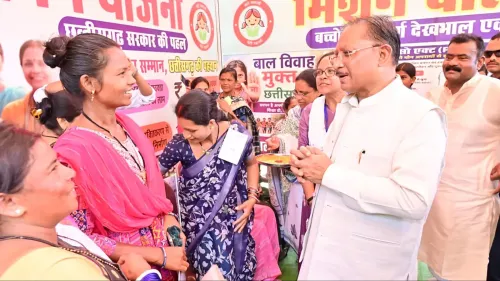
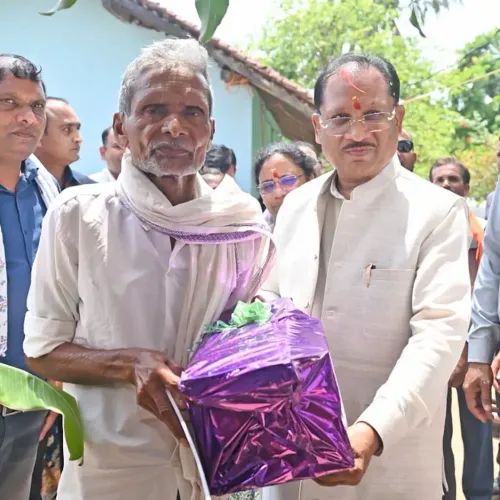
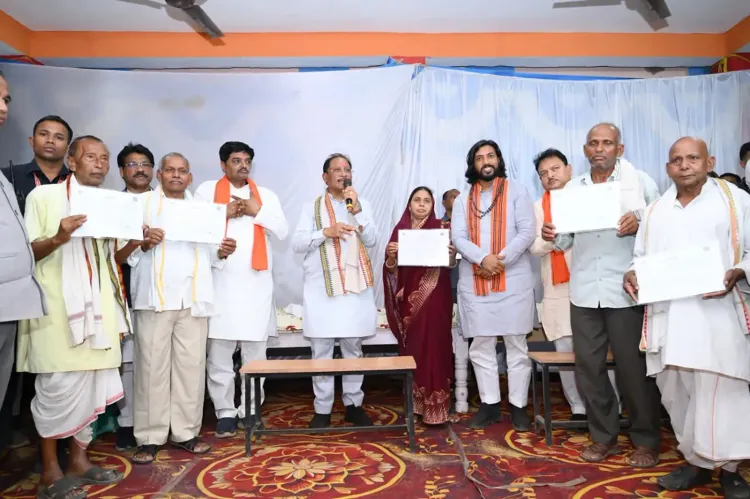
The Chief Minister's Office of Chhattisgarh announced on 22 May 2026 that Chief Minister Vishnu Deo Sai visited village Kosrangi in Arang development block under the ongoing Sushasan Tihar initiative to assess ground-level progress of rural development and welfare schemes. During the visit, CM Sai distributed property title deeds (patta) to eligible villagers under the SVAMITVA Scheme, formally conferring legal ownership rights over their residential properties.
Context
The Chief Minister's Office posted in Hindi: 'Mukhyamantri Shri Vishnu Dev Sai ne aaj Sushasan Tihar ke tahat Arang Vikas Khand ke gram Kosrangi pahunchkar gramin vikas aur jankalyankari yojnaon ki jameeni pragati par feedback liya' — ('Chief Minister Vishnu Deo Sai today reached village Kosrangi in Arang development block under Sushasan Tihar to take feedback on the ground-level progress of rural development and public welfare schemes'). The post further noted that property title deeds were distributed to eligible villagers under the SVAMITVA Scheme, securing their legal right over property.
Sushasan Tihar — translating broadly as 'Good Governance Festival' — is a state-level outreach programme under which CM Sai and other senior officials conduct direct field visits to villages to review welfare delivery and collect citizen feedback.
Policy Backdrop
The SVAMITVA (Survey of Villages and Mapping with Improvised Technology in Village Areas) Scheme was launched by the Government of India in April 2020 under the Ministry of Panchayati Raj. It uses drone-based surveys to map inhabited land in rural areas and issue legally valid property cards to household owners.
Before SVAMITVA, millions of rural households across India lacked formal documentation for their residential plots, leaving them unable to use their homes as collateral for bank loans or to establish clear title for inheritance and dispute resolution. The scheme addresses this long-standing gap in rural land records. Chhattisgarh, with its large rural and tribal population, has been an active implementing state for this central initiative.
Stakeholders and Impact
The CMO's post specifically highlighted that the distribution of pattas (title deeds) will make it easier for villagers to access bank loans, the PM Awas Yojana (housing scheme), and other government welfare programmes. Legal property ownership unlocks a range of financial and social entitlements that were previously inaccessible to informal landholders.
The primary beneficiaries are rural households in Kosrangi village and the broader Arang block. More broadly, the programme targets rural households across Chhattisgarh who have historically lacked formal land documentation. By formalising property rights, the state government also aims to reduce local land disputes and support financial inclusion at the grassroots level.
What's Next
The Sushasan Tihar programme signals continued field-level engagement by the CM's office across Chhattisgarh's development blocks. Analysts and rural welfare monitors will watch for statewide data on the total number of SVAMITVA property cards distributed, and whether formalisation of land rights translates into measurable increases in rural credit uptake and PMAY housing linkages in the state.
As Chhattisgarh continues its rollout of central and state welfare schemes, the convergence of land formalisation with housing and credit access programmes will be a key indicator of ground-level governance outcomes under CM Sai's administration.
Point of View
On-ground welfare delivery as a political and administrative signal. Distributing SVAMITVA title deeds at a village level — rather than through a centralised ceremony — underlines an emphasis on last-mile governance that the administration has consistently projected since December 2023. The linkage drawn between property formalisation and access to housing and credit schemes suggests an effort to stack welfare entitlements, amplifying the impact of each individual programme. Statewide SVAMITVA coverage data and rural credit metrics will ultimately determine whether this approach delivers systemic change or remains largely symbolic.
NationPress
6 Oct 2026
Frequently Asked Questions
What is the SVAMITVA scheme and how does it help villagers?
The SVAMITVA scheme, launched by the Government of India in April 2020, uses drone surveys to map rural residential land and issue legally valid property cards to household owners. These cards allow villagers to use their homes as collateral for bank loans and access housing and welfare schemes such as PM Awas Yojana.
What is Sushasan Tihar in Chhattisgarh?
Sushasan Tihar, meaning 'Good Governance Festival', is a Chhattisgarh government outreach programme under which Chief Minister Vishnu Deo Sai and senior officials conduct direct field visits to villages to review welfare scheme delivery and collect citizen feedback.
What did CM Vishnu Deo Sai do at Kosrangi village?
CM Vishnu Deo Sai visited village Kosrangi in Arang development block on 22 May 2026, distributed SVAMITVA property title deeds to eligible residents, and took feedback on the ground-level progress of rural development and welfare schemes.
What is a patta and why is it important for rural households?
A patta is a legally valid property title deed issued to a landowner. For rural households, it provides formal documentation of ownership, enabling access to bank loans, government housing schemes, and other welfare entitlements that require proof of property.
How does SVAMITVA help with PM Awas Yojana and bank loans?
SVAMITVA property cards serve as legal proof of residential land ownership, which is often a prerequisite for availing PM Awas Yojana housing benefits and securing bank loans. Formalising property rights removes a key barrier to financial inclusion for rural households.