CM Sai Highlights Janjati Cultural Samagam, Key Updates
Synopsis
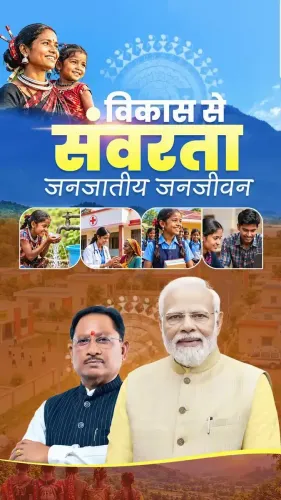
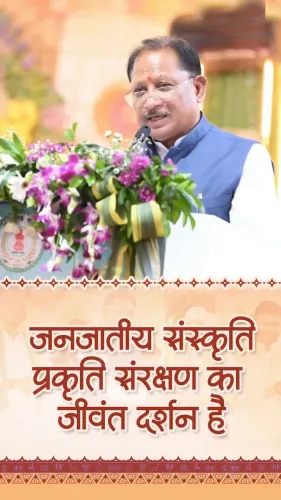
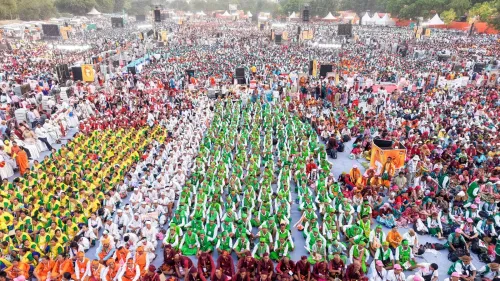
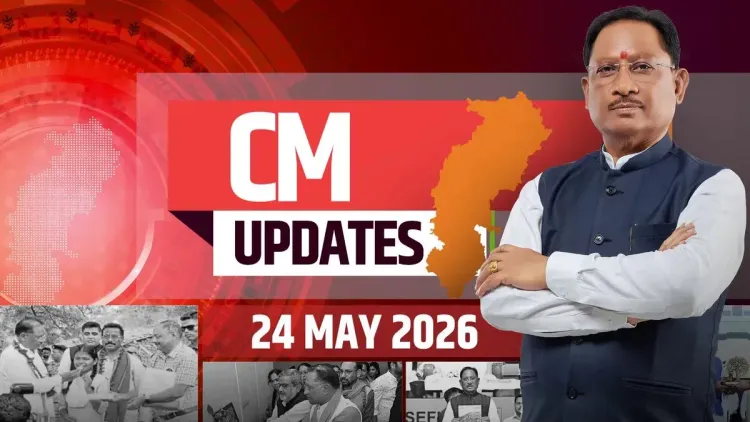
Chhattisgarh Chief Minister Vishnu Deo Sai on 24 May 2026 shared a video bulletin highlighting the Janjati Sanskritik Samagram and other state updates, reaffirming the BJP government's focus on tribal cultural outreach in a state where Scheduled Tribes exceed 30 percent of the population.
Key Takeaways
CM Vishnu Deo Sai posted a video update on 24 May 2026 covering the Janjati Sanskritik Samagram and other state news.
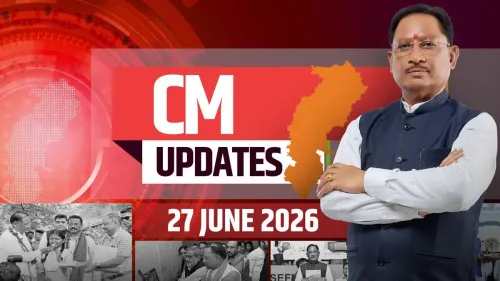
The post was in Hindi and accompanied by a video, forming part of a regular CM updates bulletin.
Chhattisgarh has a Scheduled Tribe population of over 30 percent , making tribal outreach a central governance priority.
The state has implemented the Forest Rights Act, 2006 , which underpins land and cultural recognition for indigenous communities.
CM Sai , himself from a Scheduled Tribe background, has emphasised tribal cultural events since taking office in December 2023 .
Follow-up policy announcements linked to the Samagram may appear in upcoming Chhattisgarh assembly sessions .
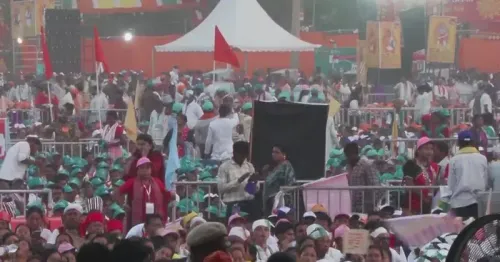
Chhattisgarh Chief Minister Vishnu Deo Sai shared a video update on Sunday, 24 May 2026, highlighting the Janjati Sanskritik Samagram (Tribal Cultural Confluence) alongside other important state developments. The post, shared on his official X account, signals the state government's continued emphasis on tribal cultural outreach as part of its broader governance communication.
Context
The Hindi-language post reads: 'Janjati Sanskritik Samagram sahit anya mahatvapurn khabren' — translated as 'Important news including the Tribal Cultural Confluence.' The update was accompanied by a video, indicating a compiled bulletin of the Chief Minister's activities and state announcements for the day. CM Sai regularly uses his social media presence to disseminate governance updates directly to citizens.
Policy Backdrop
Chhattisgarh, formed in 2000, has a Scheduled Tribe population exceeding 30 percent, comprising major communities such as the Gond and Oraon. The state has long been a focal point for tribal welfare policy, including implementation of the Scheduled Tribes and Other Traditional Forest Dwellers (Recognition of Forest Rights) Act, 2006, which formalises land and cultural rights for indigenous communities. Hosting and publicising tribal cultural events aligns with this legislative and administrative framework.
Under BJP-governed states with high tribal populations, cultural programmes have increasingly been woven into development messaging — presenting indigenous traditions not merely as heritage exercises but as affirmations of community identity alongside welfare delivery in education, health, and forest rights. CM Sai, himself from the Scheduled Tribe community, has positioned such outreach as a personal as well as political priority since assuming office in December 2023.
Stakeholders and Impact
The primary beneficiaries of events such as the Janjati Sanskritik Samagram are Chhattisgarh's tribal communities, whose cultural practices — including music, dance, art, and oral traditions — gain formal state recognition and a public platform through such confluences. For the state government, these events serve as visible demonstrations of its commitment to tribal identity and welfare.
Broader stakeholders include tribal welfare departments, cultural organisations, and local elected representatives from tribal constituencies, who often participate in and help organise such programmes. The convergence of cultural celebration with governance updates also speaks to an audience of urban and diaspora Chhattisgarhi citizens who follow state affairs digitally.
What's Next
State-level observers will watch for follow-up announcements on linked welfare scheme expansions or cultural policy decisions that may emerge from the Janjati Sanskritik Samagram. Any resolutions or commitments made at the confluence — particularly around forest rights, tribal education, or cultural preservation funding — are likely to surface in upcoming Chhattisgarh assembly sessions. The government's continued use of video-format CM updates suggests a sustained push to keep tribal outreach visible in its public communications calendar.
Point of View
The government signals that tribal identity is not peripheral but central to its political project in Chhattisgarh. This approach also serves to consolidate the electoral base among Scheduled Tribe voters, who form a decisive bloc in a significant number of state assembly constituencies. Whether these cultural gestures translate into measurable policy outcomes — on forest rights, tribal education, or cultural funding — will be the test observers apply in the sessions ahead.
NationPress
7 Oct 2026
Frequently Asked Questions
What is the Janjati Sanskritik Samagram in Chhattisgarh?
The Janjati Sanskritik Samagram is a tribal cultural confluence organised in Chhattisgarh to showcase the indigenous traditions, music, dance, and heritage of the state's Scheduled Tribe communities, which make up over 30 percent of the population.
Who is Vishnu Deo Sai and why is he significant for tribal communities?
Vishnu Deo Sai is the Chief Minister of Chhattisgarh since December 2023 and a senior BJP leader. He is himself from a Scheduled Tribe community, making his focus on tribal cultural and welfare programmes both a personal and political priority.
What percentage of Chhattisgarh's population is tribal?
Scheduled Tribes constitute over 30 percent of Chhattisgarh's population, with major groups including the Gond and Oraon, making the state one of India's most significant in terms of tribal demography.
What is the Forest Rights Act and how does it apply to Chhattisgarh?
The Scheduled Tribes and Other Traditional Forest Dwellers (Recognition of Forest Rights) Act, 2006, recognises the land and cultural rights of tribal and forest-dwelling communities. Chhattisgarh has been a key state in its implementation given its large tribal population.
What can we expect after the Janjati Sanskritik Samagram?
Observers expect the Chhattisgarh government to announce follow-up measures on tribal welfare schemes, cultural preservation funding, or forest rights expansions in upcoming state assembly sessions following the Samagram.