CM Fadnavis Addresses Maharashtra Rural Jobs Workshop
Synopsis
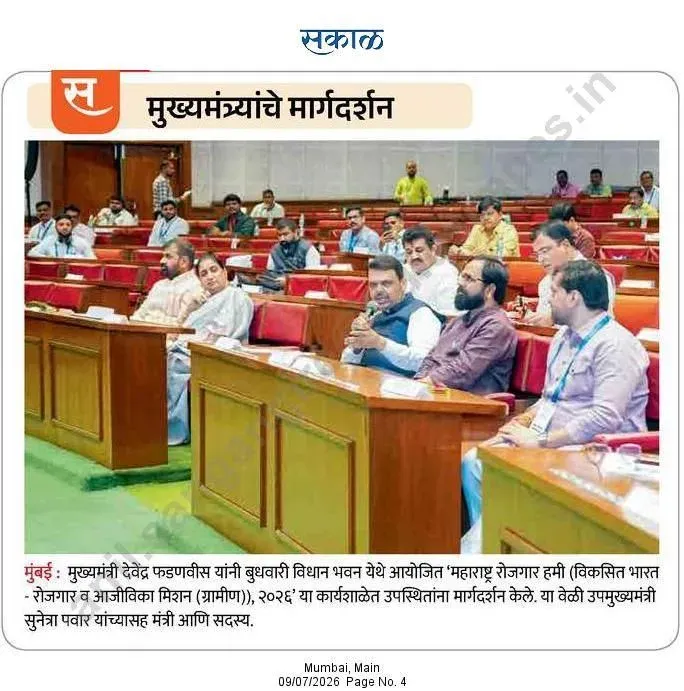
Chief Minister Devendra Fadnavis addressed a workshop at Vidhan Bhavan on 9 July 2026 for the Maharashtra Employment Guarantee (Viksit Bharat - Rural Employment and Livelihood Mission) 2026, signalling a push to align state rural jobs policy with the national Viksit Bharat agenda.
Key Takeaways
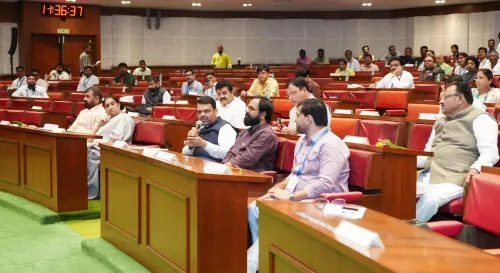
Chief Minister Devendra Fadnavis addressed a workshop on 9 July 2026 at Vidhan Bhavan, Mumbai focused on the new rural employment mission.
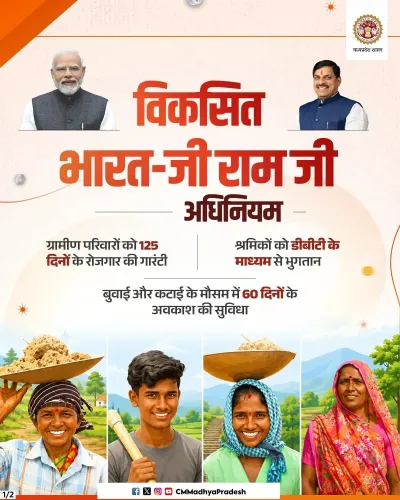
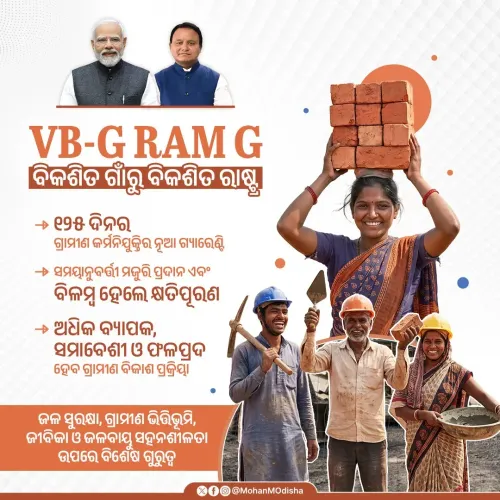
The scheme is titled 'Maharashtra Rozgar Hami (Viksit Bharat - Rozgar va Aajivika Mission (Gramin)), 2026' , linking state employment policy to the national Viksit Bharat agenda.
Maharashtra's employment guarantee architecture dates to the 1970s , making it one of India's oldest state-level rural wage employment programmes.
The mission is expected to converge with MGNREGA , which currently mandates 100 days of annual wage employment for rural households.
Village panchayats and rural households are the primary stakeholders, with district and block administrators also expected to be involved in implementation.
Detailed guidelines, funding patterns, and the official scheme notification are yet to be released following the workshop.
The Chief Minister's Office of Maharashtra announced on Thursday, 9 July 2026 that Chief Minister Devendra Fadnavis addressed a workshop titled 'Maharashtra Rozgar Hami (Viksit Bharat - Rozgar va Aajivika Mission (Gramin)), 2026' — broadly, the Maharashtra Employment Guarantee (Developed India - Employment and Livelihood Mission (Rural)), 2026 — held at Vidhan Bhavan, Mumbai.
Context
The workshop, convened on a Wednesday at the Vidhan Bhavan legislative complex, brought together officials and stakeholders to receive guidance from Chief Minister Fadnavis on the newly framed rural employment mission. The event signals a formal push to align Maharashtra's state-level employment guarantee architecture with the Centre's Viksit Bharat vision for a developed India by 2047. Workshops at Vidhan Bhavan of this nature typically precede formal scheme guidelines or budgetary allocations.
Policy Backdrop
Maharashtra's employment guarantee lineage dates to the 1970s, when the state introduced one of India's earliest rural wage employment programmes. That foundation was later complemented at the national level by the Mahatma Gandhi National Rural Employment Guarantee Act (MGNREGA), enacted in 2005, which mandates 100 days of wage employment annually for rural households. The 2026 mission branding suggests Maharashtra is now layering a livelihood and skills dimension on top of the traditional wage-employment guarantee, reflecting a broader national shift from pure workfare to integrated rural livelihood promotion.
The convergence of the state scheme with the Viksit Bharat framework indicates that funding patterns and operational guidelines may draw on both state and central resources, with village panchayats likely serving as the primary implementation unit.
Stakeholders and Impact
Rural households across Maharashtra stand as the primary beneficiaries of the mission, with the programme designed to provide both wage employment and structured livelihood pathways. Village panchayats are expected to play a central role in identifying beneficiaries, executing works, and ensuring wage disbursement. The workshop format suggests that district and block-level administrators were also in the audience, preparing them to operationalise the mission on the ground.
Maharashtra has periodically updated its employment guarantee architecture to stay in step with central rural livelihood frameworks, and the 2026 mission continues that pattern by explicitly linking state action to the national agenda.
What's Next
Detailed operational guidelines, the funding-sharing pattern between the state and Centre, and the convergence mechanism with MGNREGA are expected to be spelled out in subsequent government orders following the workshop. Observers will watch for the official scheme notification, which will clarify eligibility criteria, the nature of livelihood components beyond wage work, and the administrative structure for grievance redress. The mission's rollout timeline and budgetary envelope remain to be formally announced.
Point of View
Tying state welfare delivery to the Centre's 2047 development narrative. Holding the event at Vidhan Bhavan — rather than a ministerial office — lends it legislative visibility and signals intent to formalise the mission through policy orders. The dual focus on wage employment and livelihoods reflects a wider shift in Indian rural policy away from pure workfare toward skill-linked income generation. How effectively the state reconciles this mission with MGNREGA's existing architecture will determine whether the 2026 scheme adds genuine programmatic value or remains a rebranding exercise.
NationPress
7 Oct 2026
Frequently Asked Questions
What is the Maharashtra Rozgar Hami Viksit Bharat Mission 2026?
It is a new rural employment and livelihood mission announced by the Maharashtra government that builds on the state's existing employment guarantee scheme and aligns it with the Centre's Viksit Bharat development vision. The mission aims to provide both wage employment and structured livelihood pathways to rural households.
What did CM Devendra Fadnavis say at the Vidhan Bhavan workshop?
Chief Minister Devendra Fadnavis addressed participants at the workshop held at Vidhan Bhavan, Mumbai on 9 July 2026, offering guidance on the Maharashtra Employment Guarantee (Viksit Bharat - Rural Employment and Livelihood Mission) 2026. Specific remarks were not detailed in the official post.
How is Maharashtra's employment guarantee scheme different from MGNREGA?
Maharashtra's Employment Guarantee Scheme predates MGNREGA by several decades, having been launched in the 1970s as one of India's first rural wage employment programmes. MGNREGA, enacted in 2005, operates at the national level and mandates 100 days of employment per rural household annually. The 2026 mission is expected to converge with MGNREGA while adding livelihood components.
Who will benefit from the Maharashtra rural livelihood mission 2026?
Rural households across Maharashtra are the primary intended beneficiaries, with village panchayats expected to serve as the key implementation unit for identifying beneficiaries and executing works under the mission.
When will the Maharashtra Rozgar Hami 2026 scheme guidelines be released?
Detailed operational guidelines, funding patterns, and convergence rules with MGNREGA are expected to be issued in subsequent government orders following the 9 July 2026 workshop at Vidhan Bhavan. No formal launch date has been announced yet.