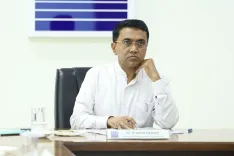
CM Vishnu Deo Sai extends Amla Navami greetings to Chhattisgarh
Synopsis
Chhattisgarh Chief Minister Vishnu Deo Sai marked Amla Navami (Akshaya Navami) on 18 November 2026 with a Sanskrit-verse-led message on X, praying for the health, peace, and prosperity of all state residents through the blessings of Lord Vishnu and Mata Lakshmi.
Key Takeaways
CM Vishnu Deo Sai posted Amla Navami greetings on 18 November 2026 .
The message opened with a traditional Sanskrit shloka saluting the divine nourisher.
He invoked Lord Shri Hari Vishnu and Mata Lakshmi for public health, peace, and prosperity.
Amla Navami , also called Akshaya Navami , falls on the ninth day of Kartik's bright fortnight and involves worship of the sacred amla tree.
No policy announcement or scheme was linked to the post.
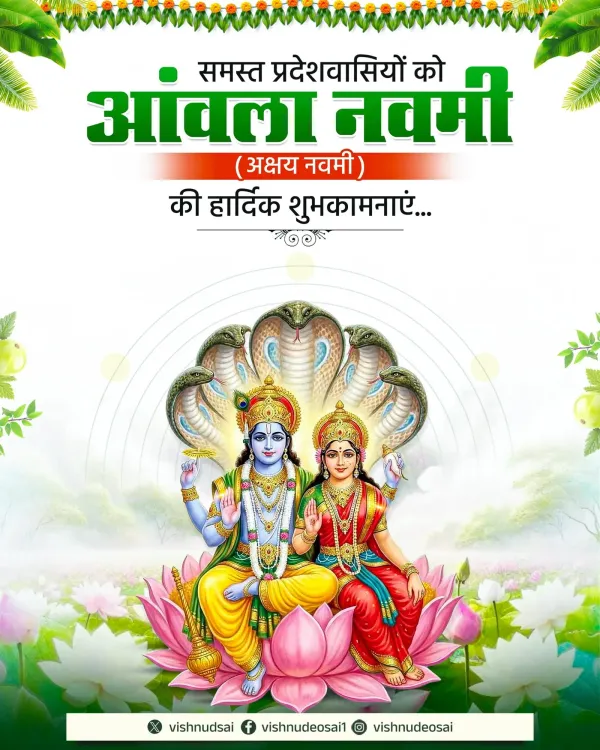
On the auspicious occasion of Amla Navami — also called Akshaya Navami — Chhattisgarh Chief Minister Vishnu Deo Sai extended heartfelt wishes to every resident of the state on Wednesday, 18 November 2026, invoking the blessings of Lord Shri Hari Vishnu and Mata Lakshmi for health, peace, and enduring prosperity.
Opening his message with a traditional Sanskrit verse — 'दामोदरनिवासायै धात्र्यै देव्यै नमो नम:' ('Salutations to the goddess who dwells in Damodara, the nourisher of all') — the Chief Minister grounded the greeting in classical devotion before turning to a broad public wish. He expressed hope that the grace of Vishnu and Lakshmi would bring an 'inexhaustible flow' (akshay sanchar) of happiness, peace, good health, and prosperity to every citizen, and that the spirit of welfare and well-being across Chhattisgarh would only grow stronger.
What Amla Navami means — and why it matters
Observed on the ninth day of the bright fortnight in the Hindu month of Kartik, Amla Navami centres on the worship of the Indian gooseberry (amla) tree, which is considered a sacred dwelling of Lord Vishnu. Devotees perform circumambulations of the tree, offer prayers, and seek blessings for longevity and prosperity. The festival is also known as Akshaya Navami — 'akshaya' meaning that which never diminishes — signalling a day when virtuous deeds are believed to yield eternal merit.
The occasion holds particular cultural resonance in central and northern India, where it marks the final stretch of the Kartik month's festive calendar before Kartik Purnima.
A tradition of public festival outreach from Raipur
CM Sai, who assumed office in December 2023 after the BJP's return to power in Chhattisgarh, has consistently used major Hindu festival occasions to reach out to the state's population through social media. Such greetings are a standard feature of Indian state governance — a soft but deliberate signal of cultural alignment and public connection. No policy announcement or scheme launch was linked to this post.
The verse, the deity invocations, and the specific choice of Sanskrit all point to a carefully crafted message — one that is at once devotional and administrative, a Chief Minister speaking both as a believer and as a steward of his state's well-being.Point of View
But they function as low-cost, high-reach gestures of cultural solidarity — particularly significant in a state like Chhattisgarh where BJP has worked to consolidate its identity among Hindu-majority communities. CM Sai's choice to open with a Sanskrit verse rather than a plain vernacular wish signals a deliberate appeal to devotional sentiment. While the post carries no policy weight, it reinforces a pattern of soft cultural outreach that BJP-led governments across states have made a fixture of their social-media governance. The consistent frequency of such messages, from Diwali to Amla Navami, builds an ambient image of a culturally attentive leadership.
NationPress
18 Nov 2026
Frequently Asked Questions
What is Amla Navami and when is it celebrated?
Amla Navami, also called Akshaya Navami, is a Hindu festival observed on the ninth day of the bright fortnight in the month of Kartik. It involves the worship of the amla (Indian gooseberry) tree, considered a sacred abode of Lord Vishnu, and is associated with blessings of longevity and prosperity.
What did Chhattisgarh CM Vishnu Deo Sai say on Amla Navami 2026?
CM Sai posted a Sanskrit verse and extended warm wishes to all Chhattisgarh residents, praying that the blessings of Lord Shri Hari Vishnu and Mata Lakshmi bring happiness, peace, good health, and prosperity, and that the spirit of public welfare in the state grows ever stronger.
What does 'Akshaya Navami' mean?
'Akshaya' means that which never diminishes or perishes. Akshaya Navami is considered an auspicious day when virtuous acts are believed to yield eternal, inexhaustible merit.
Who is Vishnu Deo Sai?
Vishnu Deo Sai is the Chief Minister of Chhattisgarh and a senior BJP leader. He assumed office in December 2023 after the BJP's victory in the state assembly elections.
Did CM Sai announce any scheme or policy on Amla Navami 2026?
No. The post was purely a festival greeting with no policy announcement, scheme launch, or administrative directive attached to it.