CM Sai hails PM Modi's Mann Ki Baat nod to Chhattisgarh's Munga drive
Synopsis
Chhattisgarh CM Vishnu Deo Sai welcomed PM Modi's mention of the state's 'Har Ghar Munga' Moringa-planting campaign on Mann Ki Baat episode 138, urging citizens to join the drive against malnutrition and anemia.
Key Takeaways
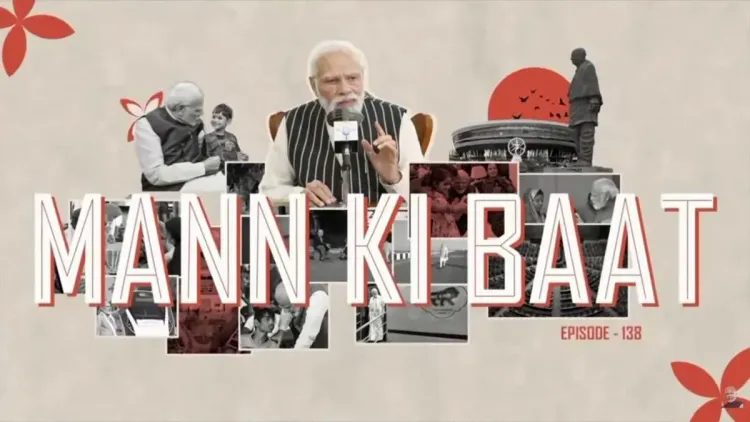
PM Narendra Modi mentioned Chhattisgarh's 'Har Ghar Munga – Ghar Ghar Munga' campaign in the 138th episode of Mann Ki Baat .
CM Vishnu Deo Sai called the mention a moment of national recognition for the state's community-driven nutrition work.
The campaign promotes Moringa (drumstick) cultivation in households to combat anemia and malnutrition across Chhattisgarh.
The initiative aligns with the central POSHAN Abhiyaan (National Nutrition Mission), launched in 2018 .
Chhattisgarh has a large tribal population historically vulnerable to high rates of child malnutrition and anemia among women.
CM Sai called for wider public participation to build a 'healthy, well-nourished, and empowered Chhattisgarh.'
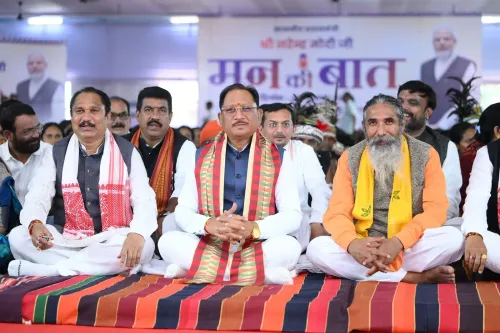
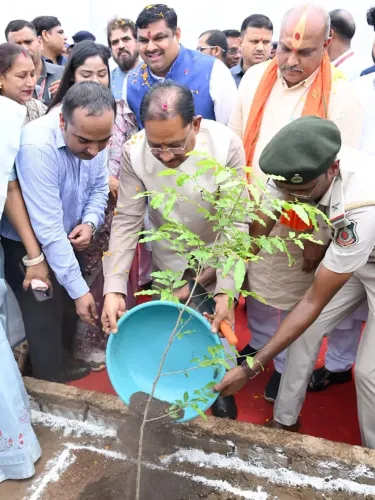
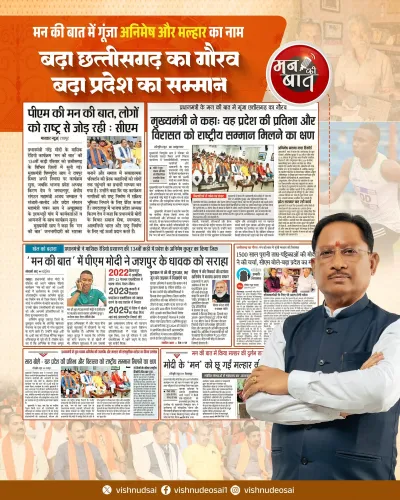
A state nutrition campaign rooted in the humble drumstick tree just got its biggest spotlight yet. Chhattisgarh Chief Minister Vishnu Deo Sai on Sunday, 27 September 2026, welcomed Prime Minister Narendra Modi's mention of the state's 'Har Ghar Munga – Ghar Ghar Munga' campaign in the 138th episode of his monthly radio programme Mann Ki Baat, calling it a moment that brings Chhattisgarh's community spirit to the national stage.
In his post, CM Sai wrote that the PM's mention 'rashtriya patal par pehchaan dene wala kshaṇ hai' — 'a moment that grants recognition on the national canvas' — for the state's people-driven service ethos. He reaffirmed his government's commitment to eliminating malnutrition and anemia and called on citizens to broaden their participation in building a 'healthy, well-nourished, and empowered Chhattisgarh'.
What the Munga campaign actually does
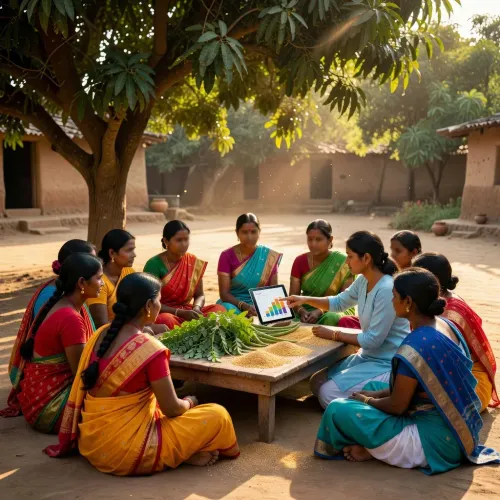
The Har Ghar Munga initiative encourages households across Chhattisgarh to plant Moringa — locally called 'munga' or drumstick — in their yards and fields. Moringa leaves are among the most nutrient-dense foods available in tropical India: rich in iron, calcium, and vitamins, they directly target the twin crises of anemia and under-nutrition that have historically afflicted the state's large tribal population. The logic is disarmingly simple — grow your supplement at home, eat it fresh, and sidestep the supply-chain gaps that plague conventional nutrition programmes.
Chhattisgarh, carved out of Madhya Pradesh in 2000, carries a disproportionate burden of child malnutrition and anemia among women of reproductive age. Community-owned, zero-cost interventions like household Moringa cultivation are designed to work precisely where formal healthcare infrastructure is thinnest.
Mann Ki Baat as a national amplifier
Since its launch in 2014, Mann Ki Baat has functioned as PM Modi's direct-to-citizen broadcast, and a mention in the programme carries real administrative weight — it signals central endorsement, lifts state-level morale, and often accelerates replication elsewhere. BJP-governed states have repeatedly used the programme's national reach to showcase grassroots nutrition and health initiatives that plug into the central POSHAN Abhiyaan (National Nutrition Mission), launched in 2018 to reduce stunting, under-nutrition, and anemia through community action.
The Munga campaign fits squarely within that architecture: a locally adapted, people-participatory intervention that complements — rather than duplicates — centrally funded nutrition pipelines.
CM Sai's call to widen the movement
CM Sai's post is as much an internal mobilisation signal as it is a public acknowledgement. By framing the PM's mention as validation of janbhagidari — citizen co-ownership — he is pushing the campaign's next phase: broader household enrolment and deeper community buy-in. The language of 'sushaasan sarkar' ('good-governance government') threads through the post, tying the nutrition drive to the BJP's wider governance narrative ahead of any future state-level review.
Watch for state-level data on anemia prevalence and Moringa plantation coverage as the campaign scales — those numbers will be the real verdict on whether a tree in every yard can move the needle on one of India's most stubborn public-health challenges.
Point of View
Signalling that locally adapted, zero-cost nutrition interventions are being actively endorsed alongside larger central programmes. For CM Sai, the spotlight arrives at a useful moment: it reinforces the BJP government's 'sushaasan' (good governance) brand in a state where tribal welfare and nutrition outcomes remain politically sensitive benchmarks. The broader pattern — BJP-governed states leveraging Mann Ki Baat to nationalise community health drives — suggests a deliberate strategy of bottom-up visibility within the POSHAN Abhiyaan framework. The real test, however, will be whether expanded Moringa coverage translates into measurable drops in anemia and malnutrition prevalence when state health data is next released.
NationPress
27 Sept 2026
Frequently Asked Questions
What is the Har Ghar Munga campaign in Chhattisgarh?
'Har Ghar Munga – Ghar Ghar Munga' is a Chhattisgarh state government campaign that encourages households to plant Moringa (drumstick) trees at home to combat malnutrition and anemia through locally grown, nutrient-rich food.
Why did PM Modi mention the Munga campaign on Mann Ki Baat?
PM Narendra Modi highlighted the Chhattisgarh campaign in the 138th episode of his monthly radio programme Mann Ki Baat to recognise its community-driven approach to nutrition and give it national visibility.
How does Moringa help fight anemia and malnutrition?
Moringa leaves are exceptionally rich in iron, calcium, and essential vitamins, making them an effective dietary supplement to address iron-deficiency anemia and under-nutrition, particularly in communities with limited access to diverse foods.
What is POSHAN Abhiyaan and how does the Munga campaign relate to it?
POSHAN Abhiyaan is India's National Nutrition Mission launched in 2018 to reduce stunting, under-nutrition, and anemia. The Munga campaign is a state-level, community-based initiative that complements POSHAN's goals through household-level Moringa cultivation.
Who is Vishnu Deo Sai and when did he become Chhattisgarh CM?
Vishnu Deo Sai is a BJP leader who became Chief Minister of Chhattisgarh in December 2023. He has championed community nutrition and tribal welfare programmes since taking office.