CM Sai Highlights Tribal Youth Education Push in Chhattisgarh
Synopsis
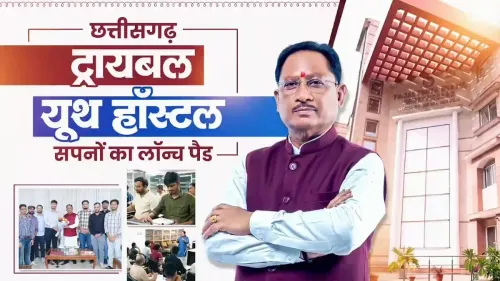
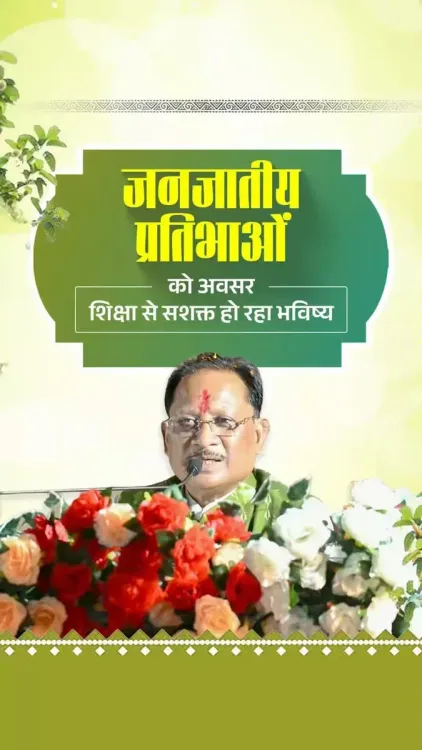
Chief Minister Vishnu Dev Sai's office reaffirmed the Chhattisgarh government's tribal education drive, naming the Tribal Youth Hostel, Prayas Residential School, and Nalanda Parisar campus as key facilities shaping futures for the state's Scheduled Tribe students.
Key Takeaways
Chief Minister Vishnu Dev Sai and the Chhattisgarh CMO publicly reaffirmed the state's commitment to tribal youth education on October 15, 2026 .
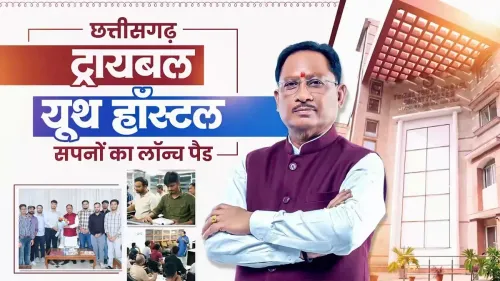
Three facilities were specifically named: the Tribal Youth Hostel , Prayas Residential School , and Nalanda Parisar campus.
The government frames these under its 'Sushasan' (good governance) framework, presenting them as a coherent pipeline rather than isolated welfare measures.
Chhattisgarh's tribal communities make up roughly 32 percent of the state population, making targeted education infrastructure a significant policy priority.
The post coincided with the Karma Puja festival, a major cultural celebration for tribal communities, underscoring the symbolic timing of the message.
For the nearly 32 percent of Chhattisgarh's population that belongs to Scheduled Tribe communities, the distance between a village and a good school has long been the difference between a future realised and one abandoned. Chief Minister Vishnu Dev Sai and the Chief Minister's Office of Chhattisgarh reaffirmed the state government's commitment to closing that gap on Thursday, October 15, 2026, spotlighting a cluster of flagship facilities designed to keep tribal students in classrooms and moving forward.
The post, signed directly by Chief Minister Vishnu Dev Sai, stated that the 'sushasan sarkar' (good-governance government) is 'continuously striving to refine the talent of the state's tribal youth, realise their dreams, and provide better opportunities to advance.' Three infrastructure anchors were named explicitly: the Tribal Youth Hostel, the Prayas Residential School, and the Nalanda Parisar campus.
Three Pillars Holding Up Tribal Education
Each facility targets a distinct barrier. The Tribal Youth Hostel solves the proximity problem — tribal students from remote forest villages gain safe, state-supported accommodation close to urban schools and skill centres. The Prayas Residential School scheme goes further, embedding students in a full live-in academic environment so that geography never interrupts a semester. Together they address the twin obstacles of distance and household economic pressure that have historically pushed tribal adolescents out of formal education.
Nalanda Parisar adds the higher-education tier. The campus is designed to carry tribal students beyond schooling into collegiate and professional pathways — a signal that the state's ambition is not just enrolment but long-term trajectory. The reference to all three in a single statement suggests the government is positioning them as an integrated pipeline rather than isolated welfare schemes.
Chhattisgarh's Long Bet on Tribal Learning Infrastructure
Chhattisgarh has run targeted tribal education programmes since its formation in 2000, but the scale and branding of these efforts have shifted under the BJP government that took office in December 2023. The 'Sushasan' framework — good governance — is the administrative lens through which Chief Minister Sai's administration has grouped social welfare measures, presenting them as systemic delivery rather than sporadic intervention.
The post appeared alongside the #KarmaPuja hashtag, the harvest and ancestral worship festival central to Chhattisgarhi tribal culture, adding a cultural resonance to what is otherwise a policy statement. Tribal communities across the state celebrate Karma Puja as a moment of renewal — timing this reaffirmation of youth investment with the festival is a deliberate signal of cultural solidarity from the Chief Minister's office.
India's broader push under centrally sponsored schemes for Scheduled Tribe education — from Eklavya Model Residential Schools to the Pradhan Mantri Janjaati Adivasi Nyaya Maha Abhiyan (PM-JANMAN) — provides the national scaffolding on which state-level initiatives like Chhattisgarh's are built. The state's ability to layer its own hostel and campus infrastructure on top of central funding determines whether tribal youth actually reach graduation. The Chief Minister's public reaffirmation keeps political attention — and bureaucratic accountability — focused on that question.
Point of View
However, is output data — enrolment numbers, retention rates, and campus utilisation from Prayas schools and Nalanda Parisar — that the state legislature and civil society groups will increasingly demand. If those numbers hold up, the messaging strategy converts into a durable electoral asset in one of India's most tribally significant states.
NationPress
16 Oct 2026
Frequently Asked Questions
What is the Tribal Youth Hostel in Chhattisgarh?
The Tribal Youth Hostel is a state-run accommodation facility in Chhattisgarh that provides housing and support for tribal youth pursuing education and skill development away from their home villages, reducing the barrier of geographic distance to schooling.
What is Prayas Residential School in Chhattisgarh?
Prayas Residential School is a Chhattisgarh government initiative that offers full live-in schooling for tribal students, ensuring that economic and geographic challenges do not interrupt their academic continuity.
What is Nalanda Parisar in Chhattisgarh?
Nalanda Parisar is an educational campus developed by the Chhattisgarh government to support higher learning opportunities, intended to extend the educational pipeline for tribal students beyond secondary school into collegiate and professional pathways.
Who is the Chief Minister of Chhattisgarh in 2026?
Vishnu Dev Sai is the Chief Minister of Chhattisgarh, heading the BJP-led state government since December 2023 .
What is the 'Sushasan Sarkar' framework in Chhattisgarh?
'Sushasan Sarkar' translates to 'good governance government' and is the administrative and political branding under which the Vishnu Dev Sai-led BJP government in Chhattisgarh groups its welfare and development initiatives, including tribal education schemes.