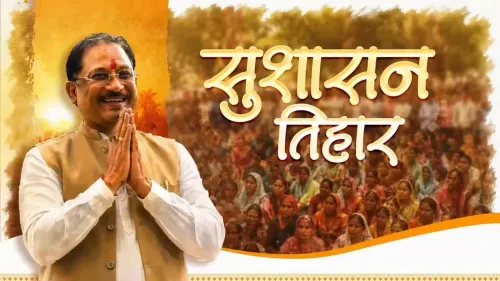
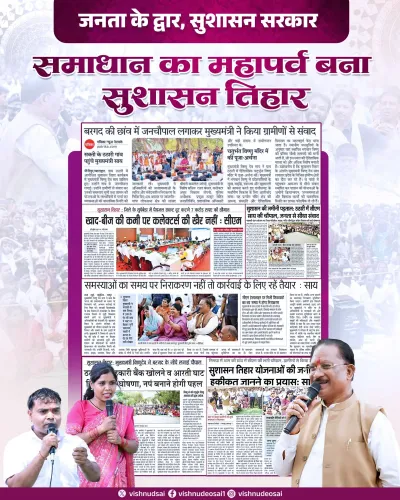
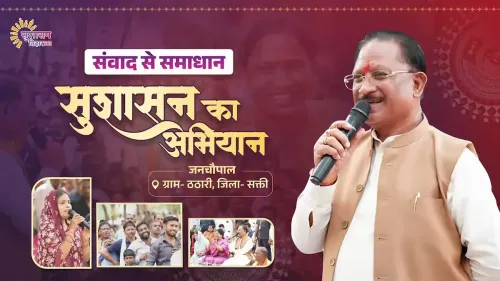
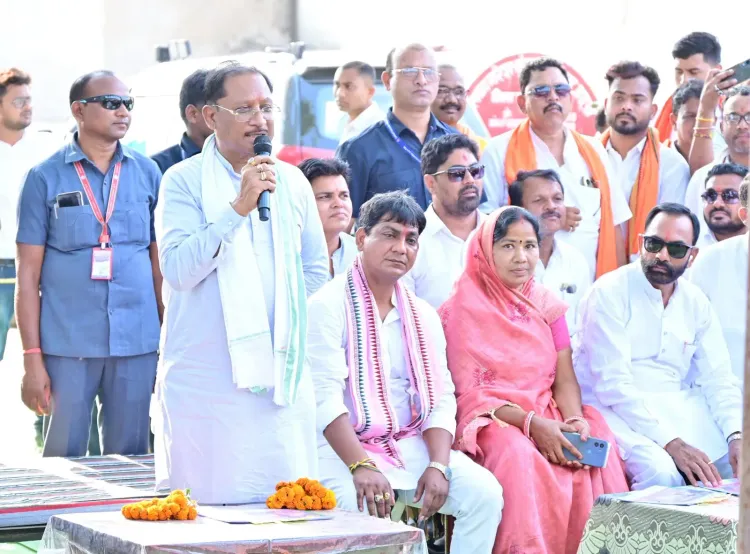
CM Sai holds Sushasan Tihar chopal in Mahasamund village
Synopsis
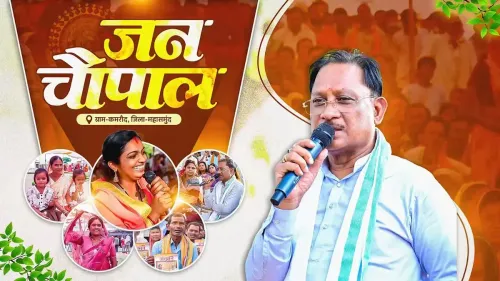
Chief Minister Vishnu Dev Sai held a Sushasan Tihar 2026 chopal at Kamraud village in Mahasamund district on 22 May 2026, gathering direct feedback from villagers on ration, electricity, drinking water, Mahatari Vandan Yojana, and state targets including 18 lakh PMAY houses and 6,000 Atal Digital Seva Kendras.
Key Takeaways
CM Vishnu Dev Sai conducted a public chopal at Kamraud village, Bagbahra, Mahasamund on 22 May 2026 under the Sushasan Tihar 2026 programme.
Villagers gave direct feedback on ration, electricity, drinking water, and the Mahatari Vandan Yojana .
The CM cited a target of 18 lakh PMAY houses being pursued as a state priority.
The government is working to operationalise 6,000 Atal Digital Seva Kendras for rural digital access.
Improved irrigation and timely fertiliser supply for farmers were highlighted as active government priorities.
The stated government goal is delivery of services to the 'last person' — antim vyakti .
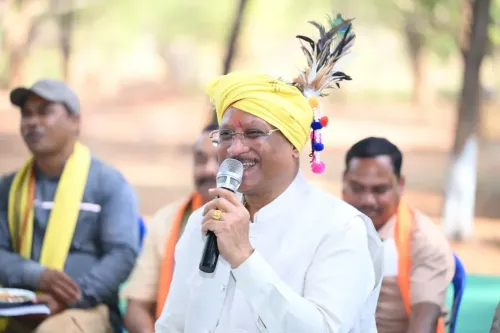
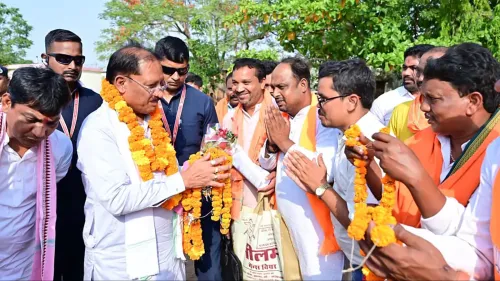
Chief Minister Vishnu Dev Sai conducted a direct public dialogue with villagers at Kamraud village, Bagbahra, Mahasamund district, on Friday, 22 May 2026, as part of the state-wide Sushasan Tihar 2026 governance outreach programme. The chopal, held under the shade of a banyan tree, was convened to gather ground-level feedback on the delivery of welfare schemes across the district.
Context
The Chief Minister's Office shared that CM Sai engaged in aatmiya charcha (warm, personal conversation) with residents on schemes covering ration distribution, electricity, drinking water, and the state's Mahatari Vandan Yojana. The session was framed around a clear government commitment: 'sarkar ka lakshya antim vyakti tak suvidhaen pahunchana hai' — 'the government's goal is to deliver services to the last person.'
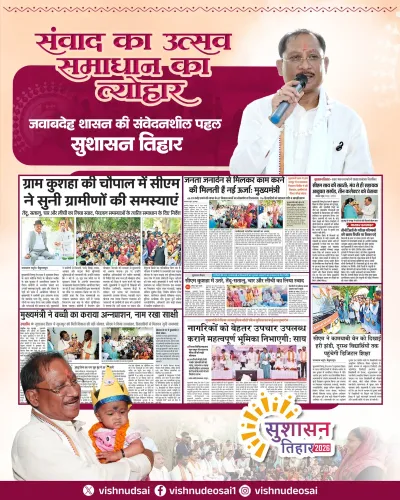
Such village choupals are a central feature of Sushasan Tihar 2026, a programme designed by the BJP government in Chhattisgarh to take senior officials and the Chief Minister directly to communities rather than expecting citizens to approach district offices.
Policy Backdrop
During the chopal, CM Sai cited four specific delivery targets the state government is actively pursuing: construction of 18 lakh Pradhan Mantri Awas Yojana (PMAY) houses, operationalisation of 6,000 Atal Digital Seva Kendras, improved irrigation infrastructure for farmers, and timely availability of fertilisers. The Pradhan Mantri Awas Yojana, launched nationally in 2015, assigns annual housing targets to each state; Chhattisgarh continues to report progress against its allocated share.
The Atal Digital Seva Kendras are modelled on the common-service-centre framework under the 73rd Constitutional Amendment, intended to bring digital government services within reach of rural and tribal populations. Irrigation and fertiliser access are particularly acute concerns in districts like Mahasamund, which has a significant farming community.
Stakeholders and Impact
The primary beneficiaries addressed at the chopal were rural villagers, women enrolled under Mahatari Vandan Yojana, and farmers dependent on state irrigation and input-supply systems. The Mahatari Vandan Yojana is a Chhattisgarh state scheme providing financial support to women beneficiaries, and feedback on its ground-level reach was a key agenda item.
Tribal-dominated and semi-rural districts such as Mahasamund are frequently cited as areas where last-mile delivery gaps are most pronounced. Direct outreach by the Chief Minister is intended to signal administrative accountability and surface implementation bottlenecks that may not appear in official reports.
What's Next
The Sushasan Tihar 2026 series is expected to continue with further district-level rounds across Chhattisgarh, with subsequent choupals likely targeting other underserved blocks. Progress on the 18 lakh PMAY houses and the 6,000 Atal Digital Seva Kendras will be key metrics to watch in upcoming state assembly sessions and budget reviews. If the outreach surfaces systemic gaps, the government may be expected to announce corrective administrative measures or revised delivery timelines.
Point of View
Allowing CM Sai to project direct accountability on central schemes such as PMAY while reinforcing the party's 'last-mile delivery' narrative ahead of future electoral cycles. Anchoring the event in a rural, semi-tribal district like Mahasamund signals an effort to consolidate support among farming and women-beneficiary constituencies. The specific numbers cited — 18 lakh houses and 6,000 digital centres — function as public benchmarks that will invite scrutiny in the state legislature. Whether the outreach translates into measurable administrative correction or remains primarily symbolic will determine its longer-term political value.
NationPress
7 Oct 2026
Frequently Asked Questions
What is Sushasan Tihar 2026 in Chhattisgarh?
Sushasan Tihar 2026 is a state-level governance outreach programme run by the Chhattisgarh government in which senior officials and Chief Minister Vishnu Dev Sai visit villages to hold choupals, gather direct public feedback on welfare scheme delivery, and address implementation gaps at the ground level.
What is Mahatari Vandan Yojana?
Mahatari Vandan Yojana is a Chhattisgarh state welfare scheme designed to provide financial support to women and mothers. It was a key topic of discussion at the Sushasan Tihar chopal held at Kamraud village in Mahasamund on 22 May 2026.
How many PMAY houses is Chhattisgarh targeting?
Chief Minister Vishnu Dev Sai stated at the Mahasamund chopal that the Chhattisgarh government is working to deliver 18 lakh Pradhan Mantri Awas Yojana houses as a priority target.
What are Atal Digital Seva Kendras in Chhattisgarh?
Atal Digital Seva Kendras are rural digital service centres being set up by the Chhattisgarh government, with a stated target of 6,000 centres, to bring government digital services within reach of villagers and tribal communities.
Where was CM Sai's Sushasan Tihar chopal held on 22 May 2026?
The chopal was held at Kamraud village in Bagbahra block, Mahasamund district, Chhattisgarh, on 22 May 2026.