CM Sai Holds Jan Chaupal in Mahasamund Under Sushasan Tihar
Synopsis
Chhattisgarh Chief Minister Vishnu Deo Sai visited village Kamraud in Mahasamund district on 22 May 2026 for a Jan Chaupal under Sushasan Tihar 2026, directly engaging rural beneficiaries — farmers, women, youth, and needy families — to review the reach of state welfare schemes.
Key Takeaways
Chief Minister Vishnu Deo Sai held a Jan Chaupal at village Kamraud, Mahasamund district on 22 May 2026 .
The event was part of the Sushasan Tihar 2026 annual good governance programme run by the Chhattisgarh government.
The CM gathered direct feedback from beneficiaries on welfare scheme delivery across four groups: farmers, women, youth, and needy families .
Sai expressed satisfaction that schemes are 'effectively reaching' target groups and generating 'positive change.' The BJP government in Chhattisgarh has prioritised last-mile welfare delivery and transparent administration since taking office in December 2023 .
Further Jan Chaupals are expected across Chhattisgarh's remaining 33 districts as the Sushasan Tihar calendar progresses.
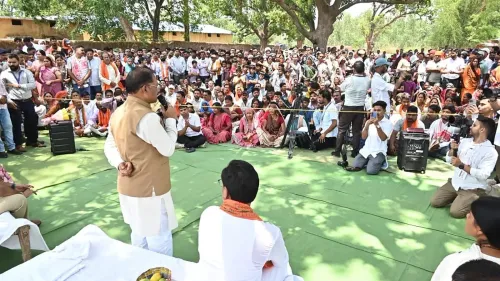
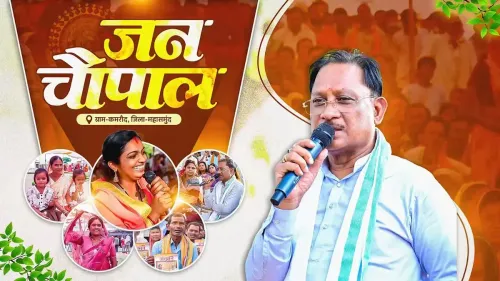
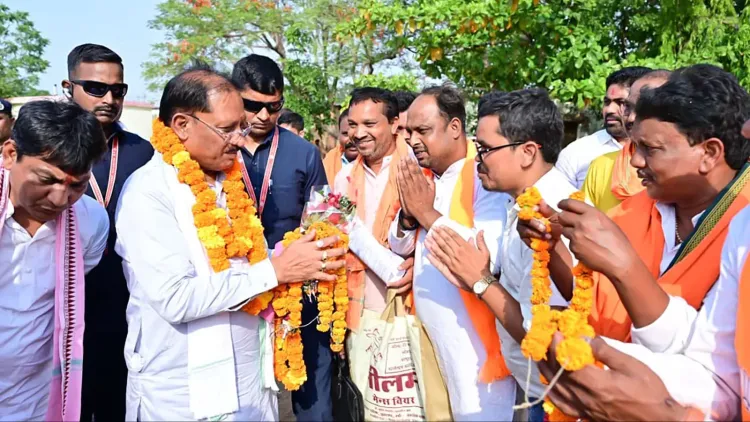
Chhattisgarh Chief Minister Vishnu Deo Sai on Friday, 22 May 2026, conducted a Jan Chaupal (public dialogue session) at village Kamraud in Mahasamund district under the ongoing Sushasan Tihar 2026 programme, directly engaging with villagers to assess the on-ground reach of state welfare schemes.
Context
Posting on X, Chief Minister Sai described the interaction as an exercise in 'sensitive governance,' writing: 'Jan Chaupal se Jan Kalyan... Sanvedansheel Shasan ki Pehchaan' — 'From public dialogue to public welfare... the hallmark of sensitive governance.' He said he gathered direct feedback from beneficiaries on how government schemes are reaching farmers, women, youth, and families in need.
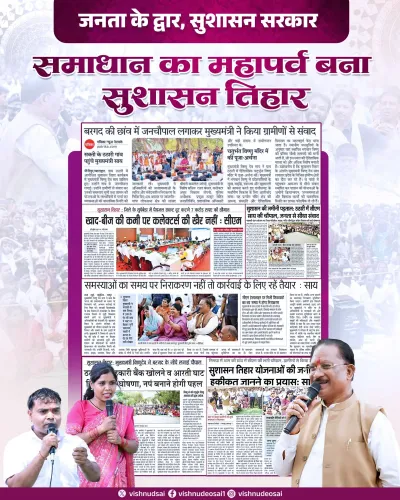
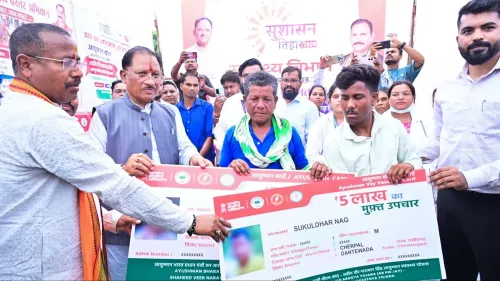
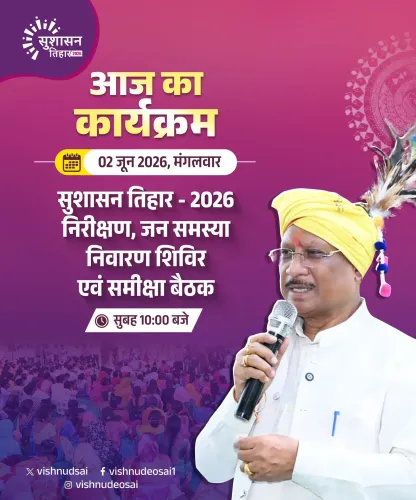
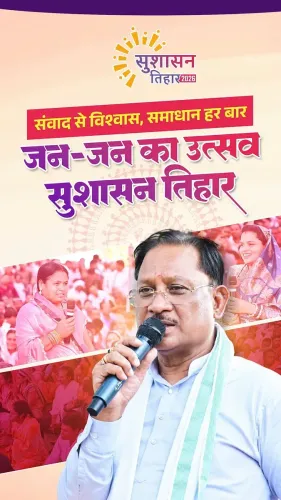
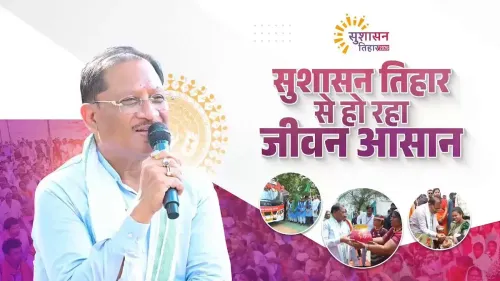
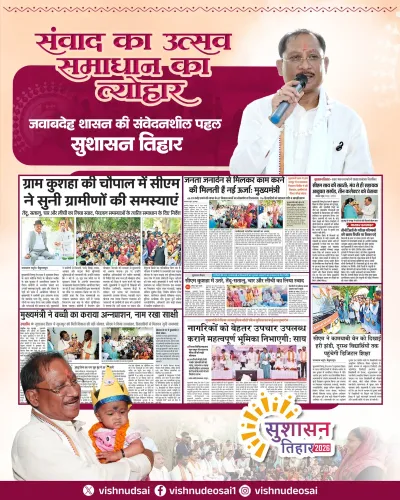
The Chief Minister expressed satisfaction that schemes were 'effectively reaching' these groups and 'bringing positive change in their lives.' The post was accompanied by four images from the village interaction.
Policy Backdrop
Sushasan Tihar — literally 'Festival of Good Governance' — is an annual public outreach programme run by the Chhattisgarh government to monitor welfare delivery and provide a structured platform for citizen grievances. The 2026 edition, tagged #SushasanTihar2026, continues the format established after the BJP government took office in December 2023 under Chief Minister Sai with an explicit mandate of transparent, last-mile administration.
Mahasamund is one of Chhattisgarh's 33 districts, predominantly rural, and representative of the agrarian and tribal constituencies the state government has prioritised for welfare outreach. The Jan Chaupal format — a direct, open-air public forum — is designed to bypass administrative intermediaries and allow elected leadership to hear from beneficiaries firsthand.
Stakeholders and Impact
The beneficiary groups highlighted by the Chief Minister — farmers, women, youth, and economically vulnerable families — reflect the multi-sectoral targeting that has defined Chhattisgarh's welfare architecture since 2023. Direct-interaction models of this kind serve a dual purpose: they provide political visibility for the ruling dispensation while also generating ground-level data on scheme implementation gaps.
Similar structured public forums have been adopted across several BJP-governed states as a mechanism to strengthen grievance redressal and demonstrate administrative accountability. For rural communities in districts like Mahasamund, the Jan Chaupal represents one of the few formal channels through which beneficiaries can flag non-delivery or delays directly to senior leadership.
What's Next
The Chhattisgarh government is expected to roll out Jan Chaupals across the remaining districts as part of the Sushasan Tihar 2026 calendar. Any mid-course corrections to existing welfare schemes — informed by feedback gathered during these sessions — will be a key indicator of whether the exercise translates into administrative action beyond public engagement. The district-by-district progression of the programme will be closely watched by both beneficiary groups and opposition parties assessing the BJP government's governance record ahead of future electoral cycles.
Point of View
Women, and youth as beneficiary categories signals continued alignment with the Centre's flagship social sector priorities. Whether the feedback gathered translates into measurable scheme corrections will determine the long-term credibility of the Sushasan Tihar model beyond its ceremonial value.
NationPress
8 Oct 2026
Frequently Asked Questions
What is Sushasan Tihar in Chhattisgarh?
Sushasan Tihar, meaning 'Festival of Good Governance,' is an annual public outreach programme run by the Chhattisgarh government to monitor welfare scheme delivery, hear citizen grievances, and demonstrate administrative accountability at the grassroots level.
What is a Jan Chaupal?
A Jan Chaupal is an open public forum — typically held in a village — where government officials or elected representatives engage directly with citizens to discuss welfare schemes, collect feedback, and address grievances without administrative intermediaries.
Where did CM Vishnu Deo Sai hold the Jan Chaupal on 22 May 2026?
Chief Minister Vishnu Deo Sai held the Jan Chaupal at village Kamraud in Mahasamund district of Chhattisgarh on 22 May 2026.
Which beneficiary groups were discussed at the Mahasamund Jan Chaupal?
The Chief Minister highlighted welfare outreach to four groups: farmers, women, youth, and economically vulnerable families, stating that government schemes are effectively reaching all of them.
When did Vishnu Deo Sai become Chief Minister of Chhattisgarh?
Vishnu Deo Sai became Chief Minister of Chhattisgarh in December 2023 after the BJP won the state assembly elections.