CM Sai Hosts Seva Sankalp Yatra Riders in Raipur
Synopsis
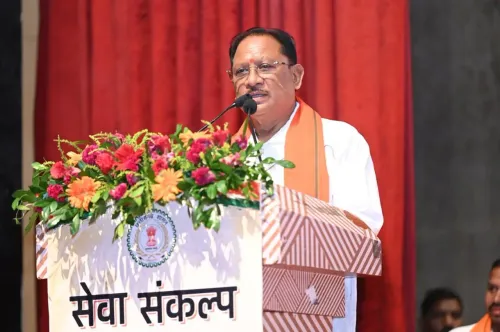
Chhattisgarh CM Vishnu Deo Sai welcomed young bikers from Vadnagar and Bastar at Raipur's Seva Sankalp Yatra and Yuva Samvad event, highlighting cleanliness, de-addiction, TB elimination, and Bastar's transformation from conflict to aspiration.
Key Takeaways
Seva Sankalp Yatra and Yuva Samvad was held in Raipur on September 29, 2026 , attended by CM Vishnu Deo Sai.
Young bike riders arrived from Vadnagar, Gujarat (PM Modi's birthplace) and Bastar division of Chhattisgarh.
The campaign promotes four national priorities: cleanliness, de-addiction, TB elimination, and environmental protection .
CM Sai described Bastar children's aspirations as 'the most beautiful picture of a transforming Chhattisgarh,' noting the region's shift away from Naxalite violence.
The event is linked to PM Modi's Viksit Bharat 2047 vision of a fully developed India by the centenary of independence.
Policy anchors include Swachh Bharat Mission (2014) , Nasha Mukt Bharat Abhiyan (2020) , and the National TB Elimination Programme .
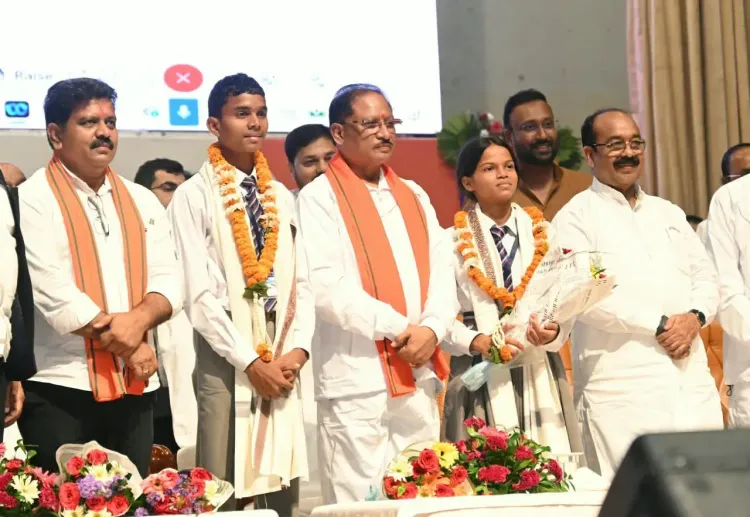
Young bikers who rode from Prime Minister Narendra Modi's birthplace of Vadnagar, Gujarat, and from the forests of Bastar converged on Raipur on Tuesday, September 29, 2026, for the Seva Sankalp Yatra and Yuva Samvad programme — and Chhattisgarh Chief Minister Vishnu Deo Sai was there to receive them. The welcome, he said, was a reminder that India's youth are now carrying the nation's most urgent social missions on two wheels.
From Vadnagar to Bastar — one yatra, four missions
The Seva Sankalp Abhiyan is a youth-led outreach campaign built around four pillars the central government has made a policy priority: cleanliness, de-addiction, TB elimination, and environmental protection. Riders from across the country take these messages directly into communities, blending the theatre of a motorcycle rally with the substance of a social drive. CM Sai called it 'sewa aur rashtra nirman ke prati yuva shakti ki pratibaddhta' — a living demonstration of young India's commitment to service and nation-building.
The campaign draws its mandate from a chain of flagship national programmes: the Swachh Bharat Mission launched in 2014, the Nasha Mukt Bharat Abhiyan of 2020, and the National TB Elimination Programme with its target of a TB-free India by 2025. Linking a state-level motorcycle event to each of these simultaneously is a deliberate governing choice — it keeps centrally prioritised themes alive at the grassroots long after the launch headlines have faded.
Bastar's children: the 'most beautiful picture' of a changing Chhattisgarh
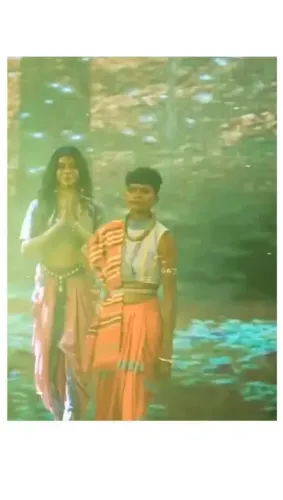
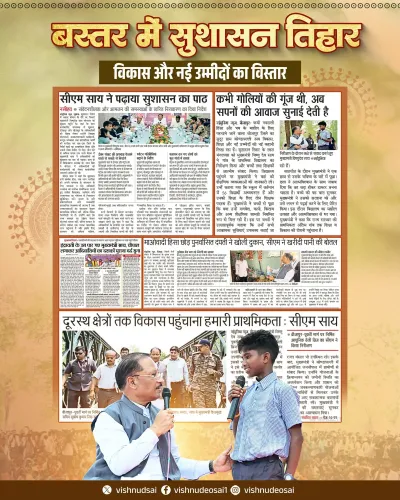
The moment that clearly moved CM Sai most was a conversation with children from Bastar. Bastar, the vast southern division of Chhattisgarh, was for decades defined by Naxalite violence — a conflict that hollowed out schools, choked roads, and kept an entire generation in fear. Sai described the children's eyes as carrying dreams of the future, and called that image 'badlte aur viksit hote Chhattisgarh ki sabse sundar tasveer' — the most beautiful picture of a transforming Chhattisgarh.
The broader arc behind that observation matters. After 2014, the central government began rolling out targeted security and development packages for Left Wing Extremism-affected districts, including Bastar's component districts. Roads, schools, and connectivity projects that were once impossible to execute under insurgent threat began to reach tribal communities. The motorcycle riders arriving from Bastar for a civic-values campaign in the state capital is, in that context, a small but pointed symbol of changed ground realities.
Viksit Bharat 2047 and the youth-messenger strategy
CM Sai explicitly framed the event within Prime Minister Modi's Viksit Bharat 2047 vision — the governing ambition of turning India into a fully developed nation by the centenary of independence. Organising youth motorcycle yatras to carry social messages is a pattern the BJP has used consistently across states: it generates local media energy, mobilises young volunteers without heavy government expenditure, and ties street-level activity visibly to national goals. The choice of Vadnagar — the PM's birthplace — as one of the yatra's originating points adds a layer of symbolic geography to an otherwise civic event.
For Chhattisgarh specifically, this kind of programme serves a dual purpose. It signals administrative confidence — that the state's youth can be deployed for outreach rather than being managed as a security concern — and it gives tribal and rural young people a stage in the state capital, Raipur, that was not easily accessible a decade ago.
The children of Bastar now dream openly in Raipur. That, Chief Minister Sai seems to be saying, is the real development indicator — and the one no spreadsheet captures.
Point of View
High-visibility governing tool. CM Sai's emphasis on Bastar children is strategically significant: it reframes the region's story from a security liability to a development success, which is a narrative the state government has been cultivating since the BJP's return to power in Chhattisgarh in late 2023. Tracing the yatra's origin to Vadnagar stitches local activity directly to the Prime Minister's personal biography, reinforcing the Viksit Bharat 2047 branding at the state level. Analysts will watch whether these symbolic moments translate into measurable development and security outcomes in Bastar's tribal districts.
NationPress
29 Sept 2026
Frequently Asked Questions
What is the Seva Sankalp Yatra?
The Seva Sankalp Yatra (also called Seva Sankalp Abhiyan) is a youth-led motorcycle outreach campaign that carries messages on cleanliness, de-addiction, TB elimination, and environmental protection to communities across India. It is linked to the BJP government's broader Viksit Bharat 2047 vision.
Why did bikers start from Vadnagar for the Seva Sankalp Yatra?
Vadnagar in Gujarat is the birthplace of Prime Minister Narendra Modi. Beginning the yatra from there is a symbolic choice connecting the youth campaign to the PM's personal narrative and the national Viksit Bharat 2047 development goal.
What is the current situation in Bastar, Chhattisgarh?
Bastar is a large southern division of Chhattisgarh that was historically affected by Naxalite insurgency. Post-2014 central government security and development packages have gradually improved ground conditions, and CM Vishnu Deo Sai highlighted the aspirations of Bastar's children as evidence of the region's transformation.
Who is Vishnu Deo Sai?
Vishnu Deo Sai is a BJP leader who became Chief Minister of Chhattisgarh in December 2023 after the party won the state assembly elections. He is a tribal leader from the Jashpur district of Chhattisgarh.
What is the Nasha Mukt Bharat Abhiyan?
Nasha Mukt Bharat Abhiyan is a central government campaign launched in 2020 to combat substance abuse, particularly among youth. It is one of the four social causes championed by the Seva Sankalp Yatra riders.