CM Sai Welcomes Seva Yatra in Raipur, Highlights Bastar's New Face
Synopsis
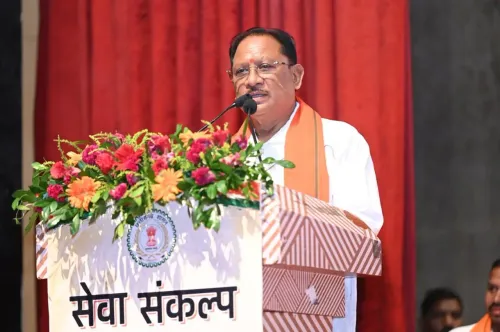
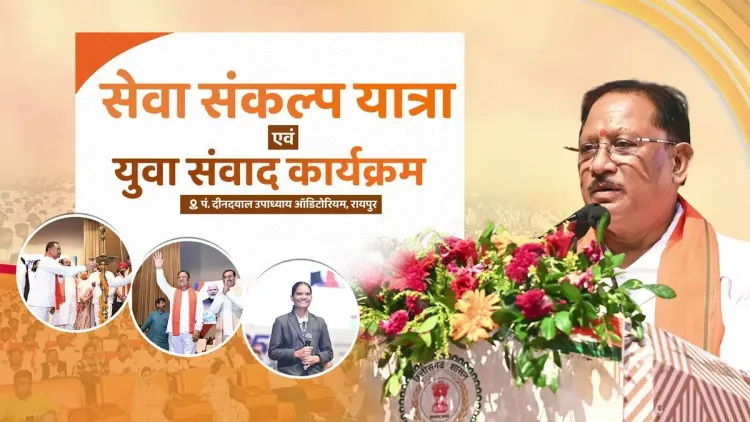
Chhattisgarh CM Vishnu Deo Sai welcomed youth participants of the Seva Yatra in Raipur on September 30, 2026, as Bastar children presented a vision of peace and development under PM Modi's leadership during the BJP's Seva Sankalp Abhiyan.
Key Takeaways
The Seva Yatra , part of the BJP's Seva Sankalp Abhiyan , arrived in Raipur on September 30, 2026 .
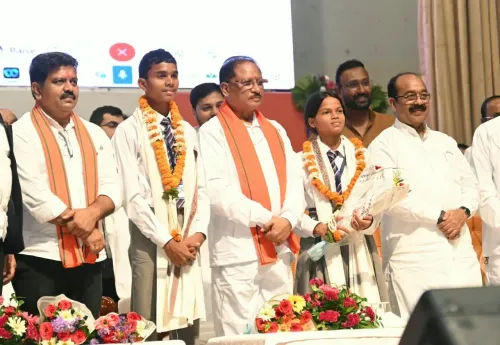
CM Vishnu Deo Sai personally welcomed and encouraged the young participants at the event.
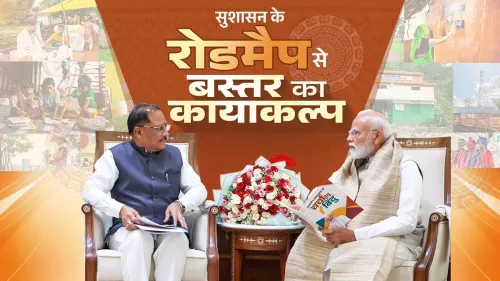
Children from Bastar presented a picture of peace, development, and positive change in their region under PM Narendra Modi .
Sai described the hope and smiles on Bastar children's faces as the 'most beautiful identity of a changing Bastar.' The campaign fits a broader BJP pattern of framing Bastar's transformation through human-scale, youth-centric storytelling since the party's 2023 Chhattisgarh election victory .
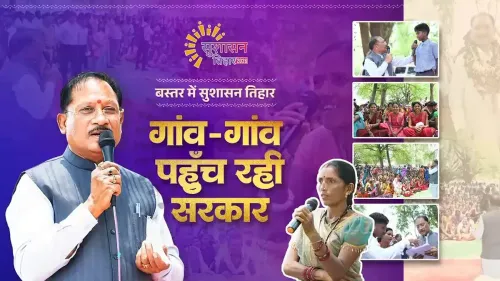
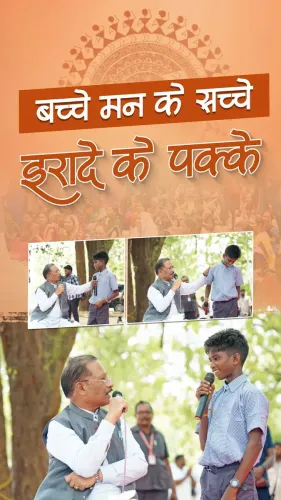
The children of Bastar carried a message to Raipur on Wednesday, September 30, 2026 — and Chhattisgarh Chief Minister Vishnu Deo Sai was there to receive it. As the Seva Yatra, the travelling centrepiece of the BJP's Seva Sankalp Abhiyan, rolled into the state capital, Sai welcomed the young participants and pointed to what he called the most beautiful proof of a changing Bastar: the hope in the eyes and the smiles on the faces of its children.
What the Seva Yatra Carried into Raipur
The Seva Sankalp Abhiyan is a BJP-led outreach campaign that deploys seva yatras — travelling convoys of youth volunteers — across Chhattisgarh's districts to engage communities and showcase government programmes. On its arrival in Raipur, the yatra carried something unusually concrete: presentations by Bastar's children depicting what they described as a new picture of peace, development, and positive change under Prime Minister Narendra Modi's leadership.
Sai noted the moment in Hindi — 'बस्तर के बच्चों की आंखों में दिखती उम्मीद और चेहरे पर खिलती मुस्कान ही बदलते बस्तर की सबसे सुंदर पहचान है' — ('The hope visible in the eyes of Bastar's children and the smile blooming on their faces is the most beautiful identity of a changing Bastar.') That single line, posted to X alongside the event video, is both a political statement and a carefully composed image: the transformation of a conflict zone measured not in security statistics but in a child's expression.
Bastar's Long Road From Conflict to Outreach Campaign
Bastar, the sprawling division of southern Chhattisgarh, spent decades as one of the most Naxal-affected zones in India. The region became a byword for left-wing extremism, displacement, and disrupted development. Since 2014, successive central and state administrations have layered security operations with infrastructure, health, and education initiatives — and since the BJP's 2023 Chhattisgarh election victory, the messaging has intensified around visible, human-scale proof of change.
Campaigns like the Seva Sankalp Abhiyan are a direct extension of that political and administrative strategy: bring the story of tribal districts to the state capital, amplify it through party networks, and frame development as an ongoing, participatory process rather than a distant bureaucratic output. The recurring motif — children as the most credible witnesses to transformation — recurs across BJP state communications on Bastar precisely because it is difficult to contest.
The Pattern Behind the Politics
There is a well-worn groove in the BJP's Bastar playbook: state leaders credit the Prime Minister for local gains, the Prime Minister's outreach brand ('seva') provides the national frame, and images of tribal children or youth volunteers supply the emotional texture. CM Sai's public tagging of @narendramodi and the use of #SevaSankalpAbhiyan slot Wednesday's event neatly into that pattern.
What is worth watching is whether the yatra's subsequent legs carry specific project announcements — new schools, healthcare facilities, or connectivity schemes — that give the campaign's imagery a concrete policy anchor. For now, the Seva Yatra has delivered its most important cargo to Raipur: a story, told in children's faces, about what the government wants voters to believe Bastar is becoming.
Point of View
Shareable narratives centred on children and youth. By publicly crediting PM Modi and tagging him on social media, CM Sai reinforces a state-to-Centre loyalty signal that is now standard BJP practice in tribal governance communications. The real test of the campaign's substance lies in whether it catalyses measurable policy announcements for Bastar, or remains primarily an image-management exercise in the run-up to future electoral cycles.
NationPress
30 Sept 2026
Frequently Asked Questions
What is the Seva Sankalp Abhiyan?
The Seva Sankalp Abhiyan is a BJP-led outreach campaign that organises Seva Yatras — travelling convoys of youth volunteers — across Chhattisgarh's districts to engage communities and highlight government programmes.
What happened when the Seva Yatra reached Raipur on September 30, 2026?
Chhattisgarh Chief Minister Vishnu Deo Sai welcomed and encouraged the young participants; Bastar children also presented a picture of peace and development in their region under PM Narendra Modi's leadership.
Why is Bastar significant in Chhattisgarh's political narrative?
Bastar is a southern Chhattisgarh division historically affected by Naxal-related left-wing extremism. It has been a focus of central and state peace-building, infrastructure, and welfare initiatives since 2014.
What did CM Vishnu Deo Sai say about Bastar's children?
Sai said the hope visible in the eyes of Bastar's children and the smiles on their faces are the most beautiful identity of a changing Bastar — a direct quote from his post on X during the Seva Yatra event.
When did the BJP win the Chhattisgarh state election?
The BJP won the Chhattisgarh assembly election in 2023, after which Vishnu Deo Sai was sworn in as Chief Minister and the government launched multiple outreach campaigns for tribal districts.