CM Sai Leads Janjatiya Gaurav Diwas in Bilaspur, Launches ₹120 Cr Projects
Synopsis
Chief Minister Vishnu Deo Sai celebrated Janjatiya Gaurav Diwas in Bilaspur on 16 November 2026, launching 16 development works worth ₹120 crore, honouring 28 achievers in education, sport, art and social service, and paying tribute to Bhagwan Birsa Munda.
Key Takeaways
CM Vishnu Deo Sai attended the Janjatiya Gaurav Diwas ceremony at Lal Bahadur Shastri School Maidan, Bilaspur on 16 November 2026 .
He inaugurated and laid the foundation for 16 development works valued at approximately ₹120 crore using a ceremonial remote.
28 individuals were honoured for contributions in education, sports, art, and social service .
The CM paid tribute to Bhagwan Birsa Munda (Dharti Aaba) and other great tribal leaders of India.
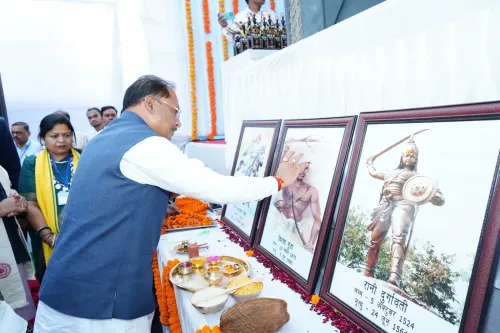
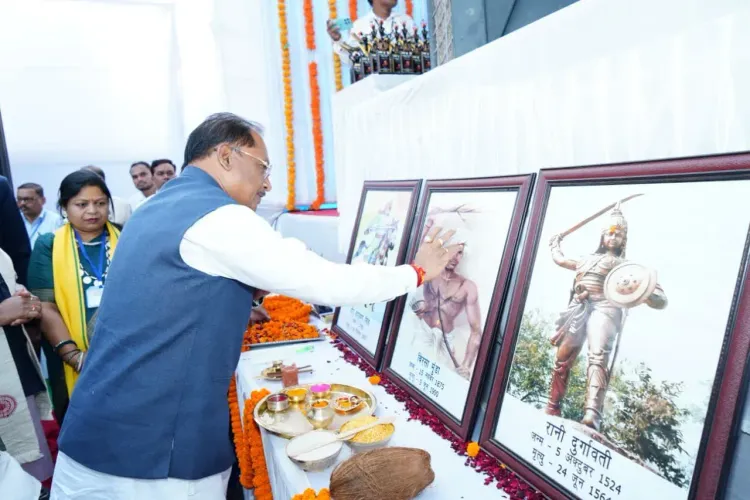
A photo exhibition focused on tribal leaders was also held at the venue.
Janjatiya Gaurav Diwas was instituted nationally in 2021 to mark Birsa Munda's birth anniversary on 15 November .
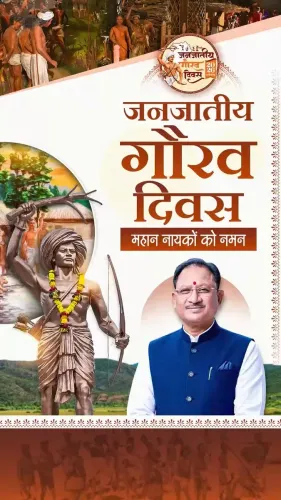
On the occasion of Janjatiya Gaurav Diwas, Chief Minister Vishnu Deo Sai stood before a packed ground at Lal Bahadur Shastri School Maidan in Bilaspur on 16 November 2026 and did what central India's tribal-belt politics increasingly demands — he combined solemn homage with the concrete weight of a remote-control button press.
The Chief Minister's Office of Chhattisgarh confirmed that Sai inaugurated and laid the foundation for 16 development works valued at approximately ₹120 crore, activating them with a ceremonial remote at the event hosted in Bilaspur, the state's divisional and educational hub in its northern belt.
Birsa Munda's legacy at the centre of the celebration
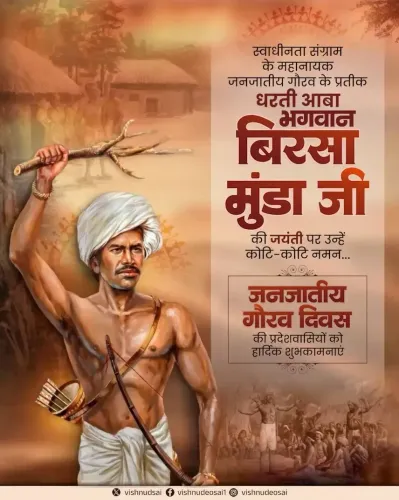
Sai opened his address by paying tribute to Bhagwan Birsa Munda — revered as Dharti Aaba (Father of the Earth) — alongside other great tribal leaders of the country. Birsa Munda, the 19th-century Munda community resistance fighter who defied British rule, has become the defining symbol of India's tribal rights movement. His birth anniversary, 15 November, was formally designated Janjatiya Gaurav Diwas by the Government of India in 2021 to institutionalise recognition of tribal heritage nationally.
Chhattisgarh, where over 30 percent of the population belongs to Scheduled Tribes, has consistently used the occasion to anchor state-level ceremonies. This year's Bilaspur event featured a photo exhibition focused on tribal leaders, giving the gathering a museum-quality cultural dimension alongside its administrative agenda.
28 achievers honoured across education, sport, art, and service
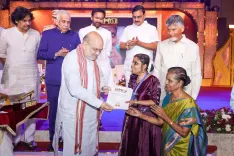
The event's most personal moment came when 28 individuals were recognised by the organising committee for outstanding contributions in education, sports, art, and social service. Chief Minister Sai personally extended wishes to each honouree, spotlighting the breadth of tribal achievement beyond the political and historical narrative.
The gesture follows an established pattern in central Indian states — Jharkhand and Odisha have run similar district-level honour ceremonies — but the scale of Chhattisgarh's simultaneous infrastructure activation on the same stage makes the signal harder to miss: cultural pride and development spending are being framed as a single policy statement.
₹120 crore and 16 projects: the development subtext
The 16 works span inauguration and bhoomi puja (ground-breaking), meaning some are completions and others are starts — a common dual-announcement format at state ceremonies. Chhattisgarh's long-running Vanbandhu Kalyan Yojana, which channels infrastructure spending into tribal blocks, provides the policy scaffolding for this kind of event-linked rollout.
With mineral-rich tribal belts at the economic core of the state, the pressure to demonstrate visible returns to tribal constituencies is constant — and Janjatiya Gaurav Diwas has become the annual ledger moment where that accounting happens in public.
Sixteen projects, twenty-eight honourees, one remote control — and a tradition of turning a birth anniversary into a governance reckoning that Chhattisgarh shows no sign of slowing down.
Point of View
The political calculus is straightforward: cultural recognition without economic delivery loses credibility fast. The ₹120 crore rollout in Bilaspur — a non-tribal-majority city hosting a tribal-pride event — also signals an intent to mainstream tribal welfare rather than confine it to forest-district politics. Whether the 16 projects clear execution benchmarks will determine how durable that credibility proves.
NationPress
16 Nov 2026
Frequently Asked Questions
What is Janjatiya Gaurav Diwas and when is it observed?
Janjatiya Gaurav Diwas is a national observance held on 15 November every year to commemorate the birth anniversary of tribal freedom fighter Bhagwan Birsa Munda . The Government of India instituted it in 2021 to recognise the contributions of tribal communities and leaders.
What projects did CM Vishnu Deo Sai launch in Bilaspur?
CM Sai inaugurated and performed the bhoomi puja (ground-breaking) for 16 development works worth approximately ₹120 crore at the Janjatiya Gaurav Diwas event in Bilaspur on 16 November 2026 . Specific project details were not itemised in the official announcement.
Who is Bhagwan Birsa Munda?
Bhagwan Birsa Munda was a 19th-century tribal leader from the Munda community in present-day Jharkhand who led a major resistance movement against British colonial rule. Revered as Dharti Aaba (Father of the Earth), he is the central symbol of India's tribal rights heritage.
How many people were honoured at the Bilaspur Janjatiya Gaurav Diwas event?
28 individuals were recognised at the event for notable contributions in education, sports, art, and social service . Chief Minister Vishnu Deo Sai personally congratulated each honouree.
What share of Chhattisgarh's population belongs to Scheduled Tribes?
More than 30 percent of Chhattisgarh's population belongs to Scheduled Tribes, making the state one of the most significant tribal-majority states in central India and a key focus of national tribal welfare policy.