CM Sai Holds Tripartite Talks on Mahanadi Water Management
Synopsis
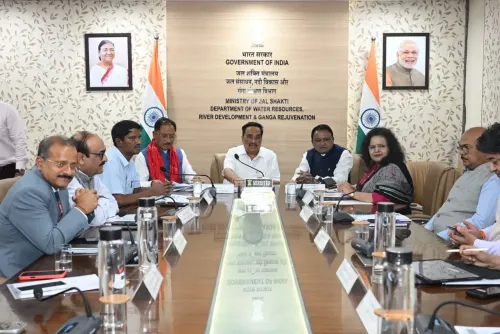
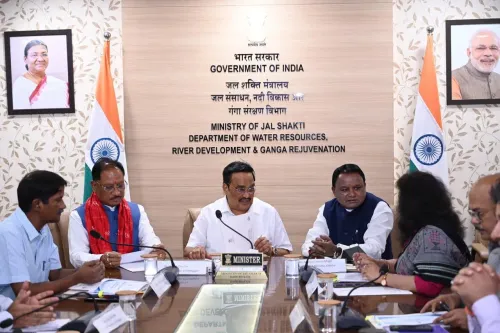
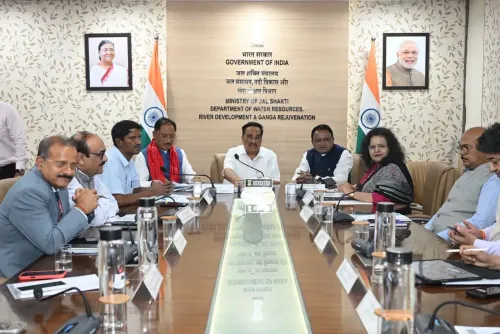
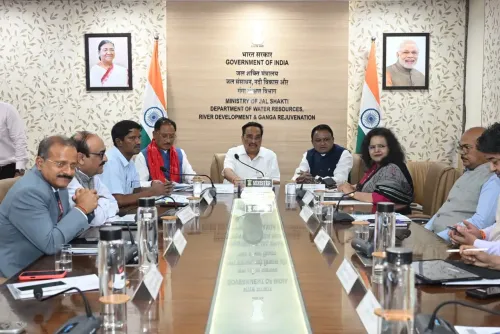
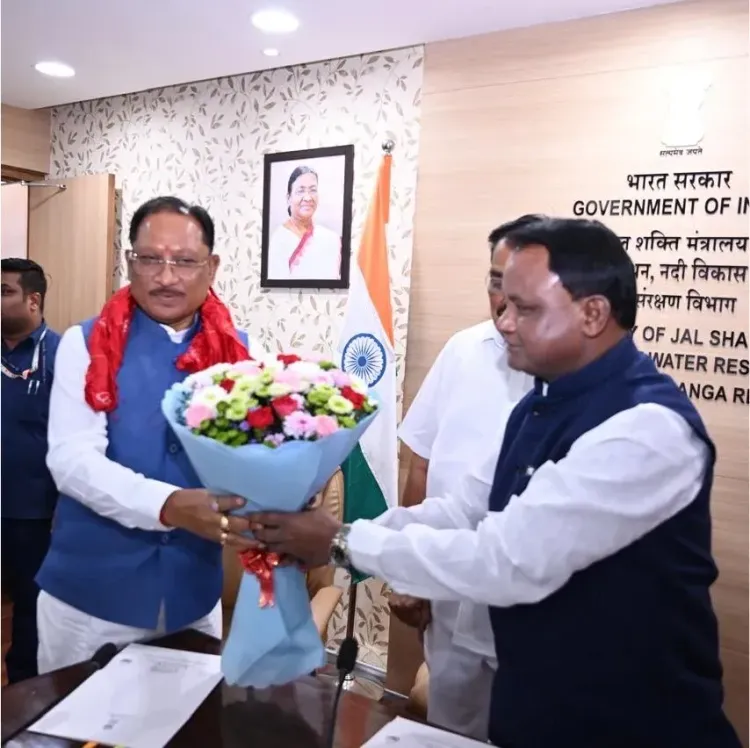
Chhattisgarh CM Vishnu Deo Sai, Odisha CM Mohan Charan Majhi, and Union Jal Shakti Minister C. R. Patil held tripartite talks in New Delhi on 30 July 2026 over long-term water management of the Mahanadi, framing the dialogue under PM Modi's cooperative federalism vision.
Key Takeaways
Tripartite meeting on 30 July 2026 in New Delhi brought together Chhattisgarh CM Vishnu Deo Sai , Odisha CM Mohan Charan Majhi , and Union Jal Shakti Minister C.
The agenda centred on 'better and long-term water management' of the Mahanadi , an interstate river originating in Chhattisgarh and flowing through Odisha.
The Mahanadi Water Disputes Tribunal was constituted by the Union Government in 2018 to adjudicate water-sharing claims between the two states.
CM Sai invoked PM Narendra Modi's cooperative federalism framework, emphasising dialogue, trust, and coordination over adversarial legal processes.
The primary beneficiaries of any agreement would be farmers and residents in the Mahanadi basin across both states.
A river that feeds two states sat at the centre of high-level diplomacy in the capital on Thursday, 30 July 2026. Chhattisgarh Chief Minister Vishnu Deo Sai met Union Jal Shakti Minister C. R. Patil and Odisha Chief Minister Mohan Charan Majhi in New Delhi to discuss long-term water management of the Mahanadi — a river whose fate is shared, and whose disputes have long tested inter-state relations.
The Mahanadi Question: One River, Two States, Decades of Tension
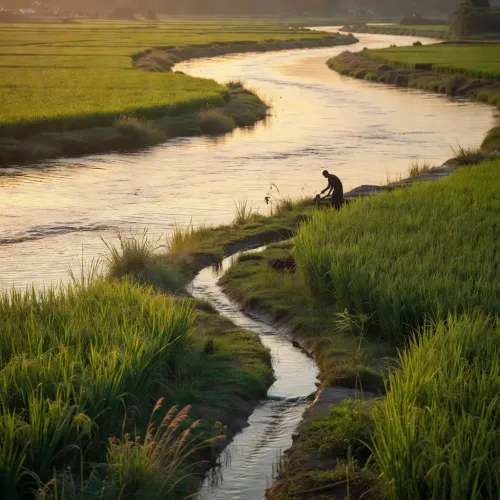
The Mahanadi originates in Chhattisgarh and flows over 850 kilometres before draining into the Bay of Bengal through Odisha. For decades, the two states have clashed over water allocation — Odisha accusing Chhattisgarh of building upstream structures that reduce downstream flow, Chhattisgarh asserting its right to develop irrigation for its own farmers. The Union Government constituted the Mahanadi Water Disputes Tribunal in 2018 to adjudicate these claims, but the tribunal process has been slow and the political temperature periodic.
That is precisely what makes Thursday's meeting significant. Rather than leaving resolution entirely to a legal tribunal, the three governments chose direct dialogue — a signal that both BJP-ruled states and the Centre see political will as a faster lever than judicial timelines.
Cooperative Federalism as the Stated Framework
CM Sai framed the talks explicitly within Prime Minister Narendra Modi's doctrine of sahyogi sanghavad (cooperative federalism), writing that 'through dialogue, trust and coordination, we are moving forward to further strengthen the interests of farmers and citizens of both states.' The language is deliberate: it positions the meeting not as a concession by either state but as a shared advance, neutralising the zero-sum optics that inter-state water disputes typically generate.
Union Minister C. R. Patil, who oversees the Jal Shakti Ministry responsible for national water policy and interstate river boards, provided the institutional anchor for the talks. His presence signals that the Centre is actively facilitating rather than merely observing.
What Farmers on Both Banks Are Waiting For
The real constituency here is the Mahanadi basin's farming communities — in Chhattisgarh's rice-belt districts and in Odisha's delta region, where the river sustains irrigation, drinking water, and livelihoods for millions. Any agreed framework on water releases, storage schedules, or joint monitoring would have immediate, tangible consequences for kharif sowing cycles and dry-season water security.
India's inter-state river history offers sobering precedent: the Cauvery dispute between Karnataka and Tamil Nadu took decades and a Supreme Court order to reach a partial resolution; the Krishna tribunal ran for years before a revised award. The Mahanadi talks suggest both governments want to avoid that trajectory.
The next test is whether Thursday's conversation produces a joint statement, an agreed project list, or a scheduled follow-up — the concrete outputs that will determine whether this meeting was a breakthrough or a warm handshake.
Point of View
The Centre is positioning itself as a facilitator rather than an arbiter, consistent with the BJP's cooperative federalism messaging. The framing matters: with both Chhattisgarh and Odisha governed by BJP, the party has a political incentive to demonstrate that alliance states can resolve legacy disputes faster than tribunal processes allow. Whether the dialogue produces binding water-sharing commitments or remains at the level of goodwill signalling will define its real significance.
NationPress
14 Sept 2026
Frequently Asked Questions
What is the Mahanadi water dispute between Chhattisgarh and Odisha?
The dispute centres on water allocation from the Mahanadi river, which originates in Chhattisgarh and flows through Odisha. Odisha has argued that upstream infrastructure built by Chhattisgarh reduces downstream water availability, while Chhattisgarh asserts its right to use the river for its own irrigation needs. The Union Government set up the Mahanadi Water Disputes Tribunal in 2018 to adjudicate the claims.
What happened at the Mahanadi meeting in New Delhi on 30 July 2026?
Chhattisgarh Chief Minister Vishnu Deo Sai held talks with Union Jal Shakti Minister C. R. Patil and Odisha Chief Minister Mohan Charan Majhi in New Delhi to discuss long-term and sustainable water management of the Mahanadi river.
What is the Mahanadi Water Disputes Tribunal?
The Mahanadi Water Disputes Tribunal was constituted by the Union Government in 2018 to adjudicate water-sharing disagreements between Chhattisgarh and Odisha over the Mahanadi river.
Who is C. R. Patil and what is his role in the Mahanadi talks?
C. R. Patil is India's Union Minister of Jal Shakti, the ministry responsible for national water resources policy and inter-state river management. His presence at the 30 July 2026 meeting signals active central facilitation of the Mahanadi dialogue.
What is cooperative federalism and how does it relate to the Mahanadi issue?
Cooperative federalism refers to a governance approach where the Centre and states work collaboratively rather than adversarially. CM Vishnu Deo Sai explicitly cited PM Narendra Modi's cooperative federalism vision as the framework for the Mahanadi talks, emphasising dialogue and coordination over legal disputes.