Mahanadi water dispute will be resolved soon, says Chhattisgarh CM Vishnu Deo Sai
Synopsis
For the first time in years, both Chhattisgarh and Odisha — now governed by the same party — are signalling a negotiated end to the decade-old Mahanadi water dispute. Chhattisgarh CM Vishnu Deo Sai's Bhubaneswar visit and his joint consent with Odisha CM Majhi to let the Central Water Commission mediate could be the breakthrough that millions of Odisha farmers and fisherfolk have been waiting for.
Key Takeaways
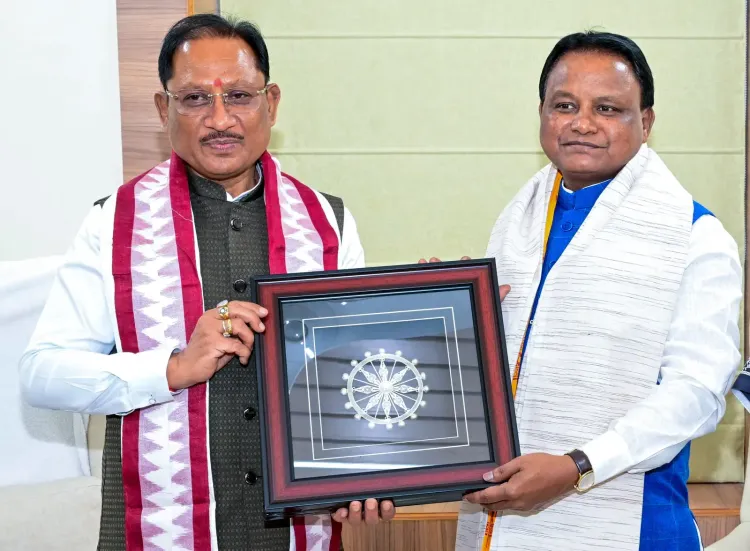
Chhattisgarh CM Vishnu Deo Sai visited Bhubaneswar on 20 September and met Odisha CM Mohan Charan Majhi .
Sai said the Mahanadi River water dispute will be resolved 'very soon,' citing shared BJP governance in both states and the Centre.
Both CMs have consented to the Central Water Commission mediating the dispute through mutual dialogue.
The conflict dates to 2016 ; Odisha alleges eight upstream barrages built by Chhattisgarh have reduced downstream flow, hurting agriculture, fisheries, and power generation.
Odisha CM Majhi welcomed the talks on X , calling them a 'fruitful interaction' on bilateral cooperation.
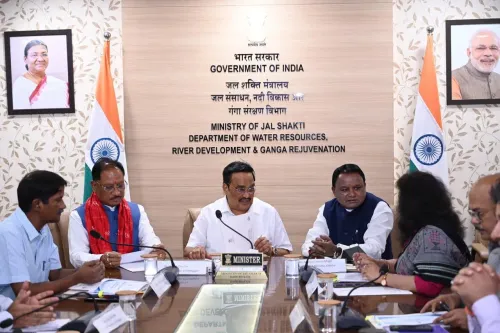
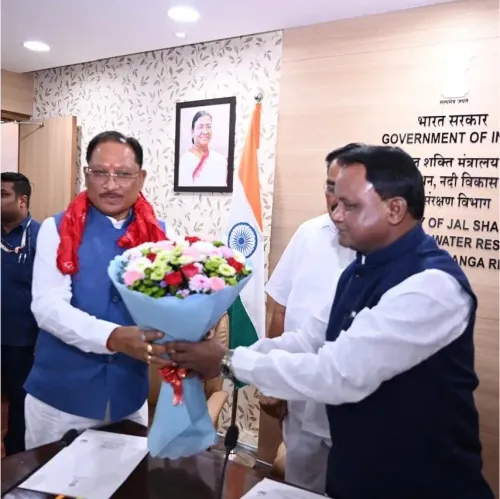
Chhattisgarh Chief Minister Vishnu Deo Sai said on Sunday, 20 September that the long-standing Mahanadi River water dispute between Chhattisgarh and Odisha would be resolved in the near future, citing the political alignment of both states and the Centre under the Bharatiya Janata Party (BJP). Sai made the remarks during a two-day official visit to Bhubaneswar, where he held talks with Odisha Chief Minister Mohan Charan Majhi at the latter's residence.
What Chhattisgarh CM Said
Speaking to reporters upon arrival, Sai sought to downplay the severity of the dispute. 'There is no dispute over Mahanadi water. As the BJP is in power in both the states, Chhattisgarh and Odisha, as well as at the Centre, this is going to be resolved very soon,' he said. He added that several long-pending inter-state river water disputes were already being settled amicably, and expressed confidence that the Mahanadi issue would follow the same path.
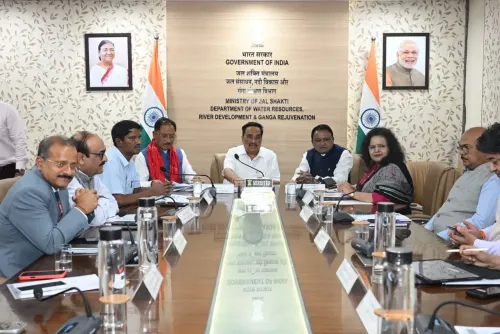
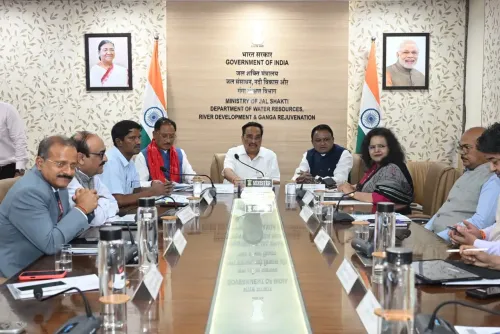
Sai further noted that the chief ministers of both states, along with senior officials, recently met in New Delhi and gave their consent to the Central Water Commission to resolve the matter through mutual dialogue — a development that signals a shift from adversarial proceedings toward negotiated resolution.
Background: A Dispute Rooted Since 2016
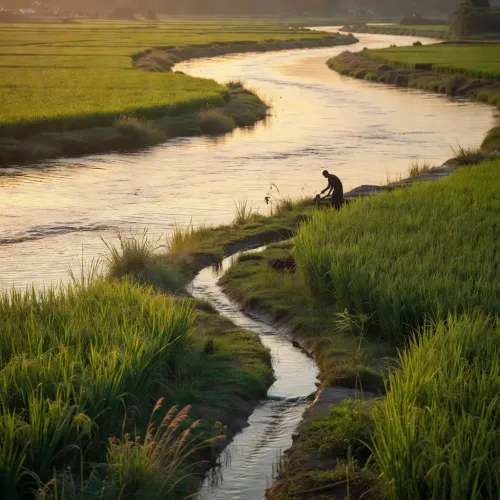
The Mahanadi River water conflict dates back to 2016, when Odisha first raised formal objections to Chhattisgarh's upstream water infrastructure projects. Odisha has alleged that the unilateral construction of at least eight barrages by Chhattisgarh has significantly reduced downstream river flow, adversely affecting the state's agriculture, fisheries, and power generation. Odisha has long described the Mahanadi as its 'lifeline,' given the river's centrality to millions of farmers and fishing communities in the state.
The dispute has been a politically sensitive issue in Odisha, where dependence on the river cuts across districts and livelihoods. Previous attempts at resolution through tribunals and inter-state negotiations yielded limited outcomes, making the latest diplomatic overture — framed within a shared political identity — a notable development.
Odisha CM's Response
Odisha Chief Minister Mohan Charan Majhi acknowledged the meeting in a post on X, writing: 'It was a pleasure to receive Hon'ble Chief Minister of Chhattisgarh, Shri Vishnu Deo Sai Ji, at my residence. We had a fruitful interaction on strengthening cooperation between Odisha and Chhattisgarh and advancing our shared commitment towards the development and welfare of our people.' Majhi's statement, while warm in tone, did not make any specific commitment on the water dispute timeline.
Sai's Odisha Itinerary
Beyond the political engagement, Sai's visit also included a spiritual dimension. According to his itinerary, the Chhattisgarh chief minister was scheduled to visit the Lingaraj Temple in Bhubaneswar following his meeting with Majhi, and later travel to Puri for darshan at the Jagannath Temple.
With both state governments now signalling willingness to resolve the dispute through the Central Water Commission's framework, the Mahanadi question may be heading toward a structured settlement — though the pace and outcome will ultimately depend on how competing water-use claims are quantified and adjudicated.
Point of View
But it rests on a political assumption rather than a legal or technical one — that shared party affiliation can override a decade of conflicting water-use claims. The Mahanadi dispute is not simply about goodwill; it involves quantified water shares, contested barrage data, and downstream livelihoods that Odisha's farmers depend on every kharif season. The Central Water Commission route is sensible, but mediation without enforceable timelines and transparent flow-measurement data risks becoming another round of cordial statements that do not translate into agreed allocations. The real test is whether this BJP-to-BJP diplomacy produces a binding formula — or just another joint photo.
NationPress
20 Sept 2026
Frequently Asked Questions
What is the Mahanadi River water dispute between Chhattisgarh and Odisha?
The Mahanadi water dispute is a long-standing inter-state conflict that began formally in 2016, when Odisha alleged that Chhattisgarh's construction of at least eight upstream barrages had reduced downstream river flow. Odisha considers the Mahanadi its lifeline for agriculture, fisheries, and power generation, and has sought equitable water sharing.
What did Chhattisgarh CM Vishnu Deo Sai say about resolving the dispute?
Sai said the dispute would be resolved 'very soon,' pointing to BJP governance in both states and at the Centre as a facilitating factor. He also noted that both chief ministers had recently consented to the Central Water Commission resolving the matter through mutual dialogue.
What role will the Central Water Commission play?
The Central Water Commission has been tasked with mediating the Mahanadi dispute through mutual dialogue, following consent given by the chief ministers of both Chhattisgarh and Odisha during a meeting in New Delhi. It is a shift from adversarial tribunal proceedings toward a negotiated framework.
How does the BJP's presence in both states affect the dispute?
Sai argued that shared BJP governance in Chhattisgarh, Odisha, and at the Centre creates a more cooperative environment for resolving the dispute. Critics and observers, however, note that political alignment does not automatically resolve technical water-sharing disagreements.
What is the impact of the Mahanadi dispute on Odisha?
Odisha has alleged that reduced downstream flow caused by Chhattisgarh's upstream barrages has hurt agricultural output, fishing communities, and power generation. The Mahanadi is described as the state's lifeline, with millions of farmers and fisherfolk dependent on its seasonal flows.