CM Sai: Naxal-hit Chhattisgarh villages get power after 78 years
Synopsis
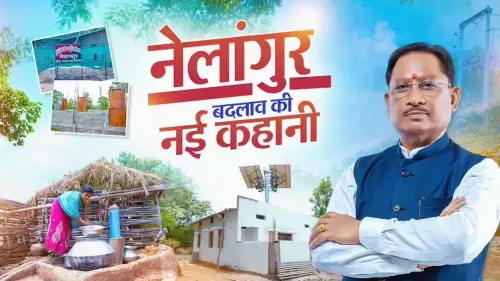
Chhattisgarh CM Vishnu Deo Sai announced that villages in the formerly Naxal-affected forests of Khairgarh-Chhui Khadan-Gandai district have received electricity for the first time in 78 years, with 11 more remote villages being connected to the grid.
Key Takeaways
Villages in the formerly Naxal-affected forest belt of Khairgarh-Chhui Khadan-Gandai district have been electrified for the first time in 78 years of Indian independence.
11 additional remote villages in the same district are currently being connected to the electricity grid.
CM Vishnu Deo Sai identified electricity, water, roads, and education as his government's foremost priority for every village in Chhattisgarh.
The electrification is grid-based, signalling a permanent infrastructure commitment rather than an off-grid stopgap.
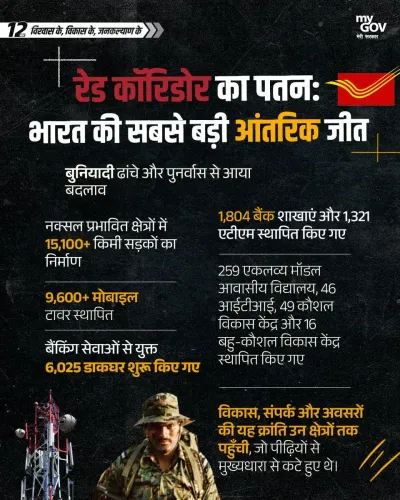
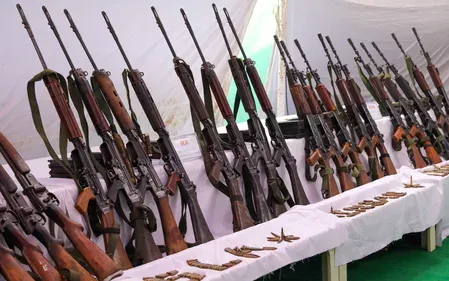
The region's history of Left Wing Extremism had long obstructed infrastructure development, making this milestone significant both developmentally and from a security standpoint.
CM Sai described the project as a step towards 'holistic development,' implying further basic-amenity rollouts in the cluster are planned.
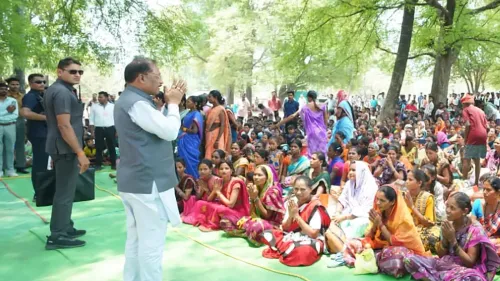
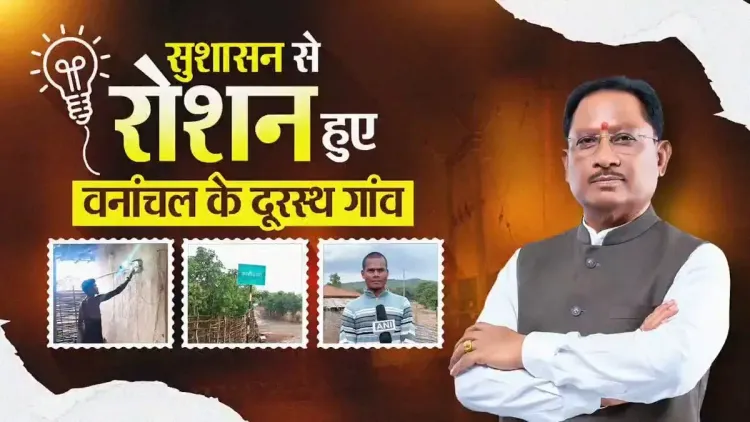
Chhattisgarh Chief Minister Vishnu Deo Sai announced on Sunday, 28 June 2026 that villages in the erstwhile Naxal-affected forest belt of Khairgarh-Chhui Khadan-Gandai district have been electrified for the first time since India's independence, 78 years after 1947, with 11 additional remote villages being connected through the electricity grid.
Context
In a post on X, CM Sai stated that delivering basic amenities — electricity, water, roads, and education — to every village in the state is his government's 'first priority.' He wrote: 'bijli, paani, sadak aur shiksha jaisi moolbhoot suvidhaen pradesh ke har gaon tak pahunchana hamari pehli prathamikta hai' ('Providing basic facilities like electricity, water, roads and education to every village of the state is our first priority.')
He described the electrification of these villages as a moment of 'immense joy,' noting that settlements nestled in the forest areas of Khairgarh-Chhui Khadan-Gandai district — once gripped by Naxal violence — are now 'glowing with the light of electricity' for the first time in 78 years of independence.
Policy Backdrop
The Khairgarh-Chhui Khadan-Gandai district was carved out as a new administrative unit in Chhattisgarh as part of the state government's effort to bring governance closer to remote and historically underserved communities. The region falls in the state's northern belt, which has long been identified as Left Wing Extremism (LWE)-affected terrain, limiting infrastructure development for decades.
The Central government's flagship Saubhagya scheme (Pradhan Mantri Sahaj Bijli Har Ghar Yojana), launched in 2017, aimed at universal household electrification across India, with special focus on LWE-affected districts. Chhattisgarh's forest-interior villages have been among the last to be covered, owing to difficult terrain, security challenges, and the logistical complexity of grid extension into dense forest areas.
Grid-based electrification — as opposed to solar microgrids or off-grid solutions — signals a more permanent and scalable infrastructure commitment. Connecting 11 additional villages simultaneously through the grid suggests a coordinated push under state-level electrification targets for 2026.
Stakeholders and Impact
The communities in these villages, who have lived without grid electricity through seven-and-a-half decades of independent India, stand to gain access to lighting, refrigeration, mobile charging, and eventually digital connectivity — fundamentally altering daily life, healthcare, and educational outcomes. Children in these areas will, for the first time, be able to study after dark under electric light.
The electrification also carries a security and governance dimension: historically, Naxal groups have targeted infrastructure such as power lines and towers in these belts, making sustained electrification a marker of restored state authority. Local businesses, small traders, and self-help groups in these villages are expected to benefit from reliable power supply, enabling economic activity beyond daylight hours.
What's Next
CM Sai framed this electrification not as an endpoint but as 'an important step towards the bright future and holistic development of these villages.' The state government is expected to follow up with road connectivity and drinking water projects in the same cluster of villages, consistent with its stated priority of bundling basic amenities in a single development push for LWE-affected areas.
With 11 more villages currently being connected to the grid, the completion of that phase will be a key milestone to watch. The broader question is whether the electricity infrastructure can be sustained and protected in terrain that has historically been difficult to secure, and whether it will catalyse the next tier of services — schools, health sub-centres, and banking access — that make electrification transformative rather than merely symbolic.
Point of View
Which has staked its development narrative on delivering visible, tangible change in areas the state had historically failed to reach. By framing grid connectivity as the beginning of 'holistic development' rather than its culmination, CM Sai is signalling a sequenced infrastructure push in LWE-affected belts — a playbook the Centre has used in Jammu and Kashmir and Jharkhand with mixed results. The durability of this progress will depend on whether the security environment holds and whether follow-on services materialise; symbolic electrification that is not sustained can become a political liability as quickly as it becomes an asset.
NationPress
29 Jun 2026
Frequently Asked Questions
Which villages in Chhattisgarh got electricity for the first time in 2026?
Villages in the formerly Naxal-affected forest areas of Khairgarh-Chhui Khadan-Gandai district in Chhattisgarh received electricity for the first time, 78 years after Indian independence, as announced by CM Vishnu Deo Sai on 28 June 2026.
Why did these Chhattisgarh villages not have electricity for 78 years?
The villages are located in dense forest terrain that was long affected by Naxal (Left Wing Extremist) violence, which repeatedly disrupted infrastructure projects and made grid extension dangerous and logistically difficult for decades.
How many villages are being electrified in Khairgarh-Chhui Khadan-Gandai district?
Several villages have already been electrified, and 11 additional remote villages are currently being connected to the electricity grid in Khairgarh-Chhui Khadan-Gandai district, according to CM Vishnu Deo Sai's announcement.
What is CM Vishnu Deo Sai's development priority for Chhattisgarh villages?
CM Sai has stated that providing basic amenities — electricity, water, roads, and education — to every village in Chhattisgarh is his government's foremost priority.
What is the Khairgarh-Chhui Khadan-Gandai district in Chhattisgarh?
Khairgarh-Chhui Khadan-Gandai is a relatively new district in northern Chhattisgarh, created to bring administration closer to remote and historically underserved communities, including areas previously affected by Naxal activity.