CM Sai Attends NITI Aayog 11th Governing Council Meet
Synopsis
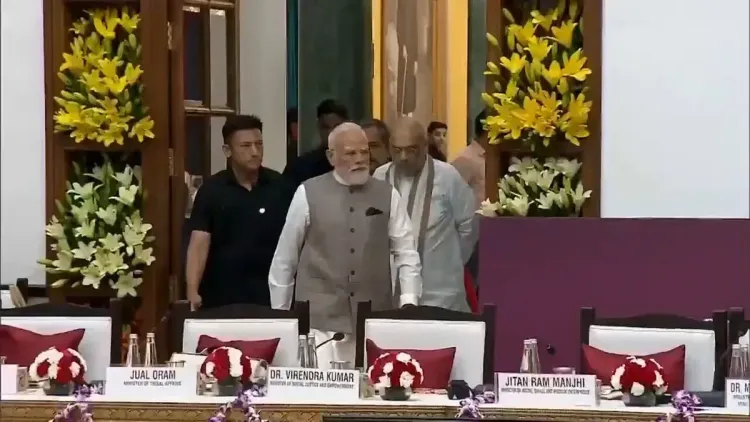
Chhattisgarh Chief Minister Vishnu Deo Sai joined state and Union Territory leaders at NITI Aayog's 11th Governing Council meeting on June 11, 2026, chaired by Prime Minister Narendra Modi at the Rashtrapati Bhavan Cultural Centre in New Delhi, underscoring the Centre-state cooperative federalism framework.
Key Takeaways
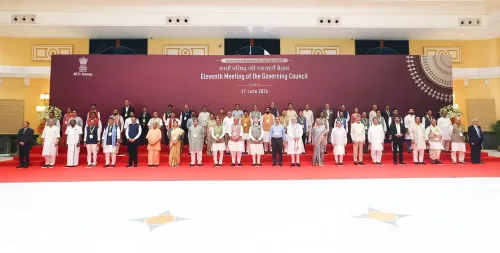
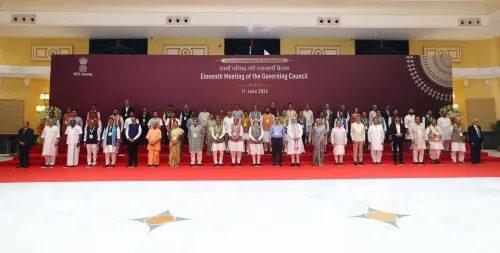
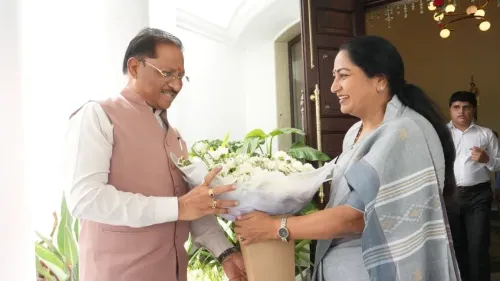
Chhattisgarh Chief Minister Vishnu Deo Sai attended the 11th Governing Council meeting of NITI Aayog on June 11, 2026 .
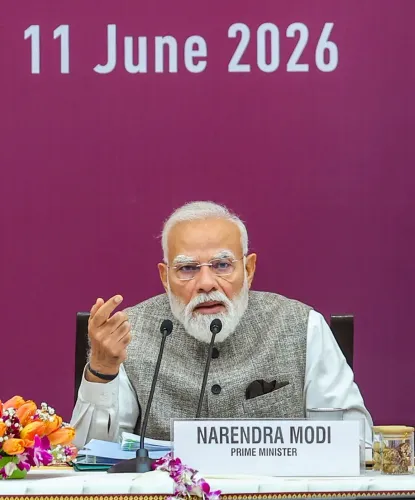
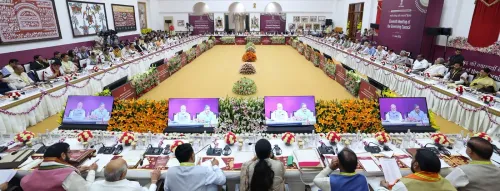
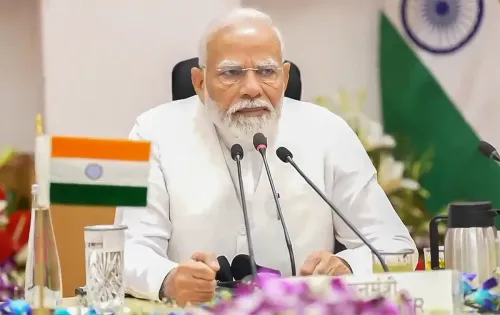
The meeting was chaired by Prime Minister Narendra Modi and held at the Rashtrapati Bhavan Cultural Centre, New Delhi .
NITI Aayog's Governing Council is the apex cooperative federalism body, comprising all Chief Ministers and Lieutenant Governors.
Chhattisgarh has active stakes in central schemes covering tribal welfare, housing, water supply, and rural connectivity.
Outcomes of the meeting are expected to influence state-level budgetary and implementation priorities for the coming fiscal period.
Chhattisgarh Chief Minister Vishnu Deo Sai attended the 11th Governing Council meeting of NITI Aayog on Thursday, June 11, 2026, chaired by Prime Minister Narendra Modi at the Rashtrapati Bhavan Cultural Centre, New Delhi.
Context
Sai shared the development on X, posting in Hindi: 'माननीय प्रधानमंत्री श्री नरेंद्र मोदी जी की अध्यक्षता में नीति आयोग की 11वीं गवर्निंग काउंसिल की बैठक' ('The 11th Governing Council meeting of NITI Aayog under the chairmanship of respected Prime Minister Shri Narendra Modi'). The meeting was held at the Rashtrapati Bhavan Cultural Centre, marking a significant gathering of the country's top executive and state leadership.
NITI Aayog's Governing Council comprises the Prime Minister as chairperson, all Chief Ministers of states, Lieutenant Governors of Union Territories, and select Union Ministers. It serves as the apex body for cooperative federalism, enabling the Centre and states to jointly deliberate on national development priorities.
Policy Backdrop
The Governing Council meetings are convened periodically to review the progress of flagship national programmes, align state-level implementation with central policy goals, and chart a shared development agenda. Previous editions have addressed themes ranging from agricultural reform and infrastructure investment to health and education outcomes.
The 11th meeting continues this tradition of structured dialogue between the Union government and state administrations. Chhattisgarh, as a resource-rich state with significant tribal population and ongoing infrastructure development, has a direct stake in outcomes related to mineral policy, forest rights, welfare schemes, and connectivity projects discussed at such forums.
Stakeholders and Impact
Chief Minister Sai's presence signals Chhattisgarh's active engagement with the Centre's development framework. The state has been pursuing accelerated implementation of central schemes in sectors such as housing, road connectivity, drinking water, and tribal welfare under programmes like PM Awas Yojana and Jal Jeevan Mission.
For Chhattisgarh's approximately 3.3 crore residents, the outcomes of such Governing Council deliberations can directly influence resource allocation, scheme design, and the pace of infrastructure rollout. Tribal communities, who constitute a significant share of the state's population, stand to be particularly affected by any policy decisions on forest rights and rural development.
What's Next
Decisions and recommendations emerging from the 11th Governing Council meeting are expected to shape state budgetary priorities and implementation roadmaps for the coming fiscal period. Chief Minister Sai is likely to translate the Centre's directives and cooperative commitments into actionable programmes at the state level, with Chhattisgarh's administrative machinery expected to align accordingly in the weeks ahead.
Point of View
A posture that typically smooths resource flows and scheme implementation. For Chhattisgarh, a state with complex tribal demographics and significant mineral wealth, such high-table access carries tangible policy dividends. The choice of the Rashtrapati Bhavan Cultural Centre as venue also signals the ceremonial weight the Union government is attaching to this edition of the council. Sai's active social media documentation of the event reinforces his administration's messaging around developmental partnership with New Delhi.
NationPress
26 Oct 2026
Frequently Asked Questions
What is NITI Aayog's Governing Council?
NITI Aayog's Governing Council is the apex body for cooperative federalism in India, chaired by the Prime Minister and comprising all state Chief Ministers, Union Territory Lieutenant Governors, and select Union Ministers. It meets periodically to align national and state development priorities.
When was the 11th NITI Aayog Governing Council meeting held?
The 11th Governing Council meeting was held on Thursday, June 11, 2026, at the Rashtrapati Bhavan Cultural Centre in New Delhi.
Why did Chhattisgarh CM Vishnu Deo Sai attend the NITI Aayog meeting?
As Chief Minister, Vishnu Deo Sai is a statutory member of NITI Aayog's Governing Council. His attendance reflects Chhattisgarh's engagement with national development planning, particularly on issues like tribal welfare, infrastructure, and central scheme implementation.
What issues does Chhattisgarh typically raise at NITI Aayog meetings?
Chhattisgarh generally focuses on tribal rights, forest and mineral policy, rural connectivity, housing under PM Awas Yojana, and drinking water access under Jal Jeevan Mission at such forums, given the state's demographic and resource profile.
Who chairs the NITI Aayog Governing Council?
The Prime Minister of India serves as the ex-officio chairperson of NITI Aayog's Governing Council. Prime Minister Narendra Modi chaired the 11th meeting held on June 11, 2026.