CM Vishnu Deo Sai Attends NITI Aayog Governing Council Meet
Synopsis
Chhattisgarh Chief Minister Vishnu Deo Sai attended the NITI Aayog Governing Council meeting at Rashtrapati Bhavan's Cultural Centre in New Delhi on 11 June 2026, reaffirming the state's engagement in national policy deliberations under India's cooperative federalism framework.
Key Takeaways
Chhattisgarh Chief Minister Vishnu Deo Sai was present at the NITI Aayog Governing Council meeting on 11 June 2026 .
The meeting was held at the Cultural Centre, Rashtrapati Bhavan, New Delhi .
NITI Aayog was established on 1 January 2015 to replace the Planning Commission and institutionalise cooperative federalism.
The Governing Council comprises all Chief Ministers and Lieutenant Governors, chaired by the Prime Minister of India .
Outcomes from such meetings typically influence Centrally Sponsored Scheme design and state plan-fund allocations.
Chhattisgarh's participation is especially significant given the state's priorities in tribal welfare, infrastructure, and rehabilitation of Maoist-affected districts.
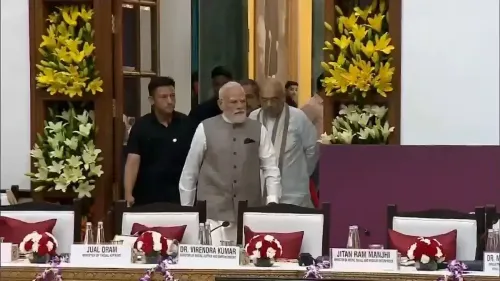
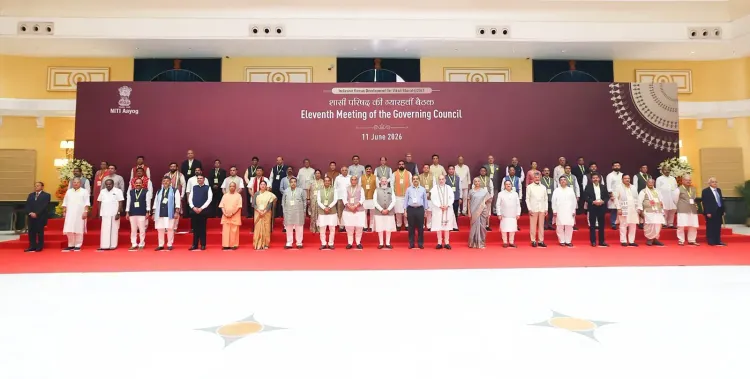
Chhattisgarh Chief Minister Vishnu Deo Sai participated in the NITI Aayog Governing Council meeting held at the Cultural Centre, Rashtrapati Bhavan, New Delhi, on Thursday, 11 June 2026. Sai shared a group photograph from the high-level gathering on social media, signalling Chhattisgarh's active engagement in national policy deliberations.
Context
The post, captioned 'समूह चित्र : शासी परिषद की बैठक, सांस्कृतिक केंद्र, राष्ट्रपति भवन, नई दिल्ली' ('Group photograph: Governing Council meeting, Cultural Centre, Rashtrapati Bhavan, New Delhi'), confirms Chief Minister Sai's presence at one of India's most consequential Centre-state forums. The NITI Aayog Governing Council is the apex body of the policy think tank and brings together all Chief Ministers and Lieutenant Governors under the chairpersonship of the Prime Minister.
The Cultural Centre within the sprawling Rashtrapati Bhavan complex in New Delhi has served as the venue for several such plenary-level deliberations, lending the proceedings an institutional gravitas that underscores their national importance.
Policy Backdrop
NITI Aayog was constituted on 1 January 2015, replacing the decades-old Planning Commission with a mandate to foster cooperative federalism and bottom-up policy design. Its first Governing Council meeting was held on 8 February 2015, and subsequent sessions have been convened periodically to align state and national development agendas on themes ranging from economic growth to welfare delivery.
Unlike the old Planning Commission model, the Governing Council framework gives Chief Ministers a direct seat at the table when national priorities are being set, making participation by state heads both symbolically and substantively significant. For a resource-rich but developmentally aspirational state like Chhattisgarh, such forums offer a platform to press for policy support on issues including tribal welfare, mineral-revenue sharing, and infrastructure investment.
Stakeholders and Impact
The Governing Council meeting draws together chief executives from all of India's states and Union Territories, making it a rare occasion where sub-national leaders can collectively engage with central policymakers on a single agenda. Decisions or action points emerging from such sessions frequently shape the design of Centrally Sponsored Schemes and the distribution of plan funds to states.
For Chhattisgarh, active representation at the Council level is particularly consequential given the state's ongoing priorities in forest-area development, Maoist-affected district rehabilitation, and expansion of social security programmes. Chief Minister Sai's visible participation signals that the state intends to leverage every federal consultation mechanism available to it.
What's Next
Attention will now turn to any official communique, resolution, or action-point document released by NITI Aayog following the meeting, and how those directives translate into upcoming state budget allocations or revised central-scheme guidelines. Chhattisgarh's own policy calendar — including its next state cabinet session and budget revision cycle — is likely to reflect the outcomes of this national-level consultation.
The meeting reinforces a broader pattern of institutionalised dialogue between the Union and state governments, and its outcomes will be closely watched by development economists, state finance departments, and civil society groups invested in cooperative federalism.
Point of View
Visibility at the apex federal forum carries both policy and symbolic weight. The meeting fits squarely into the post-2014 pattern of using NITI Aayog as a vehicle for Centre-state alignment, particularly on welfare and infrastructure spending. How effectively Chhattisgarh translates its Council-level engagement into concrete scheme outcomes will be the real measure of this participation.
NationPress
26 Oct 2026
Frequently Asked Questions
What is the NITI Aayog Governing Council?
The NITI Aayog Governing Council is the apex body of NITI Aayog, comprising all Chief Ministers, Lieutenant Governors, and chaired by the Prime Minister of India. It was set up to enable cooperative federalism and align state and national development priorities.
Why did CM Vishnu Deo Sai attend the NITI Aayog meeting?
As Chief Minister of Chhattisgarh, Vishnu Deo Sai is a statutory member of the NITI Aayog Governing Council and attended the 11 June 2026 meeting at Rashtrapati Bhavan to participate in national-level policy deliberations on behalf of the state.
Where was the NITI Aayog Governing Council meeting held?
The meeting was held at the Cultural Centre inside the Rashtrapati Bhavan complex in New Delhi, a venue frequently used for high-level national gatherings.
When was NITI Aayog established and why?
NITI Aayog was established on 1 January 2015 to replace the Planning Commission. The change was intended to shift from top-down planning to a more collaborative, iterative model of policy formulation between the Union government and the states.
What decisions come out of NITI Aayog Governing Council meetings?
Governing Council meetings typically produce action points and recommendations that shape the design of Centrally Sponsored Schemes, guide state plan-fund allocations, and set shared development priorities for the coming policy cycle.