CM Sai's Office Urges Polio Drops for All Children Under 5
Synopsis
On World Polio Day 2026, the Chhattisgarh CMO urged parents to administer polio drops to all children aged 0–5, reinforcing India's polio-free status achieved in 2014 after the landmark Pulse Polio drive launched in 1995.
Key Takeaways
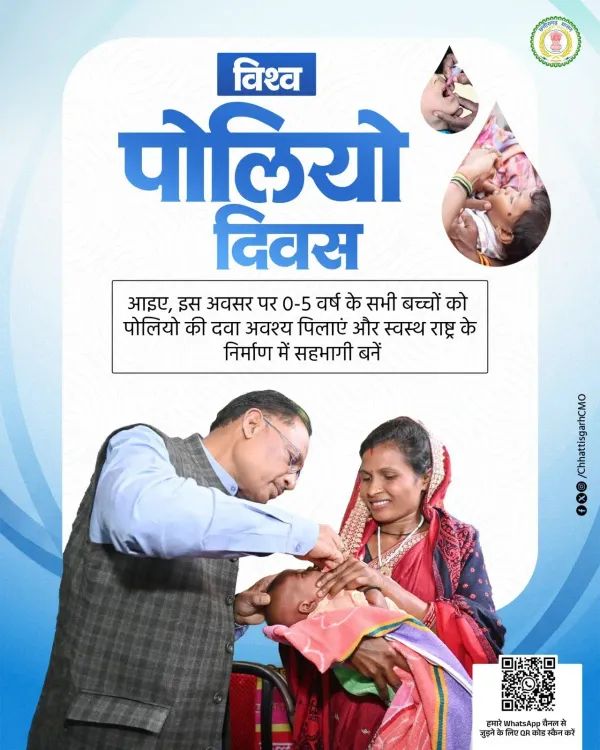
The Chhattisgarh CMO posted a World Polio Day appeal on 24 October 2026 urging polio vaccination for all children aged 0–5 years .
The appeal carries the hashtag of Chief Minister Vishnu Deo Sai , signalling top-level political backing for immunization outreach.
India launched the Pulse Polio Immunization Programme in 1995 and recorded its last wild poliovirus case in 2011 .
The WHO certified India polio-free in 2014 , a status that requires sustained high vaccination coverage to maintain.
Chhattisgarh runs both routine OPV/IPV doses and periodic supplementary immunization campaigns under the Universal Immunization Programme .
Poliovirus still circulates in neighbouring countries, making every unvaccinated child a potential re-entry risk.
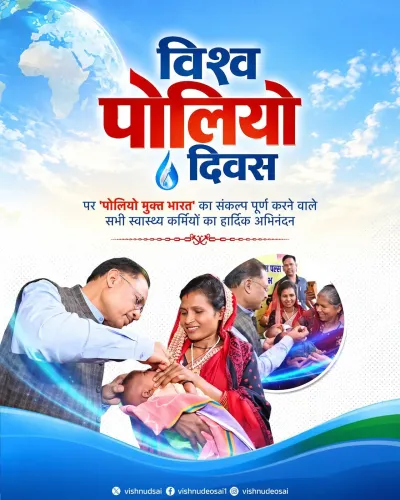
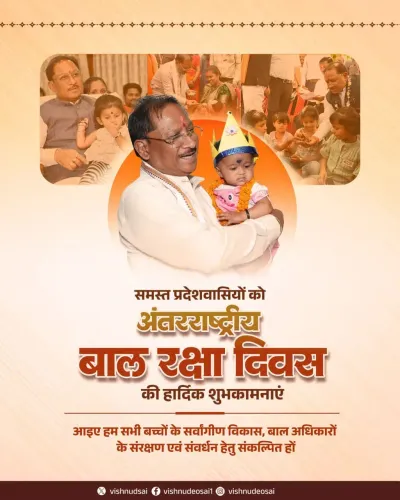
On World Polio Day, 24 October 2026, the Chief Minister's Office of Chhattisgarh issued a direct, urgent appeal to every parent in the state: make sure your child under five gets the polio drop — no exceptions. The message, posted by the Chhattisgarh CMO on X, carries the personal hashtag of Chief Minister Vishnu Deo Sai and frames immunization not merely as a health act but as a civic contribution to a 'healthy and prosperous nation.'
The post, in Hindi, reads: 'On the occasion of World Polio Day, ensure all children aged 0–5 years receive the polio vaccine and contribute to realising the vision of building a healthy and prosperous nation.' Simple words. But behind them sits one of the most consequential public-health journeys in modern history.
From endemic to polio-free: India's hard-won milestone
India launched the Pulse Polio Immunization Programme in 1995, mobilising health workers to fan out across towns, villages, and railway stations twice a year, placing drops on the tongue of every child under five. The effort took 16 years. The country's last confirmed case of wild poliovirus was recorded in 2011, and the World Health Organization certified India polio-free in 2014 — a triumph that stunned global health circles given India's population density and infrastructure challenges. That certification, however, is not a lock — it is a live obligation. The poliovirus still circulates in parts of Pakistan and Afghanistan, and an unvaccinated pocket anywhere is a potential re-entry point. Every missed child is a gap in the firewall.Why Chhattisgarh's appeal matters in 2026
Chhattisgarh participates in both routine immunization under the Universal Immunization Programme — which includes scheduled oral polio vaccine (OPV) and inactivated polio vaccine (IPV) doses — and in periodic supplementary campaigns, the so-called National Immunization Days, where booth-based drives reach children who may have been missed by routine health facilities. The state's tribal-dominated districts and forested terrain have historically posed logistical challenges for health delivery. A World Polio Day call-to-action from the Chief Minister's Office is partly a reminder to parents and partly a signal to the health department machinery: complacency is not an option. CM Vishnu Deo Sai, who has led the BJP government in the state since December 2023, has consistently framed public health messaging within a broader development narrative. Today's appeal fits that pattern — polio coverage as a measurable marker of state capacity and citizen participation alike. The firewall that took 16 years to build needs every parent, every health worker, and every booth to hold. That is the ask — and it is not a small one.Point of View
But they serve a precise epidemiological purpose: sustaining the 'immunity wall' that protects India's WHO-certified polio-free status. For the BJP government in Chhattisgarh, framing immunization as a nation-building act aligns health delivery with the broader 'Viksit Bharat' development discourse. The real test lies in booth-level coverage across the state's tribal and remote districts, where drop-out rates historically undermine campaign targets. Chief Minister Sai's visible association with the message adds political accountability to what is otherwise a technocratic health obligation.
NationPress
24 Oct 2026
Frequently Asked Questions
What is World Polio Day and when is it observed?
World Polio Day is observed every year on 24 October to raise awareness about polio eradication efforts globally. It marks the birthday of Jonas Salk, who led the team that developed the first polio vaccine.
Is India still polio-free in 2026?
Yes. India has been polio-free since 2014 , when the WHO officially certified the country after the last confirmed wild poliovirus case in 2011 . Maintaining this status requires continued high vaccination coverage.
What age group should receive polio drops in India?
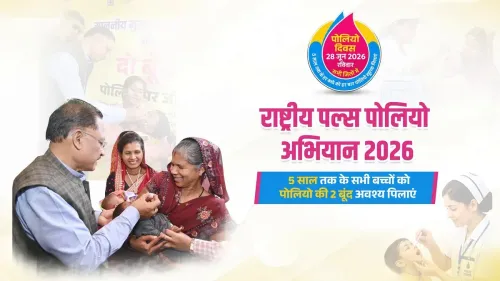
Children aged 0 to 5 years are the primary target for polio immunization under both the routine Universal Immunization Programme and periodic supplementary drives like National Immunization Days.
What is the Pulse Polio Programme?
The Pulse Polio Immunization Programme was launched by India in 1995 as a mass supplementary vaccination campaign to eradicate wild poliovirus. It involved twice-yearly National Immunization Days where health workers administered oral polio vaccine (OPV) to all children under five.
Why does Chhattisgarh need to continue polio campaigns if India is polio-free?
Despite India's polio-free certification, the virus still circulates in parts of Pakistan and Afghanistan . Any gap in immunization coverage — particularly in remote or tribal areas — can allow re-importation of the virus, making sustained campaigns essential.