CM Sai Amplifies Nadda's Warning: Only Citizens Vote

Synopsis
Chhattisgarh CM Vishnu Deo Sai amplified Union Minister JP Nadda quoting PM Modi that no foreigner or ineligible person has the right to vote, framing Indian electoral participation as a national sovereignty issue.
Key Takeaways
CM Vishnu Deo Sai shared the post on October 30, 2026 , amplifying a statement by Union Minister JP Nadda .
Nadda quoted PM Narendra Modi stating that no foreigner or 'wrong person' has the right to vote in India.
Nadda used the dharamshala metaphor to argue India cannot be treated as a political free-for-all by non-citizens.
BJP leaders have consistently tied voter-roll verification to national sovereignty and border security arguments.
The Citizenship Amendment Act (2019) forms the broader policy backdrop to the citizenship-versus-residency distinction being invoked.
Pressure may follow for Election Commission of India action on voter-list audits or Aadhaar-linkage drives.
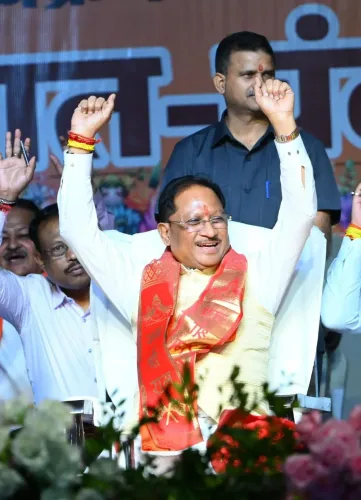
A sharp political statement on electoral integrity reverberated across social media on Friday, October 30, 2026, as Chhattisgarh Chief Minister Vishnu Deo Sai shared a pointed remark by Union Minister JP Nadda, quoting Prime Minister Narendra Modi on the right to vote in India.
The post carries a direct quotation attributed to Nadda: 'मोदी जी कहते हैं कि कोई भी विदेशी या गलत व्यक्ति को वोट देने का अधिकार नहीं है' — 'Modi ji says that no foreigner or wrong person has the right to vote.' Nadda's statement continued with a pointed comparison: 'This is India, not a dharamshala (public rest house) where anyone can walk in, rule, and walk away.'
The 'Dharamshala' Metaphor and What It Signals
The word dharamshala — a free shelter open to any traveller — is doing a lot of work here. By invoking it, Nadda frames unrestricted political participation by non-citizens not merely as a procedural lapse, but as a sovereignty question. It is language calibrated to resonate in states with documented concerns about demographic pressure along border districts.
This is consistent with a pattern BJP leaders have maintained for years: linking voter-roll purity to national security, and tying citizenship documentation to the integrity of democracy itself. The argument is simple and familiar — the franchise belongs exclusively to Indian citizens, and diluting that boundary amounts to a dilution of nationhood.
BJP's Long Campaign on Voter-Roll Verification
The rhetoric did not emerge in a vacuum. The Citizenship Amendment Act of 2019 codified pathways to citizenship while sharpening the legal distinction between residents and citizens — a distinction BJP leaders have since pressed into electoral discourse. Senior party voices have periodically called for Aadhaar-linkage of voter rolls and stricter documentation drives, precisely to enforce the citizen-only boundary the Constitution already mandates.
For Chief Minister Sai, amplifying the message carries specific weight. Chhattisgarh borders states with significant internal migration, and electoral-roll accuracy remains a live administrative concern. By sharing the clip publicly, Sai signals alignment with the national party line and directs the message at his own state's electorate.
What the Election Commission May Face Next
Statements of this register — from a serving Union Minister, amplified by a sitting Chief Minister, invoking the Prime Minister — often precede formal demands addressed to the Election Commission of India. Voter-list audits, special summary revision drives, or renewed pushes for Aadhaar seeding of electoral rolls are the institutional instruments through which this political pressure typically finds expression. Whether the Commission responds with fresh verification directives is the next concrete thing to watch.
The message, stripped to its core, is a sovereignty argument dressed in electoral language. In Indian politics, that is rarely a quiet statement — it is an opening move.
Point of View
The party is framing citizenship-based voting not as a technical issue but as a cultural compact. The dharamshala framing is particularly telling: it reframes a constitutional requirement as a civilisational boundary, a rhetorical escalation that raises the political temperature well above routine voter-roll discourse. The timing — well ahead of any announced electoral cycle — suggests the party is seeding a narrative, not merely responding to one.
NationPress
30 Oct 2026
Frequently Asked Questions
What did JP Nadda say about foreigners voting in India?
Union Minister JP Nadda, quoting PM Modi, stated that no foreigner or ineligible person has the right to vote in India, adding that India is not a 'dharamshala' where anyone can walk in and rule.
Why did Chhattisgarh CM Vishnu Deo Sai share this post?
CM Sai shared the post to amplify the BJP's position on restricting voting rights to Indian citizens, signalling alignment with the national party line on electoral integrity.
What is the Citizenship Amendment Act and how does it relate to voting?
The Citizenship Amendment Act of 2019 regulates pathways to Indian citizenship. BJP leaders cite it as part of a broader framework distinguishing citizens from residents, which they argue must be enforced in voter rolls.
Can the Election Commission take action on voter roll verification?
Yes. The Election Commission of India has authority to conduct special summary revision drives and Aadhaar-linkage audits of electoral rolls to ensure only eligible citizens are enrolled.
What does 'dharamshala' mean in JP Nadda's statement?
A dharamshala is a traditional free shelter open to any traveller. Nadda used the term metaphorically to argue India's political and electoral space cannot be open to non-citizens in the way a rest house is open to strangers.