CM Sai orders urgent crop survey after Cyclone Arnab
Synopsis
Chhattisgarh CM Vishnu Deo Sai directed all district collectors to immediately survey crop losses from Cyclone Arnab and disburse compensation to affected farmers under RBC 6-4 revenue norms, pledging full government support to the state's farming community.
Key Takeaways
CM Vishnu Deo Sai issued a state-wide directive on October 30, 2026 following crop damage from Cyclone Arnab .
All district collectors in Chhattisgarh have been ordered to conduct immediate field surveys of crop losses.
Relief will be calculated and disbursed under RBC 6-4 — the Revenue Book Circular provision for natural calamity crop compensation.
The process operates within the Disaster Management Act, 2005 framework governing state-level damage assessment and relief.
Chhattisgarh's economy is heavily agrarian, with paddy cultivation making late-season cyclone damage especially damaging to farmers' livelihoods.
Timely completion of district surveys and actual credit of assistance to farmers will be the key implementation test.
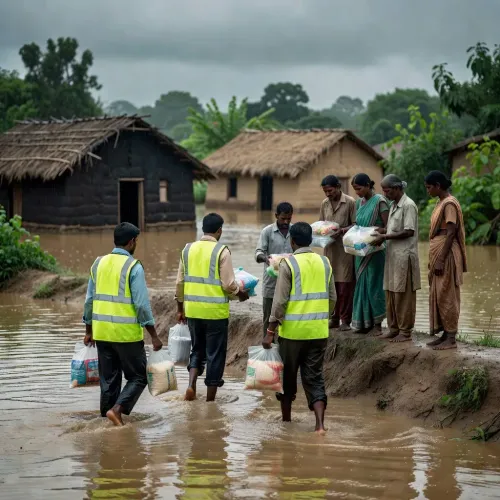
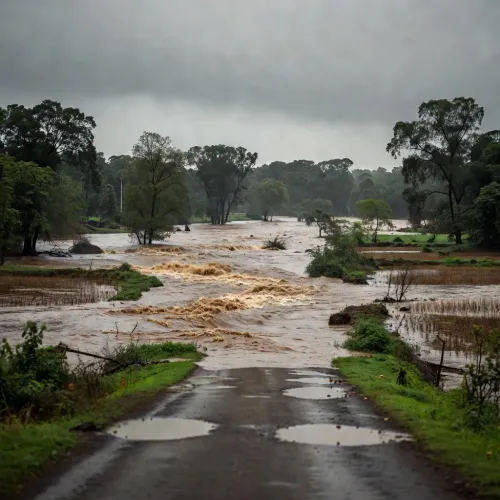
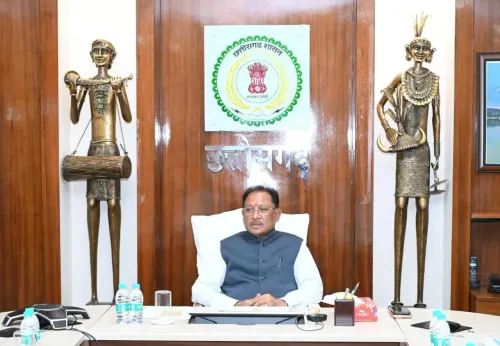
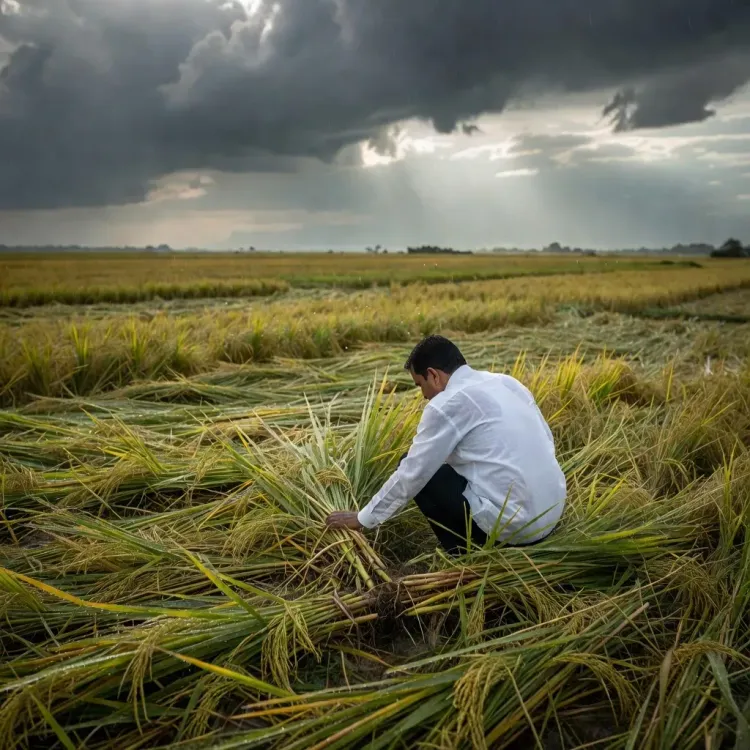
When Cyclone Arnab swept through Chhattisgarh, it left a trail of damaged standing crops — and now the state machinery is moving fast to make sure the farmers who grew them are not left to absorb the loss alone. Chhattisgarh Chief Minister Vishnu Deo Sai on Friday, October 30, 2026, directed all district collectors to immediately survey crop damage and disburse relief to affected farmers under established revenue norms.
Posting in Hindi on X, CM Sai stated: 'हमारे अन्नदाताओं की मेहनत और उनके हितों की रक्षा के लिए हमारी सरकार सदैव प्रतिबद्ध है' — 'Our government is always committed to protecting the hard work and interests of our farmers.' He assured that the government is working 'with complete sensitivity' so that the state's annadaata (food providers) face no hardship on account of the cyclone-linked crop losses.
What collectors have been told to do — and under which law
The Chief Minister's directive is specific: every district collector in the state must conduct an immediate field-level survey of crop damage, and relief amounts must be disbursed 'swiftly' under RBC 6-4 — the Revenue Book Circular provision that Chhattisgarh uses to channel compensation to farmers after natural calamity-linked crop loss. The provision operates within the broader framework of the Disaster Management Act, 2005, which mandates state governments to assess damage and release relief following declared calamity events.
RBC 6-4 lays down standardised norms — both the eligibility criteria and the compensation rates — so that assistance is calculated on a uniform, auditable basis rather than left to ad hoc discretion at the district level. The instruction to use 'prescribed criteria' signals the state wants speed without side-stepping procedure.
Why Chhattisgarh farmers are particularly exposed to weather shocks
Agriculture forms a foundational pillar of Chhattisgarh's economy, with paddy cultivation dominant across large swathes of the state's plains. The kharif season — the wet-season crop cycle — leaves standing crops vulnerable to late-season cyclones and storm surges precisely because harvest typically runs into October and November. A weather event at this point in the calendar can erase months of fieldwork within hours.
State governments across India's agrarian belt have developed well-worn administrative protocols for exactly this scenario: rapid collector-level surveys followed by revenue-rule-based compensation. Chhattisgarh's invocation of RBC 6-4 follows that established playbook. What tends to determine outcomes for farmers is not the policy framework — which exists — but the speed and accuracy of the ground-level survey.
What to watch as the relief process unfolds
The critical variable now is execution. District collectors must complete damage assessments, verify beneficiary lists, and trigger payments — all while managing post-cyclone field conditions. CM Sai pledged that the government stands 'firmly beside every affected farmer in this hour of natural disaster.' Whether that solidarity translates into credited bank accounts within days, or weeks, will be the measure farmers are watching.
For a state government that came to power in December 2023 under CM Vishnu Deo Sai with a strong agrarian pitch, how visibly and quickly this relief reaches the field will carry political weight well beyond the immediate crisis.
Point of View
Rapid and transparent execution of this relief cycle matters beyond optics: a slow or patchy disbursal in the run-up to the next election season could become a concrete grievance. The broader pattern — states repeatedly patching weather-hit farmers through revenue-code relief rather than more structural crop-insurance architecture — remains the unresolved policy question underneath every such announcement.
NationPress
30 Oct 2026
Frequently Asked Questions
What is RBC 6-4 in Chhattisgarh?
RBC 6-4 refers to the Revenue Book Circular provision used in Chhattisgarh to provide financial compensation to farmers who suffer crop losses due to natural calamities. It defines eligibility criteria and standardised relief rates so payments are uniform and auditable across all districts.
What did CM Vishnu Deo Sai announce for farmers affected by Cyclone Arnab?
CM Vishnu Deo Sai directed all district collectors in Chhattisgarh to immediately conduct crop damage surveys following Cyclone Arnab and disburse relief amounts to affected farmers swiftly under the provisions and prescribed norms of RBC 6-4.
Which law governs crop damage relief after a cyclone in India?
The Disaster Management Act, 2005 provides the primary legal framework requiring state governments to assess damage and disburse relief after natural calamity events. State-level revenue codes such as Chhattisgarh's RBC 6-4 operate within this broader framework.
Why is crop damage from cyclones especially severe in Chhattisgarh?
Chhattisgarh has a large agrarian economy dominated by paddy cultivation. Kharif crops (wet-season crops) are typically still standing in October-November when late-season cyclones can strike, making this period particularly risky for farmers who could lose months of work overnight.
When did Vishnu Deo Sai become Chief Minister of Chhattisgarh?
Vishnu Deo Sai assumed office as Chief Minister of Chhattisgarh in December 2023 after the BJP won the state assembly election.