CM Sai Thanks Amit Shah for Cyclone Arnab Relief Pledge

Synopsis
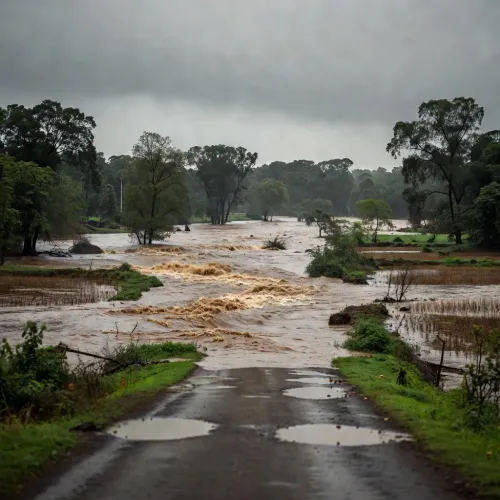
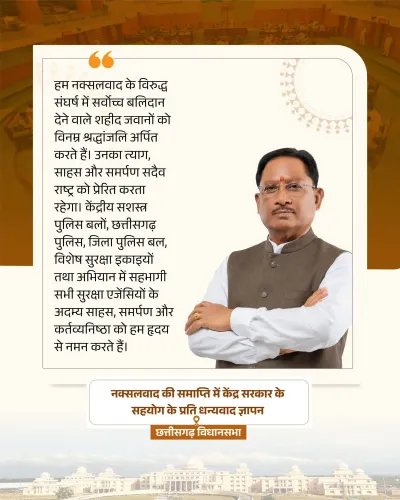
Chhattisgarh CM Vishnu Deo Sai publicly thanked Union Home Minister Amit Shah for assuring full central support to Cyclone Arnab-hit states. Sai confirmed that relief and rescue operations are actively under way through coordinated inter-agency efforts, with citizen safety listed as the government's top priority.
Key Takeaways
CM Vishnu Deo Sai thanked Union Home Minister Amit Shah on 29 October 2026 for pledging full central support to Cyclone Arnab-hit states.
Chhattisgarh is among multiple affected states receiving the Centre's assurance of 'all possible assistance' during the cyclone crisis.
The state government has declared residents' safety its highest priority , with inter-agency coordination actively driving relief and rescue.
The response framework is anchored in the Disaster Management Act, 2005 , which mandates central-state coordination through the Ministry of Home Affairs and NDRF.
Watch-points include formal NDRF deployments , damage assessments, and potential fund releases from the National Disaster Response Fund .
When a cyclone bears down, the first call a state makes is to the Centre — and Chhattisgarh Chief Minister Vishnu Deo Sai confirmed on Thursday, 29 October 2026 that the Centre answered. Sai publicly thanked Union Home and Cooperation Minister Amit Shah for assuring all possible assistance to Chhattisgarh and other states hit by Cyclone Arnab, signalling that the federal disaster-response machinery is in motion.
In his post, CM Sai expressed gratitude — 'हृदय से आभार' (heartfelt thanks) — to Shah for the commitment of support, and underlined that 'the safety of the state's residents is the highest priority of our government.' He added that relief and rescue operations are being carried out with full commitment through coordination among various agencies, with essential assistance being delivered to those in need.
Amit Shah's Assurance and the Centre-State Coordination Trigger
Under the Disaster Management Act, 2005, the Ministry of Home Affairs serves as the nodal body for orchestrating central support to state governments during natural disasters. That framework — built after the 2004 Indian Ocean tsunami exposed gaps in inter-agency response — places the Home Minister at the switchboard of federal disaster aid. Shah's personal assurance to affected states, as acknowledged by Sai, is a standard activation of that protocol, but its public acknowledgement underscores the scale of the cyclone's threat.
The National Disaster Response Force and State Disaster Response Forces form the operational spine of any such response. Historically, NDRF teams have been pre-positioned ahead of cyclone landfalls — a lesson hardened through repeated coastal and inland emergency responses across India's diverse geography. Chhattisgarh, a landlocked central Indian state, is not a primary cyclone zone, but intense remnant systems and associated flooding can funnel deep inland.
What Chhattisgarh's Government Is Doing Right Now
CM Sai emphasised that relief and rescue operations are actively under way through inter-agency coordination, and that essential assistance is being routed to those who need it. The framing — multiple agencies, full commitment, outreach to the most vulnerable — mirrors the operational checklist that disaster managers follow in the critical first 72 hours after a cyclone warning or landfall.
The state government's public communication at this stage serves a dual function: it reassures residents that help is coming, and it places on record the formal request for, and acknowledgement of, central support — a step that matters when damage assessments and fund-release requests follow.
The Next Watch-Points in the Relief Chain
Observers of disaster governance will now track whether the Centre formally deploys additional NDRF battalions to the affected belt, how quickly damage assessments feed into a formal memorandum to the National Disaster Response Fund, and whether other affected states make similar public acknowledgements. The pace at which central funds are released after such assurances has historically been a key measure of the Centre-state relationship in a crisis.
A cyclone does not respect borders — and right now, every hour of coordinated response counts.
Point of View
The warm acknowledgement also reflects the political ease of Centre-state alignment that can accelerate resource flows. The real test, as always in Indian disaster governance, will be the speed and reach of on-ground delivery once the headlines fade. This moment fits a broader pattern in which state CMs use social media to formally acknowledge central assurances, effectively creating a public accountability trail for the relief process.
NationPress
29 Oct 2026
Frequently Asked Questions
What is Cyclone Arnab and which states has it affected?
Cyclone Arnab is an active cyclonic system that has affected several Indian states including Chhattisgarh as of late October 2026. Specific impact details are still emerging as relief operations are under way.
What did Amit Shah promise to cyclone-affected states?
Union Home Minister Amit Shah assured all possible assistance to Chhattisgarh and other states hit by Cyclone Arnab, prompting CM Vishnu Deo Sai to publicly thank him on 29 October 2026.
What relief measures is the Chhattisgarh government taking?
CM Vishnu Deo Sai confirmed that relief and rescue operations are being conducted through coordination among various agencies, with essential assistance being delivered to those in need.
What is the National Disaster Response Force (NDRF) and how does it help?
The NDRF is India's specialised force for disaster response, deployed by the Ministry of Home Affairs to affected states during calamities like cyclones. It operates under the framework of the Disaster Management Act, 2005.
How does the central government assist states during natural disasters?
Under the Disaster Management Act, 2005, the Ministry of Home Affairs coordinates federal disaster aid, including NDRF deployment, logistical support, and release of funds from the National Disaster Response Fund to affected states.